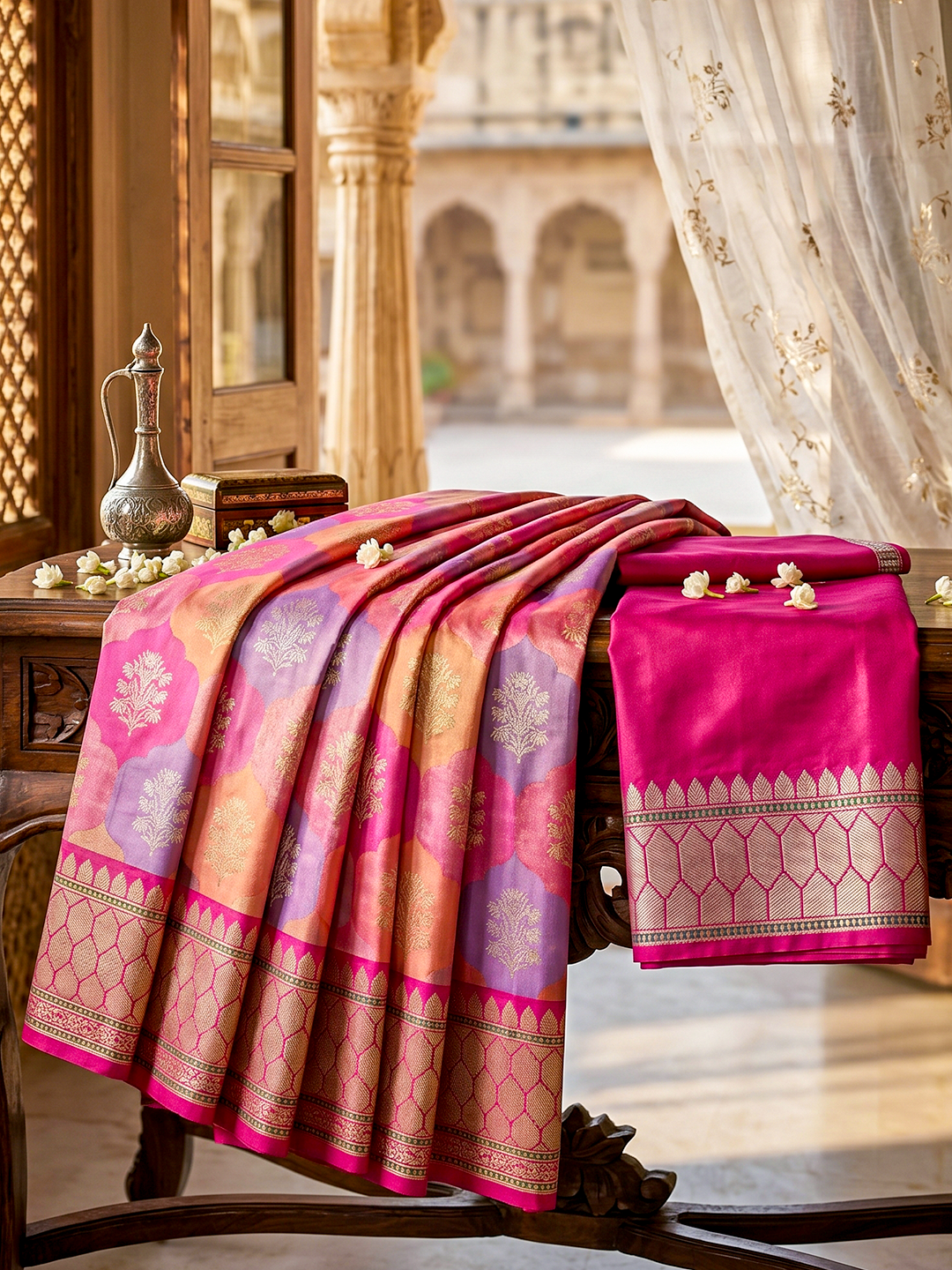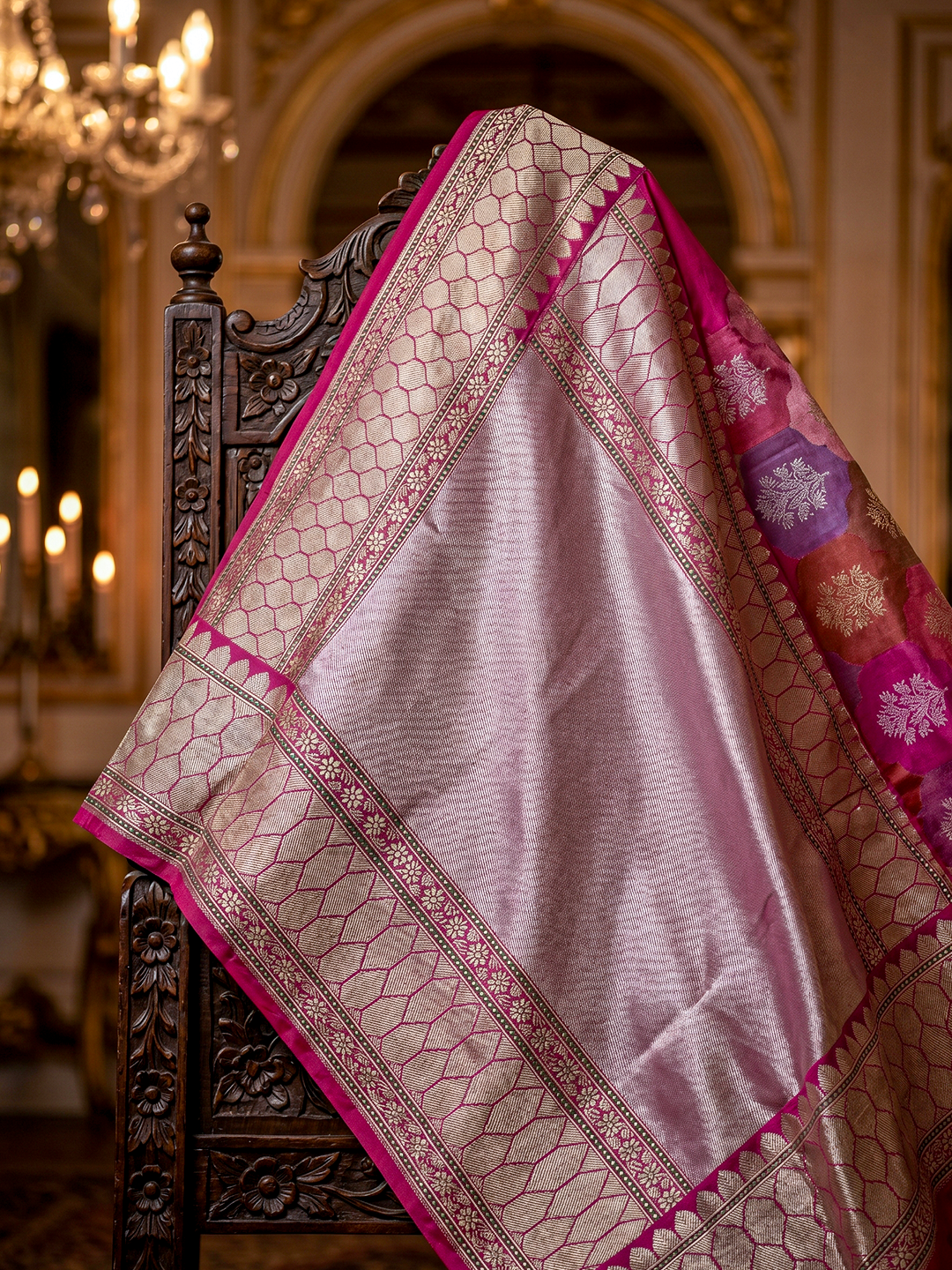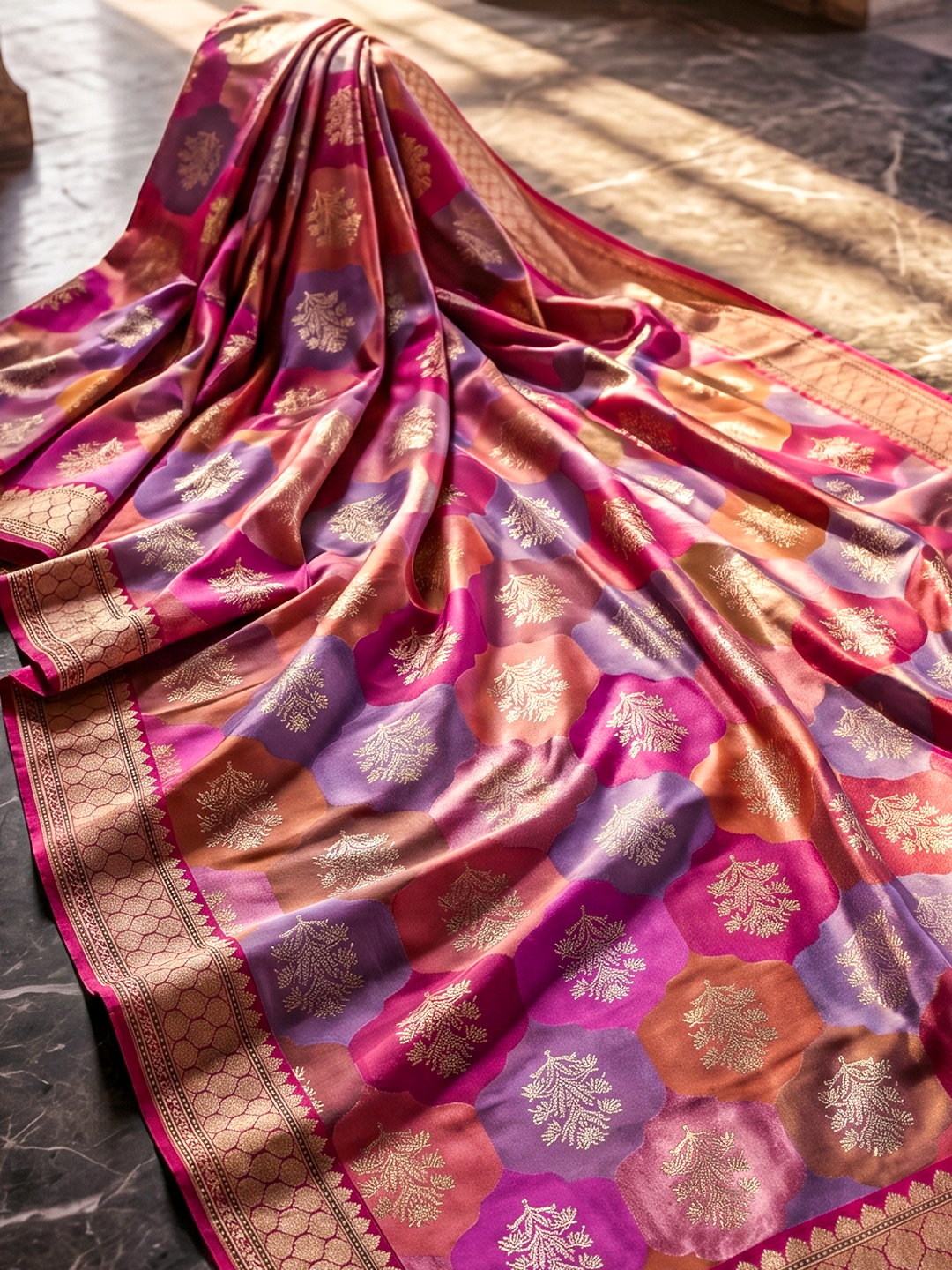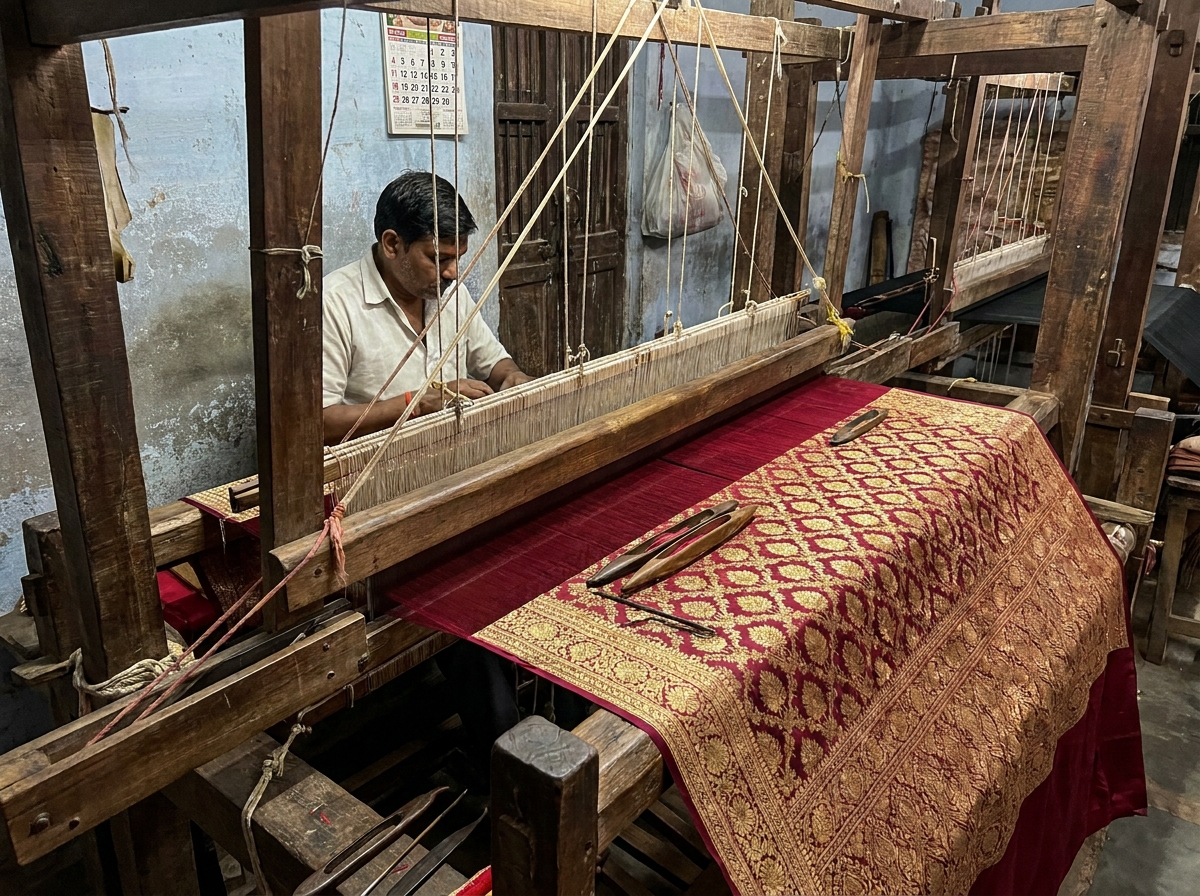
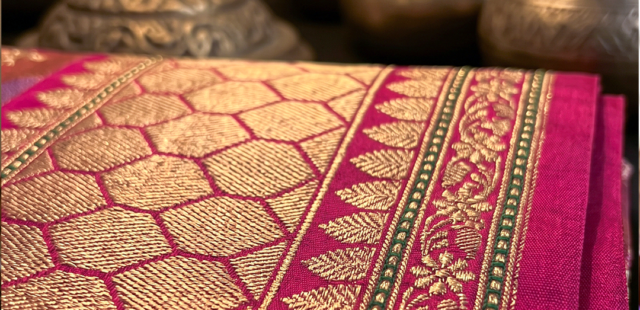
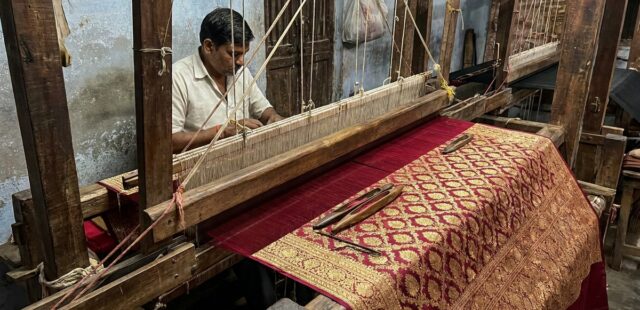
+9163073 05873 support@silkkhazana.in
Summer sale discount upto 30%! Shop Now

Mini Cart

Complete Guide to Buying Banarasi Sarees in Varanasi | Silk Khazana

Silk Khazana Presents

Complete Guide to Buying Banarasi Sarees in Varanasi

An honest, practical guide for first-time buyers

Introduction: Why Varanasi Is the Only Place to Buy a Real Banarasi Saree

There is a saying in India: "If it is not from Varanasi, it is not truly Banarasi." That is not just sentiment. It is the truth.

Varanasi — also called Banaras or Kashi — is the birthplace of the Banarasi saree. The silk threads here carry centuries of history. The gold and silver zari work is woven by hands that have learned this craft over generations.

In 2026, Varanasi is more accessible than ever. International flights connect to nearby Lucknow and Prayagraj. More tourists are visiting the ghats, the temples, and the silk bazaars. And more buyers — from London, New York, Singapore, and Dubai — are discovering what Indian women have known for centuries: there is nothing in the world quite like a pure Banarasi silk saree.

But here is the problem nobody tells you. Not every saree sold in Varanasi is genuine. Not every price is fair. Not every shopkeeper is honest.

This guide was written to change that. We have talked to weavers, walked through markets, and seen the tricks that tourists fall for every day. This is an honest, practical guide for first-time buyers — whether you are visiting Varanasi for a few days, shopping from abroad, or simply looking for a trustworthy place to spend your money.

🏪

Visit Us Directly: Silk Khazana | Varanasi, Uttar Pradesh | Get Directions on Google Maps

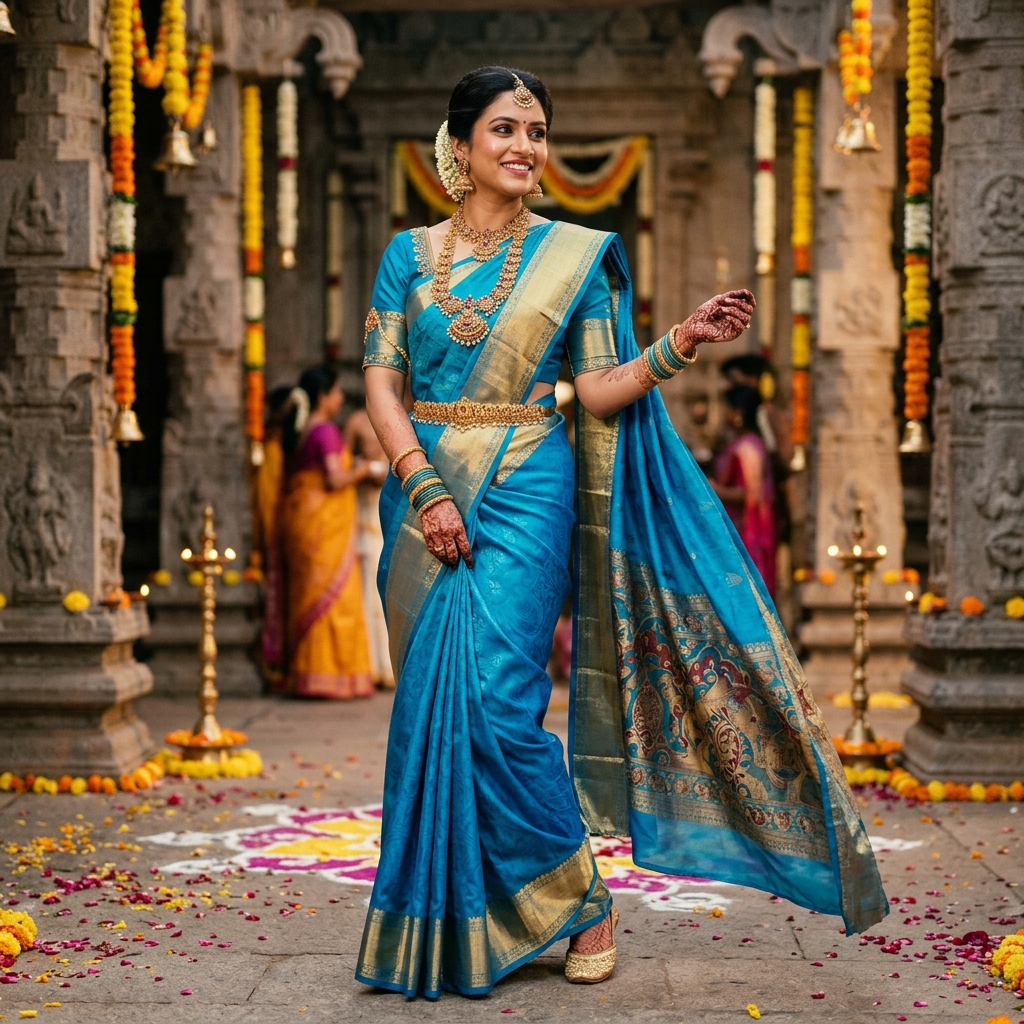
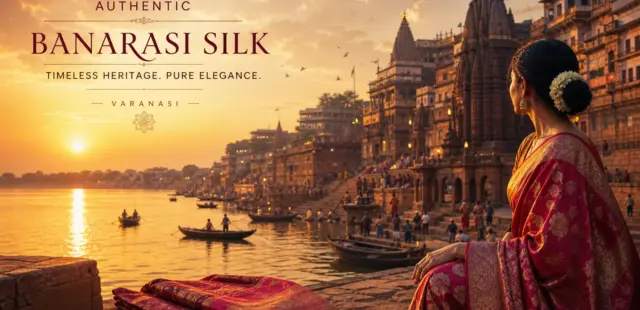
A beautiful pure Banarasi silk saree draped gracefully with the scenic Ghats of Varanasi in the background

Best Markets for Banarasi Saree Shopping in Varanasi

Varanasi has several famous shopping areas. Each has its own character, advantages, and risks. Here is an honest breakdown of the three main markets.

A vibrant traditional silk market in Varanasi, colorful Banarasi sarees displayed

1. Nati Imli — The Weaver's Neighbourhood

Nati Imli is not a market in the traditional sense. It is a residential area where weaving families have lived and worked for hundreds of years. If you want to see a saree being made on a handloom, this is where you come.

What it is known for: Direct-from-weaver sales. Raw, unpolished shopping experience.

  • Pros: Authentic weaving community, chance to see handlooms, good prices from smaller weavers.
  • Cons: Hard to navigate, language barrier, inconsistent quality, no formal receipts.

Tourist Experience: Interesting culturally, challenging for shopping without a local guide.
Price Expectations: ₹3,000 to ₹30,000.

2. Chowk — The Oldest Silk Market in Varanasi

Chowk is one of the oldest commercial areas in Varanasi. It is dense, busy, and filled with shops selling everything from spices to silk.

What it is known for: Large variety of sarees. Traditional bazaar experience.

  • Pros: Huge variety, established shops, good for comparing designs.
  • Cons: Crowded, mixed handloom/powerloom, tourist pricing (inflated by 40–60%), pressure selling.

Tourist Experience: Exciting but tiring. Requires patience.
Price Expectations: Varies widely. High tourist quotes.

3. Godowlia — The Commercial Hub

Godowlia is the busy central market of Varanasi. It connects to the main ghat road and sees a high volume of tourist foot traffic.

What it is known for: A mix of textile shops, souvenir stores, and silk emporiums.

  • Pros: Easy to reach, some fixed pricing, more English-speaking staff.
  • Cons: Tourist-heavy, machine-made sold as "handloom", hard to verify authenticity.

Tourist Experience: Convenient, but requires caution.
Price Expectations: Fair to overpriced.

📲 Not sure where to start? Connect with Silk Khazana on WhatsApp for honest guidance before you even reach the market. Chat with us!

Red Flags and Scams to Avoid

This section may save you thousands of rupees. Read it carefully. Varanasi is a beautiful city, but like any major tourist destination, it has people who take advantage of newcomers. Here are the most common tricks used in the silk market.

❌ Fake "Pure Silk" Claims

Any shopkeeper can say "100% pure silk." Real pure silk has a specific feel—smooth, cool, with a natural sheen and slight resistance when rubbed. The burn test is reliable: pure silk smells like burning hair and leaves crushable ash. If the shopkeeper refuses this test, that tells you everything.

❌ Powerloom Sold as Handloom

A handloom saree takes 15-30 days to weave; a powerloom takes hours. If a "handloom" saree is ₹2,000, it is fake. Genuine handloom sarees have neat backs, whereas powerloom sarees often have loose threads hanging on the back.

❌ Tourist Overpricing

Tourists are often quoted prices 50% to 200% higher than locals. Know the approximate price range before walking in (see guide below).

❌ No Bill, No Certification

A trustworthy shop provides a proper GST receipt with product details. Ask for Silk Mark certification. If a shop refuses to give a bill, leave.

❌ Pushy Sales Tactics

"This is the last one." "Only for you." A confident shop doesn't need pressure tactics. Take your time.

Banarasi Saree Price Guide

Here is an honest breakdown of what different types of Banarasi sarees should cost in 2026. These are realistic price ranges — not inflated tourist prices, not suspiciously cheap fakes.

Saree Type Description Realistic Price Range
Katan Silk The finest Banarasi silk. Dense, heavy weave. Best for bridal use. ₹8,000 – ₹80,000+
Organza (Kora) Lightweight, sheer silk. Great for summer weddings. ₹5,000 – ₹40,000
Georgette Flowy and versatile. Popular for parties and formal events. ₹4,000 – ₹35,000
Tissue Golden or silver shimmer fabric. Very unique appearance. ₹6,000 – ₹50,000
Meenakari Intricate multi-colour zari work. Extremely labour-intensive. ₹12,000 – ₹1,50,000+
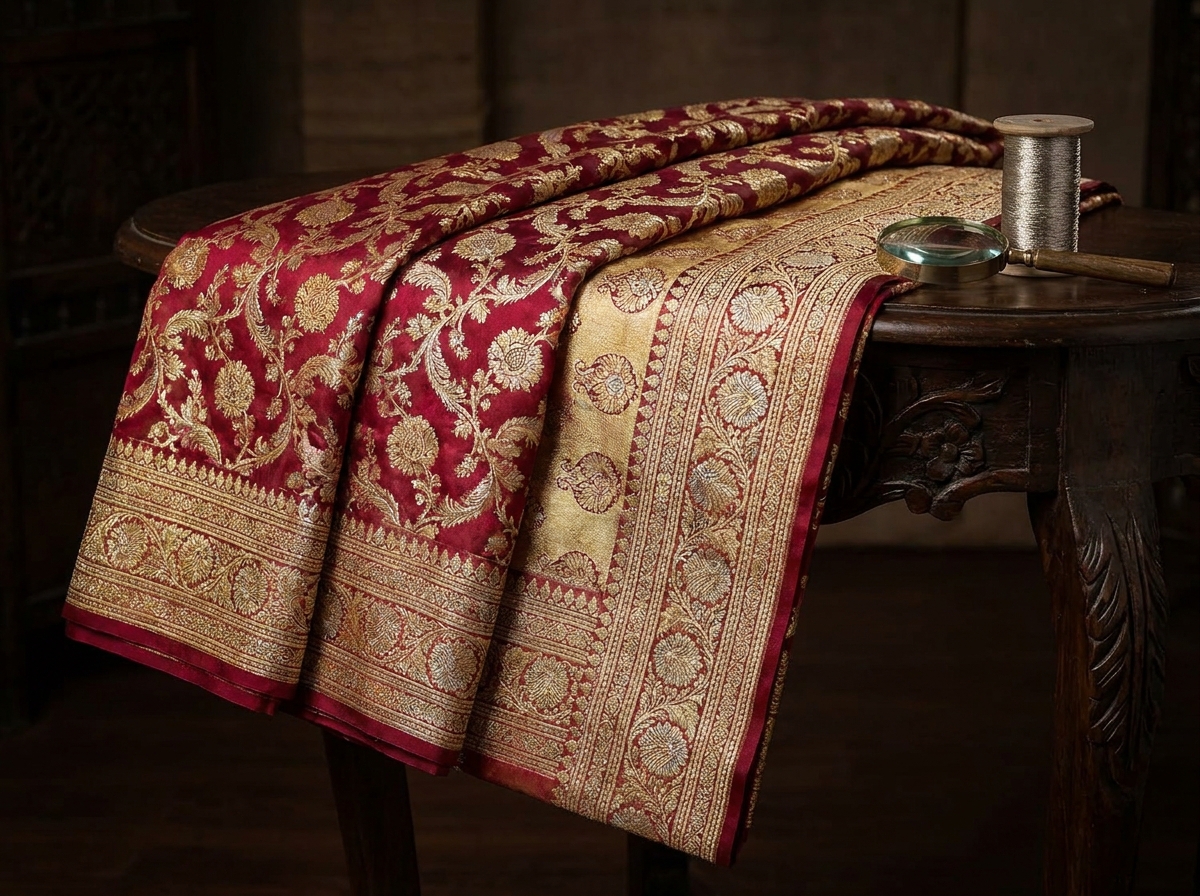
A luxurious deep red pure Katan silk Banarasi saree with heavy gold zari brocade work

What Affects the Price?

  • Zari quality: Real gold zari costs significantly more than imitation zari.
  • Weaving time: More intricate patterns take longer and cost more.
  • Silk grade: Higher-quality silk thread raises the base price.
  • Design complexity: Shikargah, Jangla, and Meenakari designs require the most skill.

How to Negotiate — and When NOT To

Bargaining is a normal part of shopping in most Indian markets. But knowing when to negotiate — and when to trust a fixed price — can make a big difference.

When Bargaining Is Acceptable:

  • In open-air markets and smaller bazaars
  • When a price seems significantly inflated
  • When no price tag is displayed

When Fixed Pricing Is Better:

  • When a shop clearly displays prices
  • When the shop offers Silk Mark certification and proper billing
  • When the quality is verifiably genuine

Fixed pricing protects you as a buyer. It means the same product is sold to everyone at the same price — the local, the tourist, the NRI customer in London. That is what fair commerce looks like.

Common Tourist Mistakes
  • Accepting the first price without question in an unverified shop
  • Bargaining a certified shop down to "street price" — you will lose quality, not save money
  • Being so focused on getting a deal that you overlook whether the saree is even real

Documents to Always Ask For

When you buy a Banarasi saree, especially at a significant price point, always ask for these official documents:

A buyer inspecting the authenticity of a handloom Banarasi saree

Silk Mark Certificate

Issued by the Silk Mark Organisation of India. Confirms the saree is made from natural silk. This is your strongest assurance of authenticity.

Proper GST Receipt

Any registered business in India must provide this. It protects you legally and confirms the transaction is legitimate.

Handloom Mark

(if applicable) Government-certified mark for handloom-woven products.

Store Contact Information

Especially for international buyers — you want to be able to contact the shop after your visit.

At Silk Khazana, we provide all of the above with every purchase. No exceptions.
👉 Learn more about our store and certifications

How to Pack and Carry Sarees

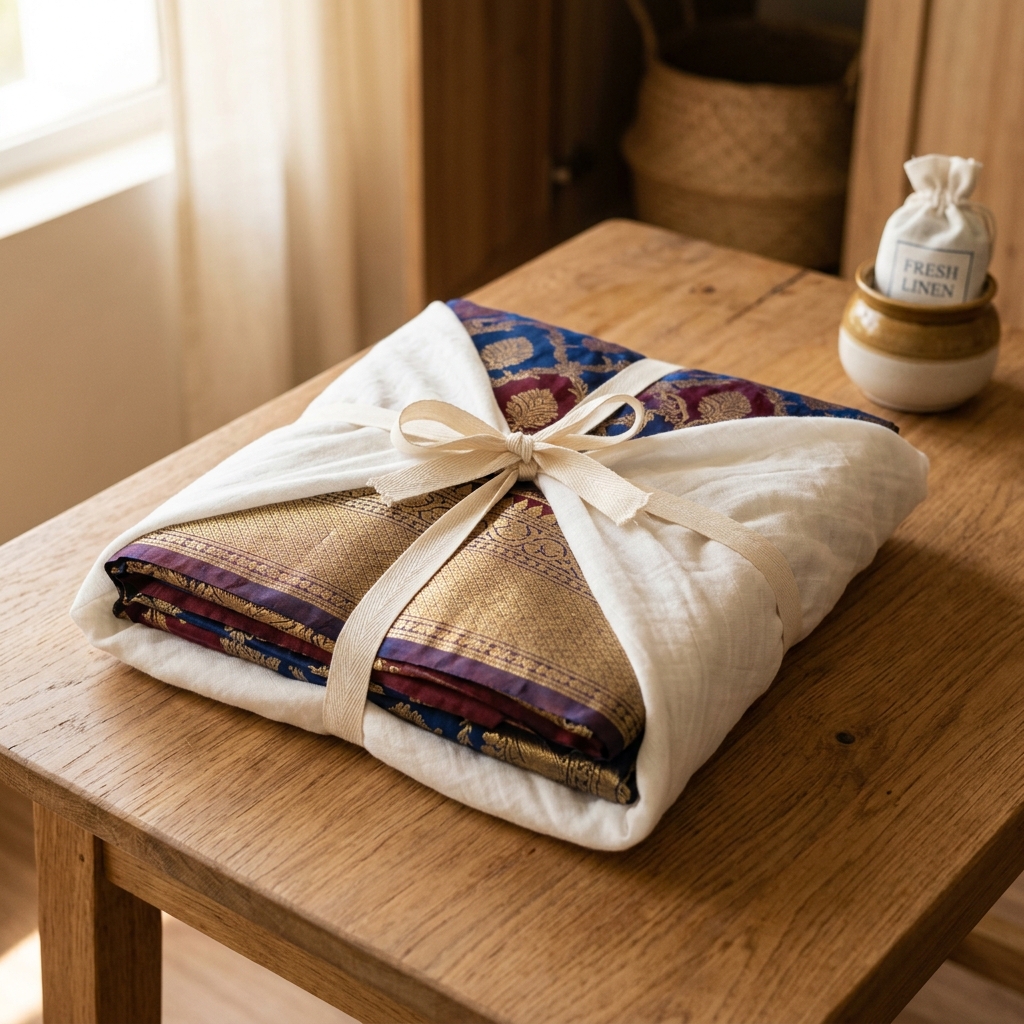
A beautifully folded Banarasi silk saree placed inside a premium wooden box with muslin cloth

You have found the perfect saree. Now, how do you get it home safely?

Folding and Storage Tips:

  • Always fold sarees loosely — never crease the zari work tightly, as it can crack over time
  • Wrap sarees in the muslin cloth they are sold in, or in a clean white cotton cloth
  • Avoid plastic bags for long-term storage — silk needs to breathe

For Domestic Travellers:

  • Carry sarees as cabin baggage if possible to avoid pressure damage in checked luggage
  • Heavier sarees like Katan silk should be rolled rather than folded for travel

For International Travellers:

  • Sarees are generally allowed in carry-on and checked baggage internationally
  • Declare them at customs if the total value of goods exceeds your country's duty-free threshold
  • Ask your shop to provide an official invoice — this helps at customs

International Shipping: Many reputable stores, including Silk Khazana, offer international shipping. This is often safer and more convenient than carrying sarees yourself.

Why Silk Khazana Is Different

This is the part of the guide where we tell you honestly who we are and why we believe you should visit us. Silk Khazana is not a middleman. We are a direct manufacturer of Banarasi sarees. Our weavers work within our own production network. When you buy from us, you are not paying commission to three layers of traders.

✅ Direct from Manufacturer

No middlemen. No commission agents. Our sarees come directly from the weavers to you. Better quality control and prices that are genuinely fair.

✅ Fixed Honest Pricing

We price every saree the same for every customer — whether you are a local, an NRI, or a first-time tourist. We do not change prices based on where you are from.

✅ Silk Mark Certified

Every eligible saree at Silk Khazana comes with Silk Mark certification. You can verify the authenticity of what you are buying.

✅ Trusted by Global Buyers

We have served customers from the US, UK, Canada, Australia, UAE, and more. Many international customers return for every major occasion.

✅ Personal Assistance

No pressure. No rush. Our English-speaking staff helps you understand each saree — its weave, its history, and its value.

✅ International Shipping

Cannot carry your purchase home? We ship internationally with full documentation and tracking.

🏪 Silk Khazana | Varanasi, Uttar Pradesh

Silk Khazana vs. Typical Market Shops

Feature Silk Khazana Typical Market Shop
Price Transparency ✅ Fixed, displayed prices ❌ Often negotiable / tourist pricing
Authenticity Guarantee ✅ Silk Mark certified ⚠️ Varies — often no certification
Tourist Pricing ✅ Same price for all ❌ Common practice
Proper Receipt / GST Bill ✅ Always provided ❌ Often avoided
International Shipping ✅ Available with tracking ❌ Rarely offered
English-speaking Support ✅ Available ⚠️ Limited
Direct from Manufacturer ✅ Yes ❌ Usually via middlemen
Return / After-Sale Support ✅ Available ❌ Rarely offered
Silk Khazana premium Banarasi saree store in Varanasi

Simple English Section: Key Tips for International Buyers

This section is written in very simple English for readers who are new to English or shopping in India.

🛍️ Buying Tips

  • Always ask: "Is this handloom or powerloom?" A good shop will answer clearly.
  • Always get a receipt with the shop's name and price.
  • Ask to see the Silk Mark certificate.
  • Do not buy from someone on the street or near the ghats. They almost never sell real sarees.
  • A real Banarasi saree is never very cheap. If the price seems too low, it is probably not real.

💰 Understanding Price

  • A basic Banarasi silk saree starts at around ₹5,000 for simple designs.
  • A wedding-quality or heavily embroidered saree can cost ₹25,000 or much more.
  • Price depends on: type of silk, how long it took to weave, and how complex the design is.
  • If a "Banarasi" saree costs ₹1,000 or ₹1,500, it is not a real Banarasi silk saree.

⚠️ Scam Warnings

  • Some shops charge tourists more money than local buyers. This is unfair. Choose shops with fixed prices.
  • Some shops say "handloom" but sell machine-made sarees. Always check the back of the saree for loose threads — this can show if it is machine-made.
  • Some people near tourist areas will offer to take you to their "family shop." These are usually not real family shops. They earn commission for bringing you there.

Frequently Asked Questions About Buying Banarasi Sarees

Yes, it is safe — as long as you know what to look for. The risks are not physical. The risk is overpaying or buying a fake. Use this guide, choose a shop with fixed pricing and certification, and always ask for a receipt.

A good-quality, authentic Banarasi silk saree starts at around ₹5,000 to ₹8,000 for simpler designs. Wedding-quality pieces — especially Katan silk with heavy zari work — can range from ₹25,000 to ₹1,50,000 or more. Be suspicious of anything labelled "pure Banarasi" at very low prices.

Ask for the burn test: pull out a thread and burn it carefully. Real silk burns like hair — it smells like burning hair and leaves a soft, crushable ash. Synthetic thread smells like plastic and leaves a hard bead. You can also ask the shop for the Silk Mark certificate, which is issued by the Indian government.

Each market has its character. Nati Imli is good for cultural experience but complex to navigate. Chowk has variety but can be overwhelming. Godowlia is convenient but tourist-heavy. For the safest, most transparent experience, visiting a certified, fixed-price manufacturer store like Silk Khazana is the best option for first-time buyers and international tourists.

Yes. Reputable shops like Silk Khazana offer international shipping with proper documentation, tracking, and commercial invoices for customs. This is a good option if you are worried about carrying sarees in your luggage or if you want to order after returning home.

Types of Banarasi Sarees: The Complete Guide (2025) | Silk Khazana

Silk Khazana Presents

Types of Banarasi Sarees: The Complete Guide Every Saree Lover Needs

Varanasi's Heritage Handloom Manufacturer

"There is a moment — and if you have ever held a Banarasi saree in your hands, you know exactly what it is — when the weight of the silk settles on your palm and something quiet happens inside you. It is not just fabric. It is three hundred years of a city's soul..."

Varanasi does not merely make sarees. Varanasi breathes them into existence.

But here is something that surprises most people: "Banarasi saree" is not a single thing. It is a family — a rich, layered, wildly varied family of fabrics, each with its own character, occasion, price point, and story. A bride shopping for her wedding lehenga-set has entirely different needs than the NRI woman looking for a lightweight saree she can carry in her cabin luggage to London. A Varanasi tourist stepping into a handloom showroom for the first time deserves to know exactly what she is looking at.

This guide exists for all of them.

At Silk Khazana, we have been weaving and selling pure handloom Banarasi sarees directly from our workshop in Varanasi for generations. We know these fabrics the way a gardener knows his soil — from underneath. Everything in this guide comes from that lived knowledge.

Let us walk you through every major type of Banarasi saree, what makes each one special, and how to find the one that is truly yours.

💬

Already know what you want? Connect with our team on WhatsApp for personalized recommendations and exclusive designs not listed online.

What Makes a Banarasi Saree Unlike Any Other Fabric in the World?

Before we discuss the different types, it helps to understand what all Banarasi sarees share — the qualities that separate a genuine piece from the thousands of imitations flooding the market.

Pure silk from mulberry silkworms

The finest Banarasi sarees use Katan — a tightly twisted silk yarn that gives the fabric its characteristic density and drape. The silk is not soft in the way cotton is soft. It has weight. Substance. A kind of architectural quality that holds shape even as it moves.

Zari work rooted in Mughal craftsmanship

When the Mughal emperors arrived in the Indian subcontinent, they brought Persian motifs — jamdanis, bootis, jaal patterns, and the famous kairi (mango) design. Varanasi's master weavers absorbed these influences and made them their own. What you see in a Banarasi saree today — the floral jhaalar borders, the interlocked vine patterns, the shimmer of real gold and silver zari — is the living legacy of that cultural exchange.

Handloom weaving that cannot be automated

The most authentic Banarasi sarees are woven on pit looms or frame looms by hand, a process that can take anywhere from fifteen days to six months for a single saree. The weaver controls every thread. There is no machine that can replicate the slight, living irregularities that mark a handloom textile — and those irregularities are not flaws. They are fingerprints.

At Silk Khazana, every saree in our collection is woven by master craftsmen in Varanasi's weaving clusters. When you buy from us, you are buying directly from the source — no middlemen, no markups, no compromises on material.

Pure zari work on original Banarasi saree by Silk Khazana

The Main Types of Banarasi Sarees — A Deep Dive

Katan silk Banarasi saree for wedding

1. Katan Silk Banarasi Saree

Katan is the undisputed crown jewel of Banarasi weaving. The word itself comes from the Persian katan, meaning pure, and that is precisely what this fabric is.

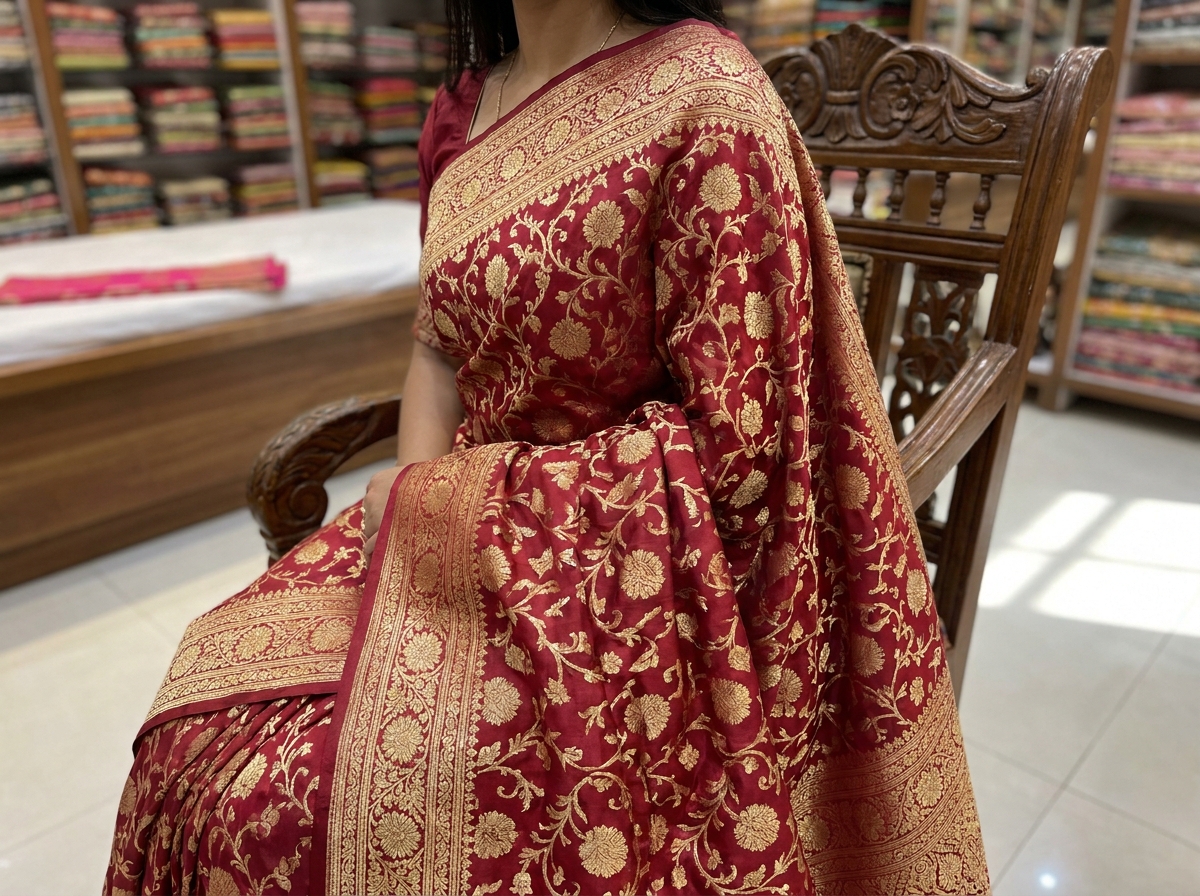
Katan silk is made by tightly twisting multiple fine silk threads together before weaving. The result is a fabric with a smooth, almost glossy surface that catches light in a way that is deeply satisfying — not garish, not loud, but quietly radiant. Run your fingers across a Katan saree and you will feel the difference immediately: a firmness, a cool weight, a slight resistance that tells you this is a fabric of substance.

  • Texture & Feel: Structured, heavy, smooth with a natural sheen. Does not crease easily once draped.
  • Best Occasion: Bridal wear, wedding receptions, milestone anniversaries, Diwali, formal family ceremonies.
  • Price Range: ₹12,000 – ₹1,50,000+ depending on zari type (real gold vs. metallic), design complexity, and weaving time.
  • Buyer Persona: The bride-to-be, the mother of the bride, the NRI woman returning for a family wedding who wants to wear something that announces itself without announcing itself.

Katan sarees are typically passed down as heirlooms. We have customers in the UK whose mothers bought their Katan Banarasi from us thirty years ago — the sarees still look pristine.

2. Organza (Kora) Banarasi Saree

If Katan is the grand matriarch, Organza — known locally as Kora — is the younger, lighter-footed relative who surprises you with her elegance.

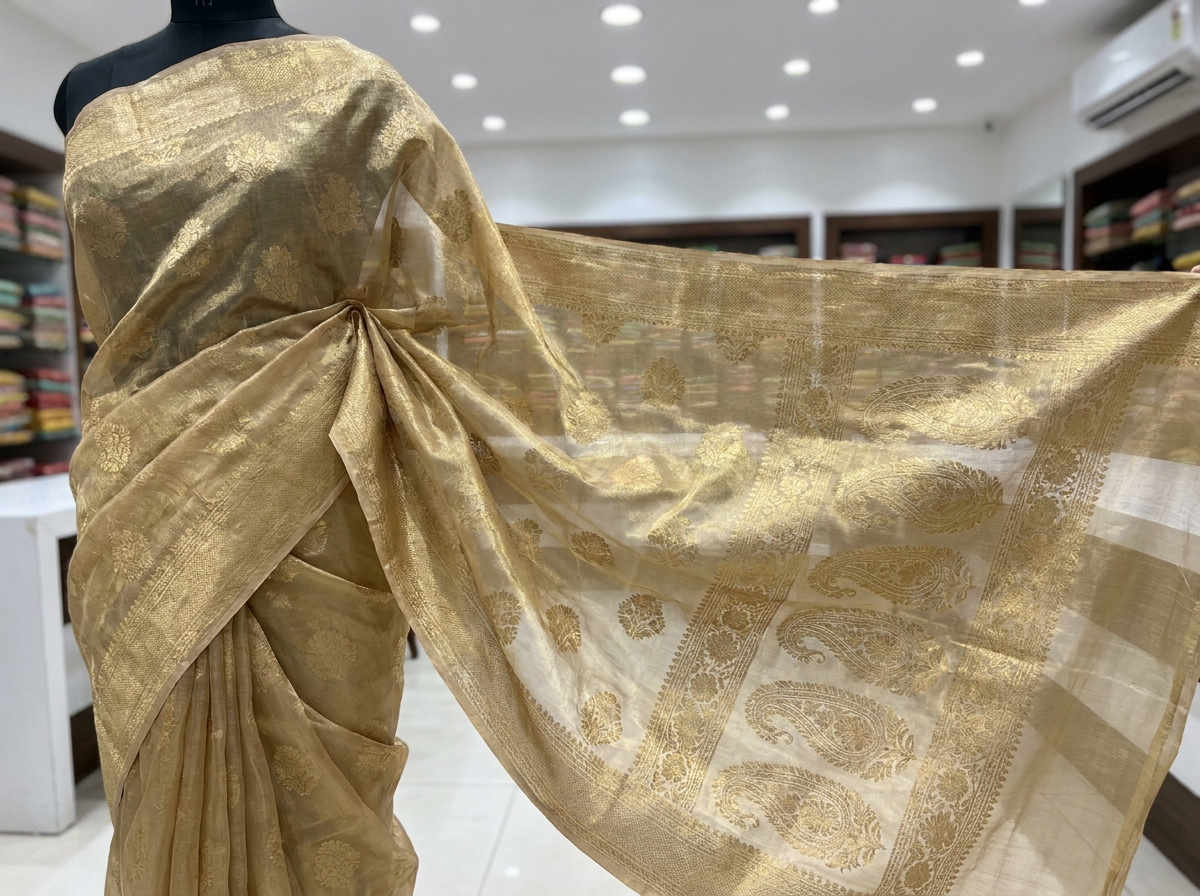
Kora is woven from raw, unprocessed silk. The threads are not degummed the way they are for Katan, which means the fabric retains a natural stiffness and a semi-transparent, almost papery quality. It is crisp without being rigid. Luminous without being heavy.

Draped, a Kora Organza Banarasi saree stands slightly away from the body, giving it a sculptural quality. The zari work on an Organza saree tends to be particularly striking — the near-transparent base makes the gold and silver patterns appear to float in mid-air.

  • Texture & Feel: Crisp, lightweight, semi-transparent, with a subtle crinkle texture.
  • Best Occasion: Summer weddings, outdoor ceremonies, receptions in warm climates, festivals like Navratri and Durga Puja. A brilliant option for NRI buyers who need something elegant but breathable.
  • Price Range: ₹8,000 – ₹60,000
  • Buyer Persona: The woman who wants to look dressed without feeling overdressed. The foreign tourist seeking a true Varanasi textile experience. The summer bride who refuses to compromise on elegance.
🛍️

Explore our Organza collection. Visit our Varanasi showroom or browse online — lightweight Banarasi sarees shipped worldwide.

Organza Kora Banarasi saree lightweight
Georgette Banarasi saree for party wear

3. Georgette Banarasi Saree

Georgette entered the Banarasi weaving vocabulary relatively recently — but the weavers of Varanasi adopted it with characteristic confidence, and the result is one of the most wearable, universally flattering types of Banarasi sarees available today.

Georgette is a crepe fabric with a slightly pebbled texture, made by alternating left- and right-twisted yarns. It drapes loosely, flows beautifully, and forgives most body types with equal grace. When Banarasi weavers began working butis, jhaalar borders, and full jaal patterns onto Georgette, something genuinely new was born — the structure of traditional Banarasi design on a fabric with the ease of modern wear.

  • Texture & Feel: Soft, flowing, matte finish. Lighter than Katan but more structured than plain chiffon. Has a subtle bounce.
  • Best Occasion: Evening parties, cocktail events, office wear for festive seasons, casual wedding guests, post-wedding functions like sangeet and mehendi.
  • Price Range: ₹6,000 – ₹45,000
  • Buyer Persona: Working women who love ethnic wear but need something practical. Party-goers who want glamour without stiffness. Young buyers experimenting with Banarasi for the first time.

A Georgette Banarasi is also one of the easiest types to carry while traveling — it folds flat and does not wrinkle badly, which makes it a favourite among NRI buyers.

4. Shattir Banarasi Saree

Very few fabrics in the world change colour as you move. Shattir does.

Shattir is a double-weave structure that uses two different coloured warp threads. From one angle, the saree appears to be one colour. Shift your position — or simply walk across a room — and the second colour blooms through. It is one of those things that cannot be fully appreciated in a photograph. You have to stand in front of a mirror with a Shattir saree draped over you and turn.

The iridescent effect is entirely structural, produced by the weave itself, not by dyes or finishes. This is what handloom craftsmanship looks like at its most quietly astonishing.

  • Texture & Feel: Smooth with a subtle sheen, slightly heavier than Georgette. The dual-colour weave gives it a dense, layered feel.
  • Best Occasion: Evening receptions, cocktail events, festive occasions where you want to make an impression through subtlety rather than loudness.
  • Price Range: ₹9,000 – ₹55,000
  • Buyer Persona: The connoisseur. The woman who has worn Banarasi sarees before and wants something most people at the party will not have seen. Collectors and premium buyers.
Shattir Banarasi saree two tone fabric
Tissue Banarasi saree gold shimmer

5. Tissue Banarasi Saree

Walk into a ray of sunlight wearing a Tissue Banarasi saree and the entire room will look at you. That is not an exaggeration.

Tissue is woven by interlacing fine metallic — typically gold or silver — zari threads throughout the body of the fabric. The entire saree shimmers, not just the border or the pallu. The base fabric is usually silk, but the presence of metal threads throughout the weave means the saree carries a remarkable iridescent glow under any kind of light.

These are celebratory sarees. Wedding night sarees. Sarees worn when something important is being marked.

  • Texture & Feel: Firm, slightly stiff, with a pronounced metallic shimmer over the entire surface. One of the heavier types.
  • Best Occasion: Bridal trousseaux, sangeet, traditional wedding ceremonies, Diwali celebrations, formal puja events.
  • Price Range: ₹15,000 – ₹2,00,000 (real zari pieces command premium pricing)
  • Buyer Persona: Brides, mothers of brides, women celebrating milestone occasions, buyers investing in heirloom pieces.

6. Meenakari Banarasi Saree

If you want to understand what it means when people call Varanasi a city of colour, look at a Meenakari Banarasi saree.

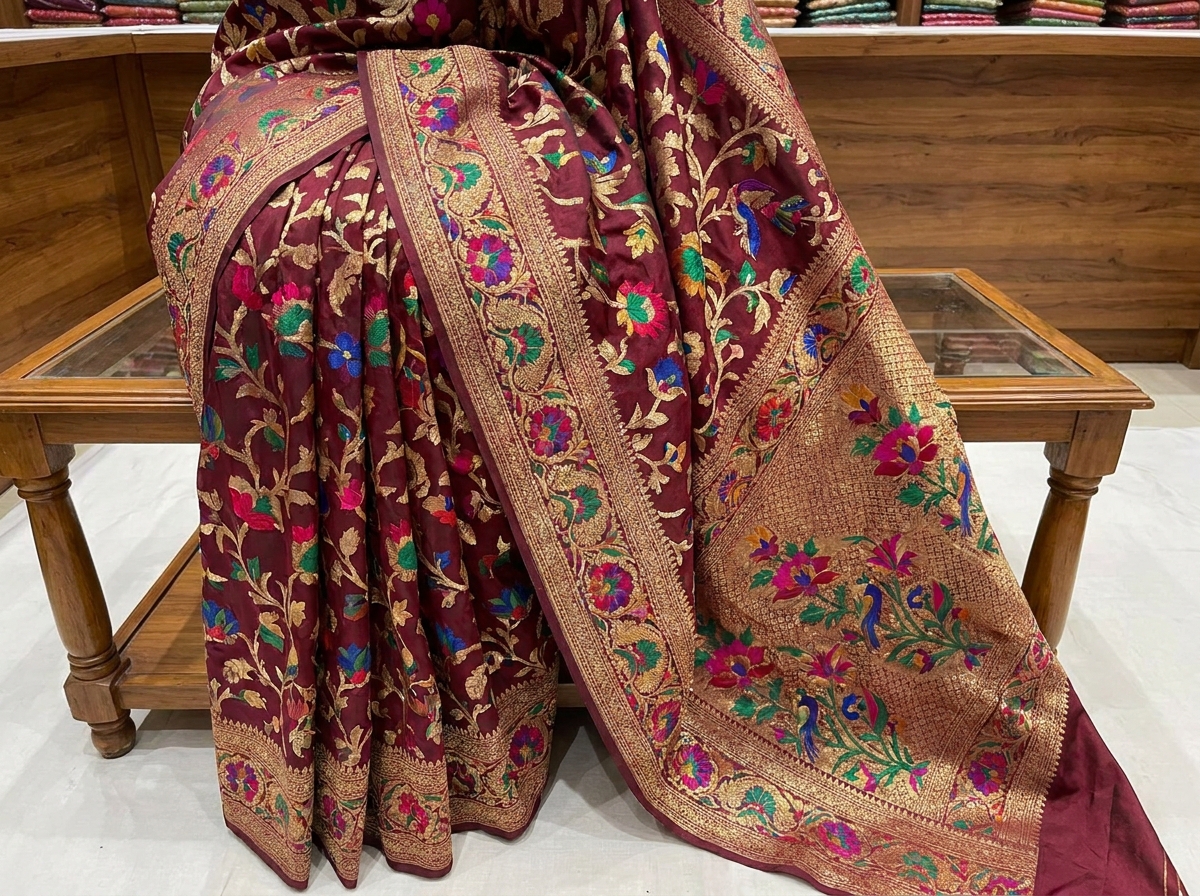
Meenakari is a weaving technique borrowed from the ancient art of enamelling jewellery — where multiple coloured threads are woven into the design to create motifs that are rich, multi-hued, and jewel-like. A single Meenakari buta (motif) might contain five or six different colours of silk thread, each one woven in by hand to create a pattern that looks like a painting. Flowers, peacocks, elephants — the motifs come alive in Meenakari work in a way that is genuinely extraordinary.

  • Texture & Feel: Usually woven on a Katan or Georgette base. The surface has textural depth — raised in places where the coloured threads sit — and a visual density that rewards close inspection.
  • Best Occasion: Weddings, festivals, special occasions where colour is celebrated. Brilliant for brides who want vibrant, non-traditional colours.
  • Price Range: ₹10,000 – ₹80,000+
  • Buyer Persona: Colour-lovers. Women who find all-gold Banarasis too monochromatic. Younger brides. Festival buyers.
Meenakari Banarasi saree colorful zari
Jangla Banarasi saree all-over weave design

7. Jangla Banarasi Saree

The word jangla means jungle — and when you see a Jangla Banarasi saree, you understand why.

Jangla is defined by an all-over design that covers the entire body of the saree with dense, continuous motifs — typically scrolling vines, flowers, leaves, birds, and animals woven in an unbroken pattern from the pallu to the hem. There is no plain ground visible. The design consumes everything.

This is one of the most labour-intensive types of Banarasi sarees. A complex Jangla saree can take a master weaver three to four months to complete. The patience and precision required is extraordinary — every element of the pattern must align across the entire length of a six-metre saree.

  • Texture & Feel: Dense, richly textured on the surface, with a heavier hand due to the all-over weave. Usually woven on Katan silk.
  • Best Occasion: Grand weddings, religious ceremonies, formal family gatherings. The Jangla is a statement saree — it is worn when you want to honour an occasion fully.
  • Price Range: ₹18,000 – ₹3,00,000+ (masterpiece pieces with real gold zari)
  • Buyer Persona: Brides with a taste for the elaborate. Collectors. Premium buyers who appreciate the depth of handloom craftsmanship.
📲

Want to see a Jangla saree in person? Connect with us on WhatsApp — our team can video call you through our latest arrivals.

How to Identify a Real Banarasi Saree (Before You Spend a Rupee)

The Banarasi saree market is flooded with machine-made imitations, power-loom copies, and synthetic "silk" sarees sold at prices that seem too good to be true — because they are. Here is how to protect yourself.

01

Look for the Silk Mark

The Silk Mark is a certification issued by the Silk Mark Organisation of India, guaranteeing the saree contains genuine silk. Legitimate sellers will have Silk Mark labelled sarees. Ask for it. If a seller cannot produce it, be cautious.

02

Feel the Weight and Temperature

Real silk is heavier than polyester of comparable length. More tellingly, silk is temperature-neutral — it feels cool in your hand when you first touch it, then adjusts to your body warmth. Synthetic fabrics feel uniformly room-temperature or slightly warm.

03

Examine the Zari

Genuine gold zari is made with a fine silver wire coated in real gold. It does not tarnish quickly and has a depth of colour that metallic thread cannot replicate. Ask if the zari is asli (real) or kalabattu (artificial). The price difference is significant.

04

Look for Handloom Irregularities

A handloom saree will have minute, almost imperceptible irregularities in the weave — slight variations in thread spacing, tiny inconsistencies in pattern alignment. These are not defects. They are the human hand at work. A perfectly machine-regular pattern is the first sign of power-loom production.

05

The Burn Test (for the bold)

Pull a single thread from the saree edge. Real silk burns slowly, smells like burning hair, and leaves an ash that crumbles to powder. Synthetic fibres melt, smell chemical, and leave a hard plastic bead.

06

Buy Directly from Weavers

The most reliable protection is the simplest: buy from a verified source. Silk Khazana sells exclusively from our own handloom workshop in Varanasi. We invite every customer to visit our production facility and watch their saree being made.

How to identify original Banarasi saree silk mark

Your Banarasi Saree Buying Guide

By Occasion

Occasion Recommended Type Why
Bridal wedding wear Katan Silk / Jangla / Tissue Maximum richness, heirloom quality
Wedding guest Georgette Banarasi / Kora Organza Elegant but manageable
Sangeet / Mehendi Georgette / Meenakari Playful colours, easy movement
Office festive wear Georgette / Shattir Professional, not overwhelming
Festival wear Meenakari / Kora Organza Colourful and seasonally right
Gift for NRI buyers Kora Organza / Georgette Lightweight, travel-friendly

By Budget

  • Under ₹10,000: Georgette Banarasi with metallic zari. Beautiful daily/festival wear.
  • ₹10,000 – ₹30,000: Kora Organza, Meenakari, Shattir. Entry-level luxury.
  • ₹30,000 – ₹80,000: Mid-range Katan Silk, Tissue sarees. Occasion wear and gifting.
  • ₹80,000 and above: Masterpiece Jangla, real-gold Katan Silk, heirloom Tissue sarees.

By Body Type

  • Petite frames: Kora Organza and Georgette drape lightly and avoid adding visual weight.
  • Fuller figures: Katan Silk and Georgette with vertical zari patterns elongate the silhouette.
  • Tall frames: Tissue and Jangla carry the drama of a fuller figure beautifully.

Why Silk Khazana?
(The Answer Is Simpler Than You Think)

We are not a brand that was built in a boardroom. We are a family of weavers and merchants who have been rooted in Varanasi for generations — in the same neighbourhoods, on the same streets where Banarasi silk has been woven for centuries.

When you buy from Silk Khazana, here is what that actually means:

  • No middlemen. Our sarees go directly from our looms to you. The savings get passed on; the quality does not get compromised.
  • 100% pure handloom silk. We do not stock power-loom sarees. Every piece in our collection is hand-woven by our artisans.
  • Full transparency. Visit our workshop. Watch your saree being made. Ask questions about the zari, the weave count, the dyeing process. We welcome it.
  • Worldwide shipping. Our sarees reach brides in New Jersey, London, Toronto, and Sydney. We handle everything — including careful dry-packing for international travel.
  • Personalised curation. Not every customer knows exactly what she wants. Our team will spend time understanding your occasion, your budget, your body type, and your aesthetic — and find you the right saree, not just the most expensive one.

We are in the heart of Varanasi. If you are visiting the city — and you should — come see us. Walk the lanes of our workshop. Hold the sarees in your hands.

That moment when the silk settles on your palm? We would like to be there for it.

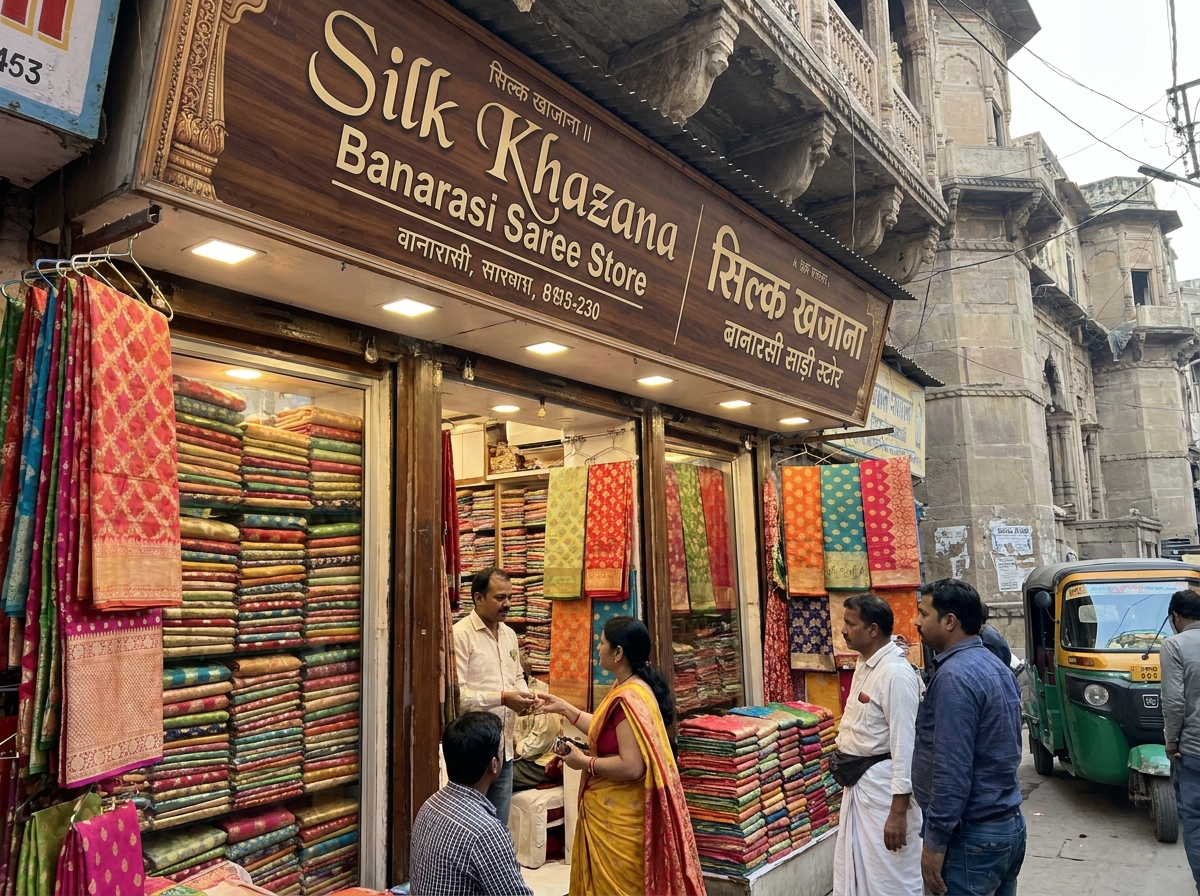
Silk Khazana Banarasi saree store Varanasi

Visit our Varanasi Store: Get Directions  |  WhatsApp Us: +91 6307305873  |  Explore the Full Collection: Shop Online

Frequently Asked Questions

For the bride herself, Katan Silk and Jangla Banarasi sarees are the gold standard — richly woven, deeply traditional, and designed to be heirlooms. For wedding guests and family members, Organza (Kora) and Georgette Banarasi sarees offer elegance with greater ease of wear. If maximum visual impact is the priority, a Tissue Banarasi with gold zari is unmatched.

Look for the Silk Mark certification on the label. Additionally, pure silk will feel cool to the touch initially, will drape with a natural weight, and a single thread burned carefully will smell like hair and leave powdery ash — not melt into a plastic bead the way synthetics do. Buying from verified manufacturers like Silk Khazana, who source directly from their own looms, eliminates the guesswork entirely.

Authentic handloom Banarasi sarees are expensive because of the extraordinary human labour involved. A mid-range Katan Silk saree takes 15–30 days to weave by hand. A complex Jangla or Tissue saree can take 3–6 months. Every motif is woven thread by thread, by a craftsman who has spent years learning his loom. Add in the cost of pure silk yarn and genuine gold zari, and the price reflects not markup but reality. What you are paying for is irreplaceable human skill.

Organza (Kora) Banarasi sarees are the lightest of the traditional types, followed closely by Georgette Banarasi sarees. Both are excellent choices for summer weddings, warm climates, or NRI buyers who need sarees that travel well. Kora Organza in particular has a distinctive crisp lightness that makes it feel almost like wearing structured air.

Banarasi sarees require careful, consistent care:

  • Dry clean only — never machine wash.
  • Wrap in muslin cloth (not plastic) — silk needs to breathe.
  • Store flat or gently folded — avoid hanging.
  • Air occasionally — air it for a few hours in indirect light every few months.
  • Store with silica gel packets — to prevent moisture damage.
  • Avoid perfume contact — direct spray can cause permanent discolouration.

The Thread That Holds Everything Together

"Jo tana bana hai, woh sirf kapda nahin hai"

— What has been woven is not merely cloth.

A Banarasi saree carries the memory of the city that made it. The smell of the Ganga at dawn. The sound of looms in narrow lanes. The patience of a craftsman who learned his art from his father, who learned from his father before him.

When you choose a Banarasi saree — whether you are a bride preparing for the most significant day of your life, an NRI woman maintaining a thread of connection to where she came from, or a visitor to Varanasi who wants to take home something that is truly real — you are not just buying fabric.

You are becoming part of a story that has been told, in silk and gold, for three hundred years.

At Silk Khazana, we are honoured to be your guide to that story.

Ready to find your saree?

Explore our latest handloom arrivals, visit our physical store in Varanasi, or let our experts help you style your perfect Banarasi look over WhatsApp.

Pure Banarasi Rangkat Katan Silk Saree – A Comprehensive Guide | Silk Khazana

Silk Khazana Presents

Pure Banarasi Rangkat Katan Silk Saree

The Rarest Thread in Indian Weaving

Introduction

There are sarees. And then there are sarees that only a handful of weavers in the entire world can make.

The Pure Banarasi Rangkat Katan Silk Saree belongs firmly to the second category.

In the by-lanes of Varanasi — where the oldest weaving traditions in India still breathe — the Rangkat technique is whispered about with reverence. It is a dying art, preserved today by only a small circle of master weavers who have spent decades mastering the precise choreography of colour that gives a Rangkat saree its breathtaking, seamless colour transitions. When that technique meets Katan silk — the purest, most prestigious silk used in Banarasi weaving — the result is not merely a saree. It is a masterpiece.

Whether you are an NRI searching for a bridal heirloom that carries the full weight of Indian craftsmanship, or a saree lover who has heard the word "Rangkat" and wants to truly understand what it means, this guide is for you. At Silk Khazana, we have been custodians of Varanasi's most authentic silk traditions, and this is our definitive guide to one of the most extraordinary sarees that Banaras produces.

Let us start at the foundation: the silk itself.

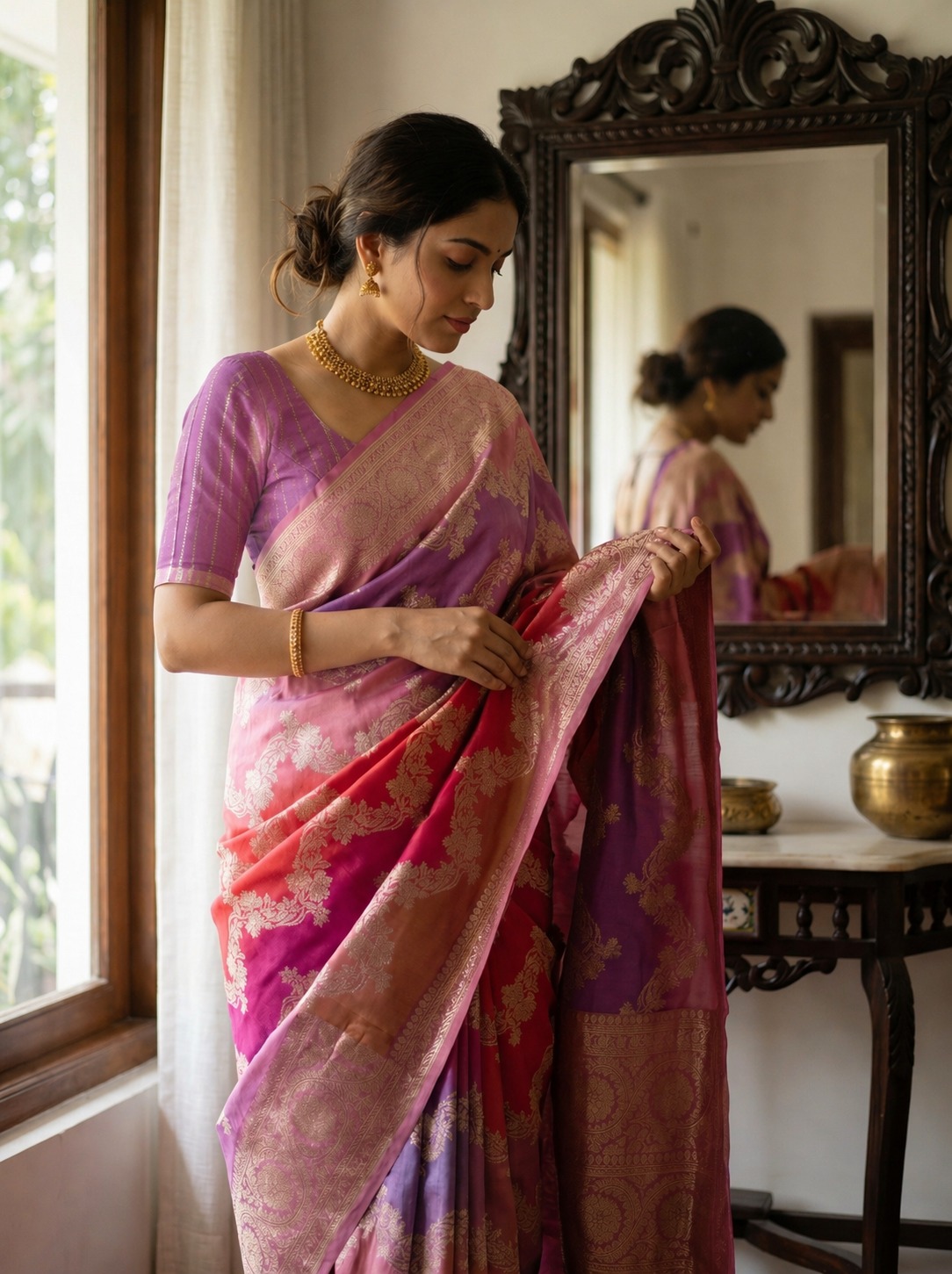
An authentic Pure Banarasi Rangkat Katan Silk Saree from Silk Khazana

What Is Katan Silk? Varanasi's Gold Standard of Weaving

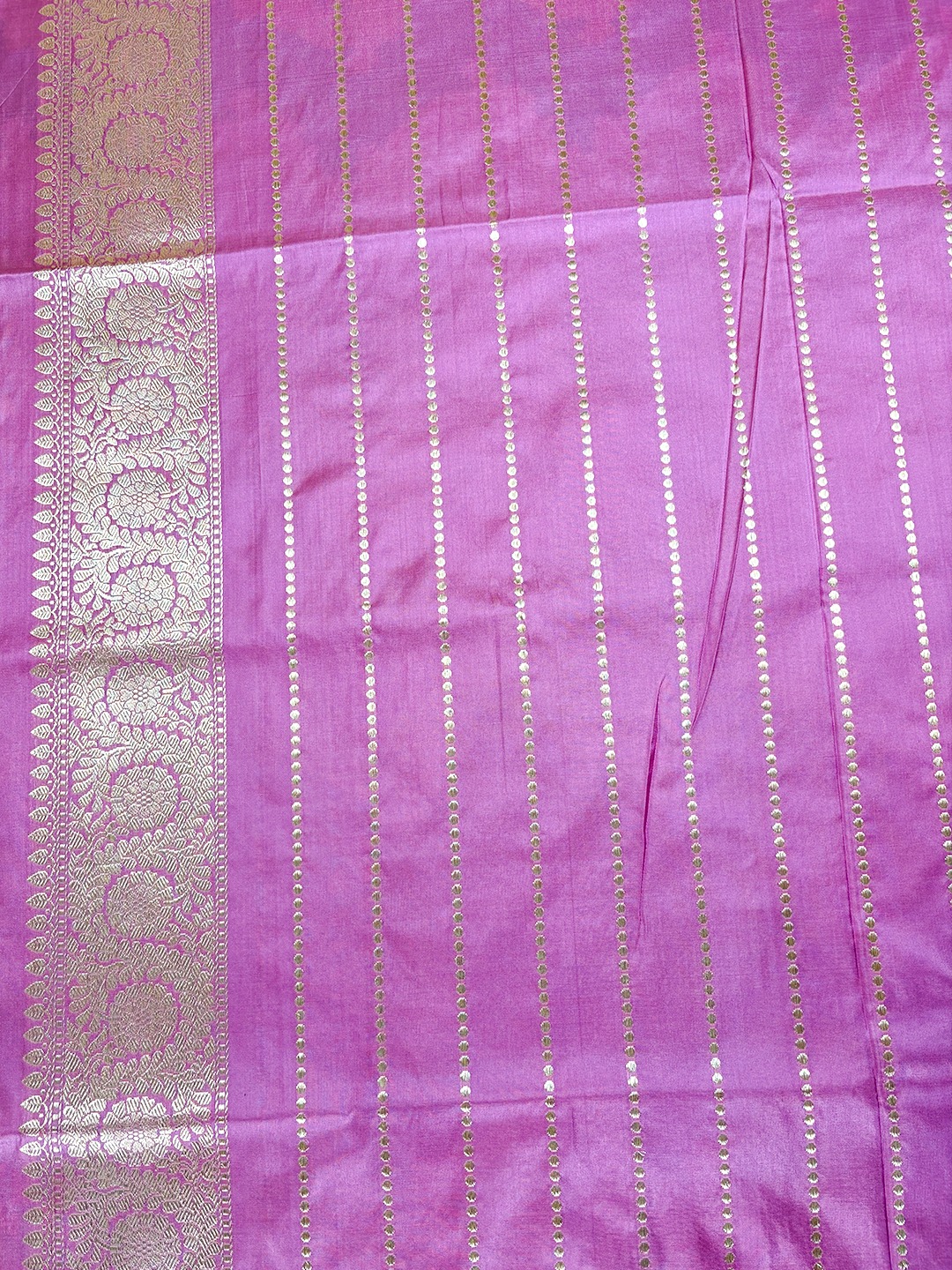
Close up of a pure Katan silk texture showing fine detailing

Before you can appreciate a Rangkat Katan saree, you must understand why Katan silk occupies the highest rung in the hierarchy of Banarasi textiles.

The Making of Katan

"Katan" refers to the manner in which the silk thread is prepared. Multiple pure mulberry silk filaments are tightly twisted together — a process called "throwing" — to create a yarn of exceptional tensile strength and uniform lustre. The result is a thread that is simultaneously strong enough to withstand the tension of Varanasi's traditional pit-loom weaving, and fine enough to produce the crisp, smooth surface that Banarasi brocade demands.

A Pure Banarasi Katan Silk Saree uses this premium twisted silk in both the warp (lengthwise threads) and the weft (crosswise threads) — which is what makes it "pure" Katan. In lesser Banarasi silks, the warp may use a different base thread. In pure Katan, there is no compromise anywhere in the structure.

🏛️ A History Woven in Royal Courts

The history of Katan silk in Varanasi is inextricably linked with the Mughal Empire. Historians trace the sophistication of Banarasi Katan weaving to the 14th and 15th centuries, when Persian weavers, patronised by Mughal courts, brought their mastery of fine silk and gold brocade to Varanasi. The women of the Mughal royal household were known to favour Katan silk for its cool, smooth drape and its ability to hold the weight of intricate zari embellishment without distorting.

By the 17th century, Varanasi had become the undisputed capital of Katan silk weaving in India — a position it holds to this day.

What Makes Katan Silk Feel Different

If you have ever held a Pure Katan Banarasi Silk Saree, you will know that it has a quality unlike any other fabric: it is heavy yet fluid, structured yet yielding. It makes a distinctive soft rustle — a sound that connoisseurs call "the music of silk" — when it moves. Its surface has a cool, smooth lustre that deepens rather than diminishes in the light.

These are not qualities that can be replicated by any synthetic fabric, however sophisticated. Katan silk's unique character comes entirely from the purity of the mulberry silk fibre and the precision of the weaving.

What Is the Rangkat Technique? Banaras's Most Secretive Weave

If Katan silk is the canvas, Rangkat is the art that elevates it into something that has no comparison in the textile world.

The Meaning of Rangkat

"Rangkat" is derived from two Hindi words: rang (colour) and kat (to cut or divide). True to its name, the Rangkat technique involves sharply dividing and transitioning colours across the body of the saree — not through dyeing, but through weaving. The colour changes are built directly into the structure of the fabric at the loom level.

This is fundamentally different from tie-dye, block-print, or screen-print techniques where colour is applied to an already-woven fabric. In a Rangkat saree, colour is the weave itself.

Rangkat saree showcasing complex woven colour transitions

🧵 How a Rangkat Saree Is Actually Woven

The Rangkat technique requires the weaver to make multiple, carefully calculated changes in both the warp (vertical threads) and the weft (horizontal threads) as the saree progresses on the loom. The weaver essentially orchestrates a transition — sometimes gradual, sometimes dramatically sharp — between two or more base colours across defined sections of the saree.

This is extraordinarily difficult for several reasons:

  • First, the loom must be set up in a particular way that allows different sections of the warp to carry different coloured threads simultaneously — a complex, time-consuming arrangement that requires expert calculation before a single thread is woven.
  • Second, the transitions must be managed with absolute precision. A miscalculation by even a few threads is visible in the finished fabric and cannot be corrected without unravelling the weave.
  • Third, when additional elements like real zari (gold and silver thread), Meenakari (coloured thread work), or Kadwa butiwork are incorporated into a Rangkat Katan saree, the weaver must simultaneously manage the colour transitions AND the additional pattern threads — a feat of multitasking that only years of experience can enable.

🙌 Why So Few Weavers Practice Rangkat

The Rangkat technique demands a level of mental concentration, physical dexterity, and accumulated knowledge that very few weavers ever fully master. It is genuinely on the verge of disappearing. In the entire weaving community of Varanasi — which numbers in the hundreds of thousands — only a small group of master weavers can execute a true Rangkat with the precision the technique demands.

A single Pure Banarasi Rangkat Katan Silk Saree can take anywhere from two weeks to over a month to complete, depending on the complexity of the colour transitions and the density of the motif work layered over them.

This is the reason that an authentic Rangkat Katan silk saree is not merely expensive — it is irreplaceable.

The Rangkat Katan Silk Sarees in Silk Khazana's Collection

At Silk Khazana, our Rangkat collection is curated directly from the master weavers of Varanasi who have dedicated their lives to keeping this technique alive. Here is a guide to the varieties you will find.

Rangkat Pure Katan Silk with Real Zari

Rangkat Pure Katan Silk with Real Zari

The most classic expression of the Rangkat tradition. The Katan silk base carries the signature colour transitions of the Rangkat technique, while real zari — gold or silver thread — creates the motifs: the paisleys (keri), lotus flowers, and geometric lattices (jaal) that Banarasi brocade is celebrated for.

The combination of the dynamic, colour-shifting base with the timeless richness of real zari creates a saree that is theatrical in impact yet deeply rooted in tradition. These are the sarees most prized for bridal trousseaux and wedding reception draping.

Rangkat Katan Silk with Meenakari

Rangkat Katan Silk with Meenakari

Meenakari is the art of adding coloured silk threads alongside the zari in the motif work — drawing from the tradition of enamel-work jewellery in creating multi-coloured, jewel-like patterns within the weave. In a Rangkat Meenakari Katan saree, this jewel-toned inlay work plays against the colour transitions of the Rangkat base.

Think of it as a saree that manages to be both bold in its large-scale colour drama and intricate in its close-up detail — two qualities that are rarely found together in a single piece of fabric.

Kadwa Rangkat Katan Silk

Kadwa Rangkat Katan Silk

The Kadwa weave is one of the most technically demanding in Banarasi weaving: each individual motif is woven independently, with the supplementary thread cut away at the back between motifs rather than being carried across the fabric. This creates a saree with a clean reverse side and motifs of exceptional definition and precision.

When the Kadwa technique is combined with the Rangkat colour transitions on a Katan silk base, the result is a saree of staggering complexity and artisanal achievement — a piece in which every square centimetre represents minutes of a master weaver's focused labour.

How to Identify an Authentic Rangkat Katan Silk Saree

In a market where imitation is rampant, knowing how to authenticate a Rangkat Katan silk saree before you buy is essential — particularly when shopping online or from unfamiliar vendors.

1. Examine the Colour Transitions Closely

In an authentic Rangkat saree, the colour transitions are woven into the fabric structure — not printed, dyed, or applied after weaving. Hold the saree up to the light and look at the transition zones from both the front and the reverse. In a genuine Rangkat, the colour shift will be visible in the weave itself. A printed imitation will show the colour only on the surface.

2. Check the Reverse Side of the Fabric

Turn the saree over and examine the back. In a handloom Katan silk saree, the reverse side should show the underside of the zari and thread work as "floating threads" between the motifs — this is the natural consequence of the loom-based weaving process. A machine-made saree will either have the same appearance front and back or very neatly clipped floats.

3. The Silk Burn Test

Remove a thread or two from an inconspicuous hem area and apply a careful flame. Pure mulberry silk burns slowly with a smell like burning hair and leaves a fine, crushable ash. Synthetic threads melt and leave a hard plastic bead.

4. The Weight Test

A Pure Katan Silk Saree has a distinctive weight to it — substantial but not stiff. Synthetic imitations tend to feel either too light and flimsy, or too stiff and heavy. The weight of genuine Katan silk comes from the density of the tightly-twisted mulberry silk threads.

5. The Silk Mark and GI Tag

Always ask for the Silk Mark certification — the Silk Mark Organisation of India's guarantee that the fabric is 100% pure silk. For a Banarasi saree, also look for the GI (Geographical Indication) tag that certifies the saree was handwoven in Varanasi according to traditional methods.

💡

Silk Khazana's Promise: Every Pure Banarasi Rangkat Katan Silk Saree in our collection comes with authentication documentation. We source directly from master weavers and offer full transparency about the weave, the technique, and the materials used.

How to Style a Pure Banarasi Rangkat Katan Silk Saree

The defining characteristic of a Rangkat saree — its dramatic, seamless colour transitions — makes it one of the most versatile and visually striking sarees you can wear. Here is how to style it for maximum impact across different occasions.

A stunning bridal drape of the Rangkat Katan Silk Saree
  • Bridal and Wedding Reception: A Rangkat Katan saree with real zari is an ideal choice for brides who want something that is both deeply traditional and visually extraordinary. Because the saree itself carries so much colour drama, keep the blouse in a solid, contrasting colour, and choose Polki, Kundan, or Jadau jewellery. For the draping, the Nivi style best showcases the Rangkat colour transitions.
  • Wedding Guest and Sangeet: A Rangkat Meenakari Katan saree offers the perfect balance of festivity and refinement for a wedding guest. Pair it with a blouse that picks up one of the Meenakari thread colours and choose gold jewellery in a medium weight. Statement earrings and a single statement cuff are all you need.
  • Festive Occasions: For festivals, a Rangkat Katan saree in vibrant, auspicious colours — red-and-gold transitions, saffron-and-ivory, or peacock blue-and-emerald — makes a statement that requires minimal accessorising. Keep the blouse clean and the jewellery simple.
  • Formal Evenings: For sophisticated, non-bridal occasions, a lighter Rangkat Katan saree with subtle colour transitions and minimal zari work creates an effect of quiet elegance. Pair with a silk or cotton blouse in a complementary neutral and small pearl or diamond earrings.
  • For NRIs - Travelling with Your Saree: Katan silk is surprisingly travel-friendly. Roll the saree loosely around a cylinder of acid-free tissue to prevent permanent crease lines. Store flat in your luggage, with the zari side protected by a thin cotton cloth.

Caring for Your Pure Banarasi Rangkat Katan Silk Saree

A Pure Banarasi Rangkat Katan Silk Saree is an heirloom investment. Caring for it correctly ensures that it remains as magnificent decades from now as the day you bring it home.

Cleaning

Always dry clean a Rangkat Katan saree. The real zari work is particularly sensitive to water and agitation. For routine freshening between wears, air the saree in the shade for a few hours.

Ironing

Iron on the lowest silk setting with a thin muslin cloth placed between the iron and the saree. Never apply the iron directly to the zari work, and do not use steam on the zari sections.

Storage

Wrap the saree in a soft muslin or cotton cloth — never plastic. Store flat or loosely rolled, not in a tight fold. Re-fold along different lines every three to six months to prevent permanent crease formation.

Zari Protection

The gold and silver zari can tarnish over time. Store a few silica gel packets near (not touching) the saree. Keep away from perfume, hairspray, and other aerosols which can permanently stain.

Petticoat Pairing

Always pair a Katan silk saree with a smooth satin or silk petticoat in a matching colour to avoid friction against the saree's delicate inner surface.

Why NRIs and International Visitors Choose Silk Khazana for Rangkat Katan Sarees

Buying an authentic Rangkat Katan silk saree from abroad is an act of trust. The risks are real: imitation fabrics sold as pure silk, machine-made sarees sold as handloom, and inflated prices justified by spurious claims of rarity.

Silk Khazana removes every one of these risks:

  • Direct Weaver Relationships: We source our Rangkat Katan sarees directly from the master weavers who create them, in Varanasi. There are no middlemen. You receive the saree the weaver made.
  • Full Authentication: Every saree carries the Silk Mark certification and, where applicable, the Banarasi GI tag. We offer full transparency about provenance.
  • Expert Guidance: Our team brings decades of expertise in Banarasi silk weaving to guide your purchase seamlessly.
  • Secure International Shipping: Each saree is packed to professional archival standards and safely shipped worldwide, including to the US, UK, Canada, Australia, UAE, and Singapore.
  • Transparent Pricing: We price our sarees honestly, with clear explanations of what you are paying for, avoiding false urgency.

Frequently Asked Questions About Banarasi Rangkat Katan Silk Sarees

What exactly is the Rangkat technique in a Banarasi saree?

Rangkat is a traditional Banarasi handloom technique in which colour changes are built directly into the warp and weft of the fabric as it is woven on the loom. This creates seamless, sharp transitions between two or more base colours in the body of the saree — a distinctive visual effect that cannot be replicated by dyeing or printing.

What is the difference between Katan silk and other Banarasi silks like Georgette or Organza?

Katan silk uses pure twisted mulberry silk in both warp and weft, producing a dense, smooth, and highly lustrous fabric. Banarasi Georgette is made with a different twist structure that creates a lighter, crinkled texture. Organza uses a plain weave with finer threads for a sheer, stiff effect. Katan is considered the gold standard — the heaviest, richest, and most durable of the Banarasi silk bases.

Why is a Rangkat Katan silk saree more expensive than other Banarasi sarees?

Three factors combine to make Rangkat Katan sarees among the most expensive Banarasi weaves: the premium cost of pure Katan silk, the extreme complexity and time requirement of the Rangkat technique (2–4 weeks per saree minimum), and the scarcity of weavers who can execute true Rangkat. In combination, these factors place authentic Rangkat Katan sarees in the highest tier of Banarasi textile pricing.

Is a Rangkat Katan saree appropriate for a bride?

Absolutely. A Pure Banarasi Rangkat Katan Silk Saree — particularly one with real zari and Meenakari — is one of the most prestigious choices for an Indian bride. Its dramatic colour transitions, real gold zari, and supreme craftsmanship make it an heirloom piece that stands apart from more common bridal saree choices.

Can I buy an authentic Rangkat Katan silk saree online?

Yes, provided you purchase from a trusted, certified seller with direct weaver relationships. Look for Silk Mark certification, ask for provenance information, and avoid listings that cannot provide authentication documentation. Silk Khazana ships authentic Rangkat Katan sarees internationally with full certification.

How many colours can a Rangkat saree have?

Traditional Rangkat sarees typically feature two to three distinct colour transitions across the body of the saree, creating a gradient or zonal colour effect. More complex Rangkat pieces may incorporate four or more colour sections, but these are rarer and even more time-intensive to produce.

How do I know if a Rangkat saree is genuine or printed?

Examine the colour transition zone under good light on both the front and reverse side of the fabric. In a genuine Rangkat saree, the colour change is structural — visible in the threads of the weave itself, consistent front and back. In a printed imitation, the colour change is surface-only, and the reverse side will look different from the front.

Conclusion: Own the Rarest Thread in Indian Weaving

The Pure Banarasi Rangkat Katan Silk Saree is not a commodity. It cannot be mass-produced. It cannot be replicated by a machine. It cannot be rushed. It exists only because a small, dedicated community of master weavers in Varanasi have chosen to spend their lives preserving a technique that the modern world very nearly allowed to disappear.

When you drape a Rangkat Katan saree, you are wearing the result of weeks of a master's labour, centuries of accumulated technique, and an unbroken thread of craftsmanship that runs from the Mughal court weaving halls to the narrow by-lanes of today's Varanasi.

At Silk Khazana, we consider it our responsibility — and our privilege — to connect you with this living heritage. Whether you are a bride searching for a saree that no one else will have, an NRI who wants to bring home something truly authentic, or a collector of India's finest textiles, our Rangkat Katan collection has been assembled with one principle: no compromises.

Explore Silk Khazana's Pure Banarasi Rangkat Katan Silk Saree collection — and wear the rarest weave from Varanasi.

Authored by the Silk Khazana editorial team — drawing on direct relationships with Varanasi's master weavers and over a decade of expertise in authentic Banarasi textile traditions.

Pure Moonga Silk Sarees – A Comprehensive Guide | Silk Khazana

Silk Khazana Presents

Pure Moonga Silk Sarees

India's Golden Fibre

Introduction

What if a saree could outlast its wearer — and grow more beautiful with every passing year?

That is not a poetic exaggeration. It is the lived reality of owning a Pure Moonga Silk Saree.

Among the rarest and most coveted silks in the world, Moonga silk (also written as Muga silk) carries a story that stretches across centuries of Indian royalty, master weavers, and the sun-drenched river valleys of Assam. Today, when artisans at Silk Khazana in Varanasi weave Moonga silk into a saree, they are continuing a tradition that is — quite literally — ancient.

Whether you are an NRI searching for an heirloom-quality saree to wear at a wedding back home, or a traveller who has fallen in love with India's textile heritage, this guide will tell you everything you need to know about Pure Moonga Silk Sarees: what they are, why they are special, how to identify the real thing, and how to style and care for them.

Let us begin with the silk itself.

Elegant folded Banarasi Moonga Silk Saree from Silk Khazana showcasing its exquisite motifs

What Is Moonga Silk? The Origin Story of India's Golden Fibre

Close up of a pure Moonga silk saree showing intricate floral patterns

The Silkworm Behind the Gold

Moonga silk — also called Muga silk — is produced by a semi-wild silkworm known as Antheraea assamensis, found exclusively in the lush forests of Assam, northeastern India. The name "Muga" derives from the Assamese word for "yellowish," a direct nod to the silk's signature natural golden hue that no dye can replicate.

What makes this silk truly extraordinary is that Antheraea assamensis exists nowhere else on earth. The silkworm feeds on the aromatic leaves of the Som (Machilus bombycina) and Soalu (Litsaea polyantha) trees, and it is this unique diet in Assam's biodiverse forests that gives Moonga silk its distinctive lustre and strength.

A single Pure Moonga Silk Saree requires approximately 1,000 grams of raw silk, which means roughly 8,000 cocoons are needed to weave just one drape. That number alone tells you why Moonga silk has always been considered precious.

A History Written in Royal Threads

The history of Moonga silk is as rich as the fabric itself. Ancient Indian texts including the Arthashastra, attributed to the philosopher Kautilya in the 4th–3rd century BCE, reference fine silks from Assam — making this one of the oldest documented textile traditions in the subcontinent.

It was during the reign of the Ahom Dynasty (1228–1826 CE) that Moonga silk weaving truly flourished. The Ahom kings offered royal patronage to weavers, elevating Muga silk from a local fabric to a symbol of sovereignty and prestige. For centuries, Moonga silk garments were reserved exclusively for royalty — ordinary citizens were simply not permitted to wear them.

Today, the GI (Geographical Indication) tag protecting Assam's Muga silk ensures that authentic Moonga silk can only be produced in Assam, safeguarding both the weavers' livelihoods and the fabric's integrity.

5 Reasons Pure Moonga Silk Sarees Are Truly One-of-a-Kind

When women who own Moonga silk sarees say they cherish them above all others, there is substance behind the sentiment. Here is what makes a Pure Moonga Silk Saree genuinely exceptional.

1

The Lustre That Grows Richer With Age

Most fabrics fade. Moonga silk does the opposite. Its natural golden sheen deepens and brightens over years of wearing and washing, making an heirloom Moonga saree more resplendent than a new one. This is a phenomenon unique to Muga silk among all the world's natural fibres.

2

Extraordinary Durability

Moonga silk is widely regarded as the most durable of all silks. It is said — and weavers in Assam will tell you with pride — that a well-cared-for Muga saree outlasts the person who owns it. The tensile strength of Muga silk fibre is significantly higher than that of mulberry silk (the silk used in most commercially available sarees).

3

A Natural, Chemical-Free Sheen

That warm, golden gleam you see in a Pure Moonga Silk Saree is entirely natural — the result of a unique protein structure in the silk filament, not any dye or chemical treatment. This makes Moonga silk a preferred choice for those who value natural, sustainable fashion.

4

Lightweight and Breathable

Despite its richness, Moonga silk is surprisingly breathable and comfortable to wear. The fabric drapes elegantly without clinging, making it suitable for warm Indian climates — a quality especially appreciated by NRIs returning from cooler countries to attend Indian weddings and festivals.

5

It Becomes a Family Heirloom

Because of its exceptional longevity and the fact that its beauty only grows with time, a Pure Moonga Silk Saree is not merely a purchase — it is an investment in a piece of living heritage that can be passed from mother to daughter across generations.

Moonga Silk Sarees at Silk Khazana: Where Assam's Golden Fibre Meets Varanasi's Artistry

Silk Khazana has been a trusted name among discerning saree lovers for its uncompromising commitment to authentic, handwoven silk sarees. Based in Varanasi — the global capital of silk weaving — Silk Khazana brings together the finest Moonga silk with the city's legendary Banarasi craftsmanship to create sarees that are genuinely extraordinary.

Banarasi Moonga Silk Sarees

When Assam's Moonga silk is woven on Varanasi's traditional handlooms with zari (gold and silver thread) motifs, the result is a Banarasi Moonga Silk Saree — a synthesis of two of India's greatest textile traditions. These sarees feature the intricate floral and paisley brocade patterns that Banarasi weaving is celebrated for, rendered in the warm golden canvas of Moonga silk.

These are the sarees that make a statement at weddings, receptions, and high-profile cultural events.

Moonga Tussar Silk Sarees

A popular variation blends Moonga silk with Tussar silk, creating a fabric with a slightly textured, earthy finish while retaining the natural golden undertone. Moonga Tussar sarees are prized for their versatility — equally at home at a festive family gathering or a formal evening event.

Handloom Moonga Silk Sarees

For those who value the purity of the weaving process, Silk Khazana's handloom Moonga silk sarees are woven entirely on pit looms by master weavers without the use of any power machinery. Each saree carries the distinct irregularities that only hand-weaving can produce — proof of genuine artisanship.

Detailed border texture of Banarasi Moonga Silk with intricate zari work

How to Identify a Pure Moonga Silk Saree: 5 Tests You Can Do at Home

With the rise of imitation fabrics, knowing how to authenticate your purchase is essential — especially when buying online or abroad. Here are five reliable ways to identify genuine Moonga silk.

1. The Burn Test

Carefully burn a few threads from an inconspicuous edge. Genuine silk burns slowly, smells like burning hair, and leaves a fine, crushable ash. Synthetic fibres melt, smell like burning plastic, and leave hard beads.

2. The Ring Test

Pure silk, being a fine natural fibre, can be pulled through a ring without snagging or bunching. Most synthetic imitations will not pass through as smoothly.

3. The Touch Test

Run your fingers across the fabric. Authentic Moonga silk feels smooth yet subtly textured, with a warmth that synthetic fibres lack. It should feel cool initially but quickly warm to your touch.

4. The Lustre Check

Hold the saree under natural light and tilt it at different angles. Authentic Moonga silk has a multi-directional sheen — it glows from within rather than reflecting like a mirror. Synthetic imitations often have a flat, uniform shine.

5. The Weave Inspection

Look closely at the weave. A handloom Moonga silk saree will have slight, natural variations in the yarn — these are not flaws but the signature of handcrafted authenticity. Machine-made imitations have a perfectly uniform, almost mechanical regularity.

💡

Pro Tip: Always ask for the Silk Mark certification when purchasing a Moonga silk saree. Issued by the Silk Mark Organisation of India, this certification guarantees the fabric is 100% pure silk.

How to Style a Pure Moonga Silk Saree: Occasion-by-Occasion Guide

A Pure Moonga Silk Saree is remarkably versatile. Its natural warmth suits a wide range of skin tones, and its texture holds embroidery and embellishment beautifully. Here is how to style it for different occasions.

  • Indian Weddings and Receptions: Pair a Banarasi Moonga Silk Saree with a heavy contrast blouse in deep jewel tones — burgundy, bottle green, or navy — and accessorise with temple jewellery or polki sets. The golden tones of Moonga silk complement both gold and silver jewellery exceptionally well.
  • Festive Occasions (Diwali, Durga Puja, Eid): Opt for a Moonga silk saree with a zari border and keep the blouse and jewellery relatively understated. The natural gold of the fabric provides all the richness the occasion demands without over-dressing.
  • Corporate and Formal Events: A lightweight Moonga Tussar silk saree in muted earthy tones draped in a Nivi style, paired with a simple blouse and minimal jewellery, makes an authoritative and elegant statement in professional settings.
  • Haldi, Mehendi and Pre-Wedding Functions: The warm yellow-gold base of Moonga silk makes it a natural choice for Haldi ceremonies, where yellow is auspicious. Look for Moonga sarees with floral or geometric borders for a traditional aesthetic.
  • For NRIs: Styling Moonga Silk Abroad: Moonga silk's lightweight, breathable nature makes it practical for international travel. For saree-wearing events abroad, a pre-stitched or pre-draped Moonga silk saree paired with statement earrings creates an effortlessly elegant Indian look without the hassle of complex draping.

A Closer Look: The Banarasi Moonga Silk Saree

Saree pleats detailed look Close up weave of Moonga silk Banarasi Moonga handloom details Saree drape showing the intricate motifs Floral Zari border of the saree Banarasi moonga silk saree pallu Wedding silk saree in full display

Pure Moonga Silk Saree Care Guide: Protecting Your Investment

Given that a Pure Moonga Silk Saree is both a financial and emotional investment, caring for it correctly is essential.

Washing

Always dry clean your Moonga silk saree. If hand-washing is necessary, use cold water with a mild, pH-neutral detergent. Never machine wash.

Drying

Do not wring or twist the fabric. Lay it flat on a clean towel or hang in the shade. Direct sunlight will fade natural silk fibres over time.

Ironing

Iron on a low silk setting with a thin cotton cloth between the iron and the saree. Never iron directly on the fabric.

Storage

Store your Moonga silk saree in a muslin or cotton cloth (not plastic) to allow the fibre to breathe. Keep neem leaves or cedar balls nearby. Refold regularly to prevent creases.

Zari Care

Gold and silver zari work is delicate. Avoid rubbing the zari against rough surfaces. When storing, keep the zari side facing inward.

Why NRIs and International Travellers Choose Silk Khazana

For NRIs and tourists, buying an authentic Indian saree can be a daunting experience. The market is crowded with imitations, and without local knowledge, it is easy to overpay for substandard fabric.

Silk Khazana addresses these concerns directly:

  • Direct-from-Varanasi sourcing: Every saree is sourced directly from master weavers, eliminating middlemen and ensuring authenticity.
  • Silk Mark certified: Silk Khazana's Pure Moonga Silk Sarees carry the Silk Mark, so you know exactly what you are buying.
  • Expert guidance: The team brings decades of expertise to help choose the right saree.
  • Safe international shipping: Sarees are carefully packed to preserve fabric making it practical to buy anywhere in the world.
  • Transparent pricing: With no auction-style pressure, what you see is what you pay.

For NRIs attending Indian weddings, celebrating cultural festivals abroad, or simply wanting to reconnect with India's textile heritage, Silk Khazana offers a trusted, authoritative point of purchase.

Frequently Asked Questions

What is the difference between Moonga silk and Muga silk?

They are the same silk. "Muga" is the Assamese name, while "Moonga" is the Banarasi/Hindi variation of the same word. Both refer to the silk produced by Antheraea assamensis silkworms in Assam.

Why is Moonga silk so expensive?

Moonga silk is expensive because it is genuinely rare. The silkworms are found only in Assam, production is entirely manual, a single saree requires ~8,000 cocoons, and the weaving process can take up to two months.

How long does a Pure Moonga Silk Saree last?

A well-maintained Moonga silk saree can last for decades — even generations. Unlike most fabrics, Moonga silk's lustre actually increases with age, making it genuinely improve over time.

Can I buy an authentic Moonga silk saree online?

Yes, provided you purchase from a reputable, certified seller. Look for the Silk Mark certification and buy from established brands like Silk Khazana, which guarantee authenticity.

Is Moonga silk saree suitable for daily wear?

Moonga silk is durable enough for regular wear but is most commonly worn for special occasions, weddings, and festivals given its value and craftsmanship.

What skin tones suit Moonga silk sarees?

The warm golden tones of Moonga silk are universally flattering and complement all Indian skin tones particularly well, from the fairest to the deepest complexions.

Are Moonga silk sarees good for gifting?

Absolutely. A Pure Moonga Silk Saree is considered one of the most meaningful gifts in Indian culture — an ideal combination of heritage, craftsmanship, and lasting value for milestone celebrations.

Conclusion: Own a Piece of Living Heritage

A Pure Moonga Silk Saree is not merely a garment. It is a living testament to thousands of years of Indian craftsmanship — from the ancient forests of Assam where the silkworms feed on aromatic leaves, to the master weavers of Varanasi who transform golden filaments into breathtaking art.

It gets richer with every wear. It endures for generations. And it carries within its weave a story that no synthetic fabric can ever tell.

At Silk Khazana, we believe that owning a Pure Moonga Silk Saree should be an experience as beautiful as the saree itself — transparent, guided, and rooted in genuine expertise. Whether you are celebrating a wedding, preserving a cultural connection from abroad, or simply investing in something truly exceptional, we are here to help you find your perfect Moonga silk drape.

Explore Silk Khazana's Pure Moonga Silk Saree collection today — and carry a golden legacy forward.

Written by the Silk Khazana editorial team, drawing on over a decade of expertise in India's handloom textile traditions.

How to Identify Pure Banarasi Silk Saree – 10 Expert Tips | Silk Khazana

Silk Khazana Presents

How to Identify a Pure Banarasi Silk Saree

The Complete Expert Guide to Authenticity

Why Authentic Banarasi Silk Matters

A pure Banarasi silk saree is more than just fabric—it's a piece of India's cultural heritage, woven with centuries of tradition in the ancient city of Varanasi (Banaras). These sarees represent unparalleled craftsmanship, where skilled artisans spend weeks creating intricate patterns with pure silk and real zari.

But here's the problem: the market is flooded with fake Banarasi sarees. Synthetic imitations, powerloom copies, and artificial zari replicas are sold as "authentic" at premium prices. Buyers lose thousands of rupees and miss out on the real beauty and durability of genuine Banarasi silk.

This guide will teach you exactly how to spot the real deal—using methods trusted by textile experts, saree connoisseurs, and seasoned buyers. Whether you're purchasing for a wedding, festival, or investment, you'll know how to avoid scams and choose wisely.

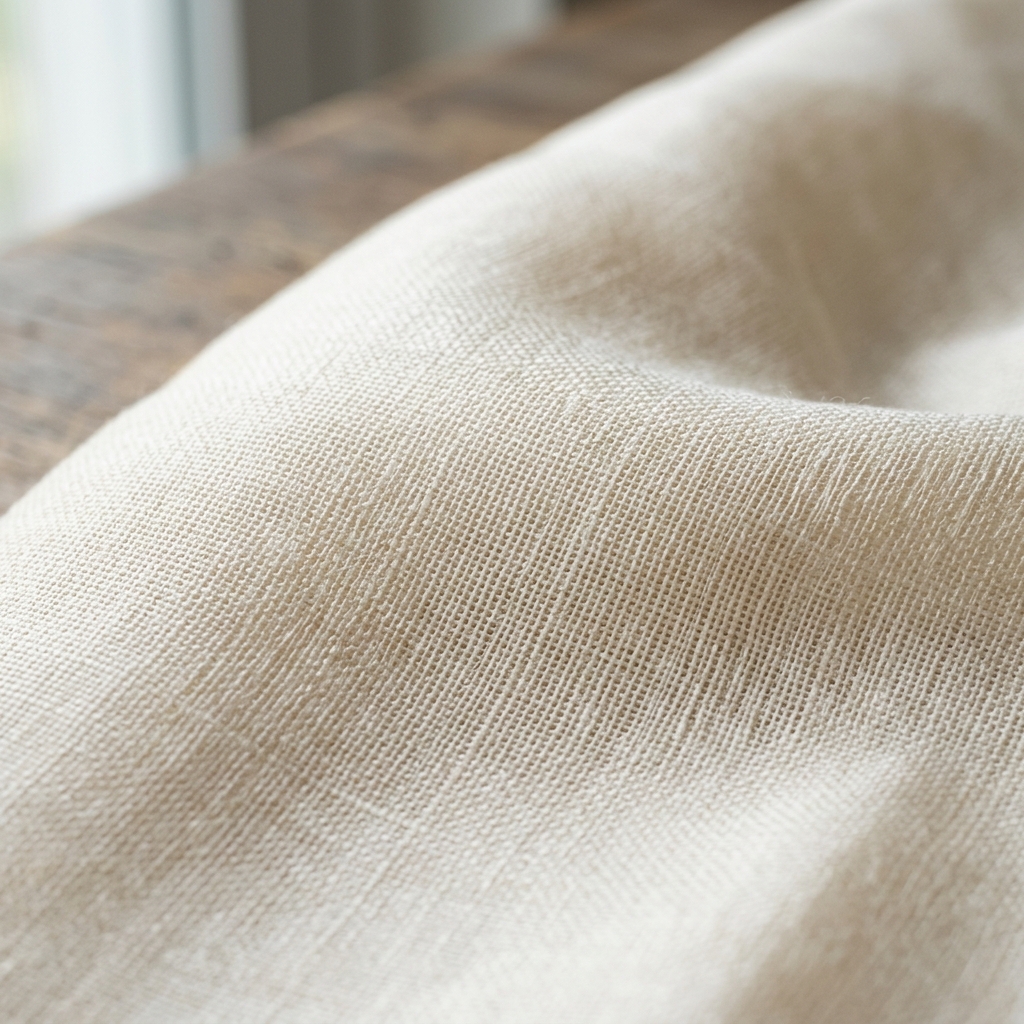
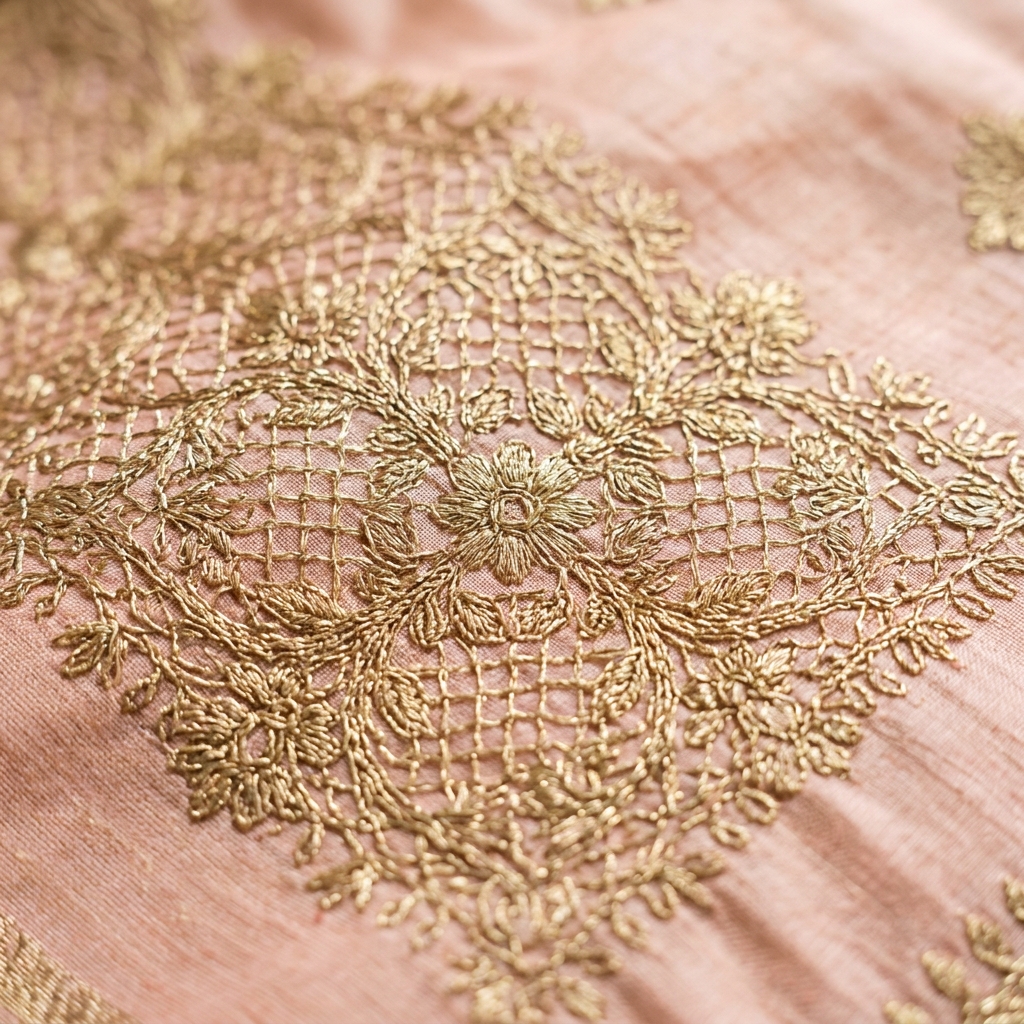
Close-up of pure Banarasi silk saree fabric showing intricate gold zari brocade weave and natural silk lustre

What Is a Pure Banarasi Silk Saree?

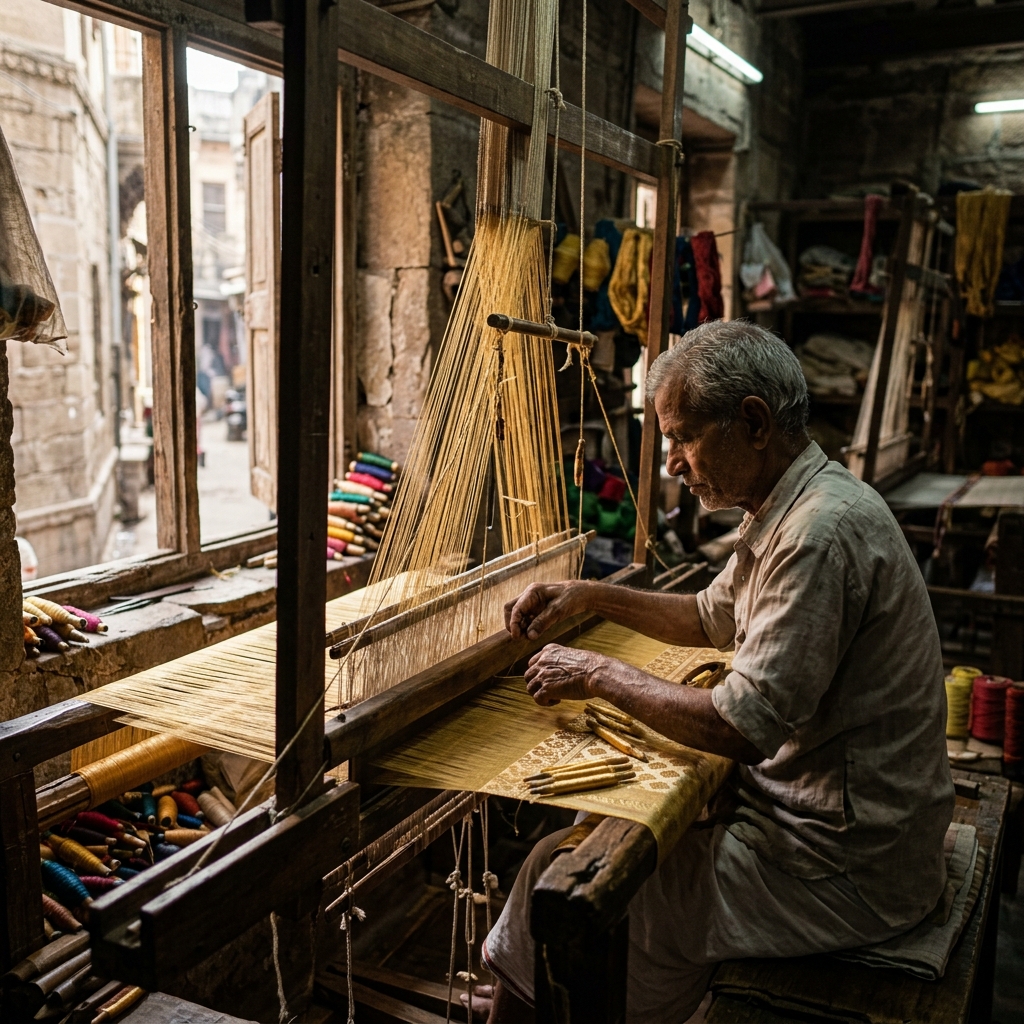
Varanasi artisan weaving pure Banarasi silk saree on traditional pit loom with gold zari threads

Origin and Heritage

Pure Banarasi silk sarees originate from Varanasi (Banaras), Uttar Pradesh—India's silk weaving capital for over 400 years. These sarees earned their fame during the Mughal era when Persian motifs merged with Indian weaving techniques to create something truly timeless.

What Makes It "Pure"?

A genuine Banarasi silk saree contains:

  • 100% pure mulberry silk (not synthetic, art silk, or blends)
  • Real zari made from silver or gold threads (not metallic-coated plastic)
  • Handloom weaving done by skilled artisans (not powerloom machines)
  • Traditional motifs like kalga, bel, jhallar, and Mughal patterns

Types of Authentic Banarasi Silk

  • Pure Silk (Katan): Dense, smooth, and heavy
  • Organza (Kora): Sheer and lightweight with stiff texture
  • Georgette: Soft, flowy, easier to drape
  • Shattir: Plain silk with zari work only on borders

"A genuine Banarasi silk saree is not just woven on a loom — it is woven in the imagination of an artisan who sees heritage, craftsmanship, and cultural legacy all at once."

10 Proven Ways to Identify Pure Banarasi Silk Saree

01

Check for Silk Mark Certification

The Silk Mark is a certification issued by the Silk Mark Organisation of India (SMOI)—a government-backed body that guarantees 100% pure silk.

How to verify:

  • Look for a holographic label with a unique serial number
  • Visit the official Silk Mark website and verify the code
  • Certified sarees come with a certificate of authenticity
🔴

Red Flag: If a seller refuses to provide Silk Mark certification, that's an immediate red flag. This is the most reliable proof of purity.

02

Perform the Burn Test (With Caution)

Pull out a single thread from the saree's edge (ask the seller first). Burn it carefully with a lighter.

Burn test comparison: pure silk burns slowly leaving fine ash, synthetic fabric melts into hard plastic beads

Pure silk results: Burns slowly with a smell like burning hair or feathers. Leaves fine, black ash that crumbles easily. Flame extinguishes quickly when removed from heat.

Fake silk (polyester/synthetic) results: Burns fast with a chemical or plastic smell. Melts into hard, sticky beads. Flame continues burning.

⚠️

Safety Note: Only perform this test in a safe environment. Never burn large sections of the saree.

03

Feel the Texture and Weight

Pure Banarasi silk has a very distinctive feel:

  • Smooth and cool to touch
  • Slightly rough on the reverse side (natural fiber texture)
  • Heavyweight — a genuine saree typically weighs 400–800 grams
  • Soft yet structured — does not cling or feel slippery like polyester
💡

Pro Tip: Run your hand across the fabric. Pure silk creates subtle friction; synthetic fabric slides effortlessly with no resistance.

Authentic zari (real gold/silver thread) versus imitation zari (synthetic metallic yarn) comparison on Banarasi saree
04

Inspect the Weaving Pattern

One of the clearest give-aways between genuine handloom and powerloom is in the weave itself:

Feature Handloom (Authentic) Powerloom (Imitation)
Pattern precision Slight natural irregularities Perfect, machine-like uniformity
Thread ends Visible loose threads at edges Cleanly cut, sealed edges
Motif depth Raised, textured designs Flat, printed-looking patterns
Back side Intricate threading visible Smooth, simplified back

Check the pallu and border: Handloom patterns show depth and dimension. Machine-made designs look printed or stamped.

05

Test the Zari Authenticity

Real zari is made from silver threads coated with gold (or pure silver). Fake zari is metallic-coated plastic.

How to identify real zari:

  • Appears dull golden or silver — not overly shiny
  • Feels metallic and slightly rough to touch
  • Bends without breaking; fake zari cracks or flakes
  • When rubbed on rough paper, real zari leaves a metallic mark

The Magnet Test: Real zari (containing silver) is slightly attracted to magnets. Fake plastic zari shows no magnetic response. Note: modern real zari may contain copper, which affects magnetism — use multiple tests for accuracy.

06

Examine the Price Range

Let's be honest: quality costs money. Below are authentic market prices for genuine Banarasi silk:

Saree Type Authentic Price (INR) Fake / Imitation Price
Pure Silk Banarasi ₹8,000 – ₹50,000+ ₹1,500 – ₹5,000
Heavy Zari Work ₹15,000 – ₹1,00,000+ ₹3,000 – ₹8,000
Kadhua Style ₹25,000 – ₹2,00,000+ ₹5,000 – ₹12,000
⚠️

If a "pure Banarasi" costs under ₹5,000, it is almost certainly fake. Genuine handloom sarees require weeks of skilled labour — that value is reflected in the price.

07

Check the Selvedge (Side Edges)

The selvedge is the finished edge running along the saree's length. Authentic Banarasi sarees use a three-shuttle technique, creating different coloured threads on both edges.

  • Borders are woven into the fabric, not stitched separately
  • Edges are neat but not perfectly uniform (handloom signature)
  • Different coloured thread on each edge from shuttle variation

Fake red flags: Borders glued or sewn onto the body; edges too perfect (machine-made); same colour thread throughout with no shuttle variation.

08

Observe the Sheen and Lustre

Pure silk has a natural, soft sheen that changes with light angles—sometimes matte, sometimes lustrous. This is the unique optical property of pure mulberry silk fibres.
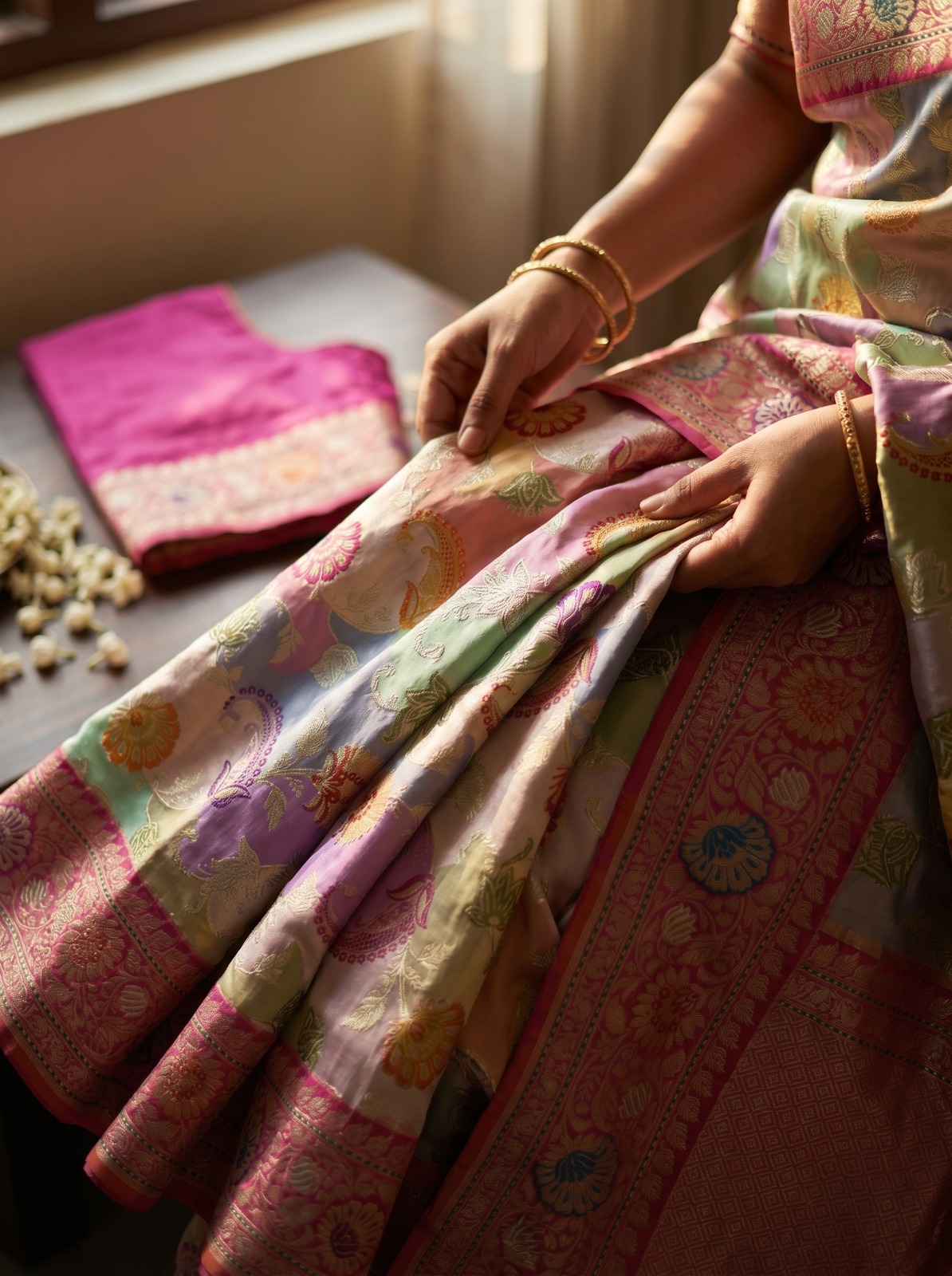
Fake silk (polyester/rayon) has constant, artificial shine. It looks overly glossy with a plastic-like appearance and shows no depth in colour gradation.

💡

Light Test: Hold the saree under natural sunlight. Pure silk shows subtle colour variations and a warm, shifting glow. Synthetic fabric looks flat and uniform under any angle.

09

Verify the Source and Seller

Where you buy matters as much as what you buy. Always purchase from trusted sources:

  • Government-certified handloom stores
  • Direct weavers' cooperatives in Varanasi
  • Established brands like Silk Khazana with verified credentials
  • Stores displaying Silk Mark authorization

Ask these questions before buying:

  • Do you have Silk Mark certification?
  • Is this handloom or powerloom?
  • What is the zari composition?
  • Who is the weaver or cooperative?
  • What is your return/exchange policy?
10

Check for GI Tag Certification

In 2009, Banarasi silk received the Geographical Indication (GI) tag—legally protecting authentic Varanasi-made sarees from imitation. This is a landmark certification that no genuine seller will hide from you.

  • Look for GI tag label or certificate attached to the saree
  • Verify proof of Varanasi origin
  • Registration number traceable to authorised weavers

This certification ensures the saree was genuinely made in Banaras using traditional methods passed down through generations.

Real vs Fake Banarasi Saree: Quick Comparison

Spotting the difference between a genuine Banarasi silk saree and an imitation can be challenging without the right knowledge. The table below summarises the key identifiers at a glance — use it as your quick-reference checklist every time you shop.

Notice the depth and dimensionality of real zari on pure silk — as seen in the image here. The raised floral motifs, warm golden lustre, and rich silk body are impossible to replicate authentically in powerloom or synthetic copies.

Close-up of pure Banarasi silk saree in deep red with intricate raised gold zari floral motifs showcasing authentic craftsmanship
Feature Pure Banarasi Silk Fake / Imitation
Material 100% pure mulberry silk Polyester, art silk, rayon
Weight 400–800 grams Under 300 grams
Price ₹8,000 – ₹2,00,000+ ₹1,500 – ₹5,000
Zari Real silver/gold threads Plastic metallic coating
Weaving Handloom with natural irregularities Powerloom, perfectly uniform
Texture Soft, cool, slightly rough reverse Slippery, overly smooth
Burn Test Smells like hair, crumbles to ash Smells chemical, melts into beads
Durability Lasts 20+ years with care Fades, tears within 2–3 years
Certification Silk Mark, GI Tag No certification
Design Depth Raised, textured motifs Flat, printed appearance

Why Choose Silk Khazana for Your Banarasi Silk Saree?

At Silk Khazana, authenticity isn't just a promise—it's our foundation. Every saree in our collection is a verified heirloom waiting to find its rightful home.

✅ Silk Mark Certified

Every piece comes with verifiable Silk Mark certification — no exceptions, no shortcuts.

✅ Direct Weaver Partnerships

We work directly with third-generation Banarasi artisans, cutting out middlemen and preserving fair wages.

✅ Transparent Pricing

No hidden costs. No fake discounts. Honest pricing that respects the effort of every artisan.

✅ Multi-Point Authenticity Check

Each saree undergoes rigorous quality assurance before it reaches you.

✅ Heritage Preservation

Every purchase directly supports traditional handloom weavers and their families in Varanasi.

✅ 7-Day Easy Returns

Buy with confidence — our hassle-free return policy protects every customer.

Common Mistakes Buyers Make (And How to Avoid Them)

Mistake

Falling for "Too Good to Be True" Deals

Buying a "pure Banarasi" for ₹2,000 during a "sale."

Solution

Authentic handloom sarees have fixed labour costs. If the price seems impossibly low, verify certifications rigorously before buying.

Mistake

Ignoring Silk Mark Certification

Trusting a seller's verbal assurance without checking for Silk Mark.

Solution

Always demand the holographic Silk Mark label and verify it online. Verbal assurances mean nothing without proof.

Mistake

Confusing Art Silk with Pure Silk

Believing "artificial silk" or "art silk" is real silk.

Solution

Art silk is rayon — a plant-based fibre, not silk. Check labels carefully. "100% pure silk" is the only acceptable claim.

Mistake

Not Checking Zari Composition

Assuming all shiny threads are real zari.

Solution

Ask specifically: "Is this real silver zari or imitation?" — 90% of market zari is plastic-coated and will tarnish within months.

Mistake

Buying Without a Return Policy

Purchasing online without return guarantees or quality assurance.

Solution

Buy from sellers offering easy returns like Silk Khazana, or request a video call to inspect the saree before purchase. Photos can be misleading — texture and weight are everything.

Expert Tips Before Buying Your Banarasi Silk Saree

Elegant Indian bride wearing a pure deep red Banarasi silk saree with heavy gold zari pallu at a traditional royal wedding venue

Know Your Budget

  • Entry-level: ₹8,000 – ₹15,000
  • Mid-range: ₹15,000 – ₹40,000
  • Premium/Bridal: ₹40,000 – ₹2,00,000+

Match by Occasion

  • Weddings: Heavy zari, rich colours
  • Formal events: Medium-weight with subtle designs
  • Daily wear: Organza or georgette Banarasi

Inspect in Natural Light

Always check the saree under daylight — not showroom lighting. This reveals true colour, sheen, and any colour inconsistencies.

Ask for Weaver Details

Request the weaver's cooperative name or artisan details. Genuine sellers proudly share this information — it is their heritage.

Verify Return Policy

Confirm the return window (minimum 7 days), condition requirements, and refund process before completing your purchase.

Join Buyer Communities

Online forums and groups dedicated to Banarasi sarees share real buyer experiences and trusted seller recommendations.

Recognising Real Zari and Certification Markers

Beyond the physical tests, authentic documentation tells the complete story of your saree's journey—from a Varanasi loom to your hands. Knowing what to look for on the label and tag can instantly separate genuine pieces from clever imitations.

What Your Tags Should Show

  • Silk Mark holographic sticker with unique serial number
  • GI Tag with Varanasi origin proof
  • Handloom Mark (for handloom-woven pieces)
  • Weaver cooperative registration or artisan name
  • Zari composition clearly stated (silver / gold / imitation)

The Rub Test for Zari

Take a length of the zari thread and rub it against rough paper or a hard surface. Genuine silver or gold zari will leave a faint metallic streak — the same way pencil lead leaves a mark. Fake plastic zari will either leave nothing or produce a bright, artificial coloured smudge.

Silk Mark holographic certification label on a pure Banarasi silk saree border with gold zari, guaranteeing 100% pure silk authenticity

Explore the World of Authentic Banarasi Silk

Silk Khazana store displaying a vibrant collection of pure Banarasi silk sarees in jewel tones with gold zari brocade patterns

The world of authentic Banarasi silk is extraordinarily diverse. Once you know how to identify purity, you can truly begin appreciating the nuances between different styles, weaving traditions, and regional variations.

Signature Banarasi Collections Worth Exploring

  • Kadhua Sarees: Each motif individually woven — the most labour-intensive and most authentic style
  • Cutwork / Jangla: Intricate floral jungles created with extra threads cut after weaving
  • Butidar: Individual small motifs (butis) scattered across the silk body
  • Tanchoi: No extra weft, design formed entirely by the warp threads — extremely disciplined weaving

At Silk Khazana, our curated collections span all these authentic weaving traditions, sourced directly from Varanasi artisans who have dedicated their lives to preserving this heritage.

Frequently Asked Questions

Use the burn test (pull a single thread — it should smell like burning hair and crumble to fine ash). Check the texture — pure silk feels cool and slightly rough on the reverse. Verify Silk Mark certification online using the holographic label's serial number. And check the weight — a genuine Banarasi saree should weigh at least 400 grams.

Silk Mark is a certification issued by the Silk Mark Organisation of India (SMOI) that guarantees 100% pure silk content in the product. It is the most reliable authenticity proof available to Indian buyers — verified sarees come with a holographic label and a unique serial number traceable on the official SMOI website.

Authentic handloom Banarasi silk sarees start from ₹8,000 because of the extensive labour-intensive weaving process (often weeks per saree). Cheaper alternatives priced under ₹5,000 are almost certainly powerloom or synthetic imitations. The price reflects the artisan's time, skill, and genuine materials — it is not arbitrary.

Handloom sarees are woven by skilled artisans on traditional pit looms. They show slight natural irregularities, have visible thread ends at the edges, and feature raised, textured motifs with depth and dimension. Powerloom sarees are machine-made and show perfect uniformity, sealed edges, and flat printed-looking patterns — they lack authentic craftsmanship and heritage value.

Real zari appears dull golden or silver (not overly bright), feels metallic to touch, and bends without cracking or flaking. When rubbed on rough paper, it leaves a faint metallic mark. Fake plastic zari is overly shiny, breaks or flakes when bent, and leaves no metallic residue. Genuine zari also has a slight magnetic attraction due to its silver content.

Yes — provided they offer Silk Mark certification, transparent return policies, and detailed product descriptions including weaver information and zari composition. Reputed brands like Silk Khazana offer fully verified authenticity and comprehensive customer protection. Always avoid sellers with no certification proof, no return policy, or vague product descriptions.

With proper care — dry cleaning, storage wrapped in soft muslin, occasional airing, and refolding along different lines every few months — a genuine Banarasi silk saree can last 20–30 years or more. The pure silk and real zari retain their quality across generations, making it a true heirloom investment.

Invest in Authenticity, Celebrate Heritage

A pure Banarasi silk saree is not just clothing—it is wearable art, a family heirloom, and a tribute to India's rich textile legacy. But with the market flooded with fakes, knowing how to identify authenticity is not just useful — it is essential.

Remember these key takeaways before your next purchase:

  • Always check for Silk Mark certification — it is non-negotiable
  • Use multiple verification methods: burn test, texture, weight, and zari test
  • Don't compromise on price — quality craftsmanship has inherent value
  • Buy from trusted sources like Silk Khazana with transparent, ethical practices
  • Ask questions and demand proof — every authentic seller will welcome them
  • Verify GI Tag origin to ensure Varanasi authenticity

When you choose authentic Banarasi silk, you are not just buying a saree — you are preserving centuries of artisan tradition and directly supporting the skilled weavers of Varanasi who keep this heritage alive.

Invest in Authenticity. Own a Piece of Heritage.

Explore Silk Khazana's curated collection of 100% Silk Mark certified, GI-tagged pure Banarasi silk sarees. Every piece tells a story of heritage, quality, and trust — woven by the hands of master artisans in Varanasi.

Sign Up Newsletter

Sign up our newsletter and save 25% off for the next purchase!

Subscribe to our newsletters and don’t miss new arrivals, the latest fashion updates and our promotions.