+9163073 05873 support@silkkhazana.in
Summer sale discount upto 30%! Shop Now

Silk Khazana Presents
Complete Guide to Buying Banarasi Sarees in Varanasi
An honest, practical guide for first-time buyers
Introduction: Why Varanasi Is the Only Place to Buy a Real Banarasi Saree
There is a saying in India: "If it is not from Varanasi, it is not truly Banarasi." That is not just sentiment. It is the truth.
Varanasi — also called Banaras or Kashi — is the birthplace of the Banarasi saree. The silk threads here carry centuries of history. The gold and silver zari work is woven by hands that have learned this craft over generations.
In 2026, Varanasi is more accessible than ever. International flights connect to nearby Lucknow and Prayagraj. More tourists are visiting the ghats, the temples, and the silk bazaars. And more buyers — from London, New York, Singapore, and Dubai — are discovering what Indian women have known for centuries: there is nothing in the world quite like a pure Banarasi silk saree.
But here is the problem nobody tells you. Not every saree sold in Varanasi is genuine. Not every price is fair. Not every shopkeeper is honest.
This guide was written to change that. We have talked to weavers, walked through markets, and seen the tricks that tourists fall for every day. This is an honest, practical guide for first-time buyers — whether you are visiting Varanasi for a few days, shopping from abroad, or simply looking for a trustworthy place to spend your money.
Visit Us Directly: Silk Khazana | Varanasi, Uttar Pradesh | Get Directions on Google Maps
Best Markets for Banarasi Saree Shopping in Varanasi
Varanasi has several famous shopping areas. Each has its own character, advantages, and risks. Here is an honest breakdown of the three main markets.
1. Nati Imli — The Weaver's Neighbourhood
Nati Imli is not a market in the traditional sense. It is a residential area where weaving families have lived and worked for hundreds of years. If you want to see a saree being made on a handloom, this is where you come.
What it is known for: Direct-from-weaver sales. Raw, unpolished shopping experience.
- Pros: Authentic weaving community, chance to see handlooms, good prices from smaller weavers.
- Cons: Hard to navigate, language barrier, inconsistent quality, no formal receipts.
Tourist Experience: Interesting culturally, challenging for shopping without a local guide.
Price Expectations: ₹3,000 to ₹30,000.
2. Chowk — The Oldest Silk Market in Varanasi
Chowk is one of the oldest commercial areas in Varanasi. It is dense, busy, and filled with shops selling everything from spices to silk.
What it is known for: Large variety of sarees. Traditional bazaar experience.
- Pros: Huge variety, established shops, good for comparing designs.
- Cons: Crowded, mixed handloom/powerloom, tourist pricing (inflated by 40–60%), pressure selling.
Tourist Experience: Exciting but tiring. Requires patience.
Price Expectations: Varies widely. High tourist quotes.
3. Godowlia — The Commercial Hub
Godowlia is the busy central market of Varanasi. It connects to the main ghat road and sees a high volume of tourist foot traffic.
What it is known for: A mix of textile shops, souvenir stores, and silk emporiums.
- Pros: Easy to reach, some fixed pricing, more English-speaking staff.
- Cons: Tourist-heavy, machine-made sold as "handloom", hard to verify authenticity.
Tourist Experience: Convenient, but requires caution.
Price Expectations: Fair to overpriced.
📲 Not sure where to start? Connect with Silk Khazana on WhatsApp for honest guidance before you even reach the market. Chat with us!
Red Flags and Scams to Avoid
This section may save you thousands of rupees. Read it carefully. Varanasi is a beautiful city, but like any major tourist destination, it has people who take advantage of newcomers. Here are the most common tricks used in the silk market.
❌ Fake "Pure Silk" Claims
Any shopkeeper can say "100% pure silk." Real pure silk has a specific feel—smooth, cool, with a natural sheen and slight resistance when rubbed. The burn test is reliable: pure silk smells like burning hair and leaves crushable ash. If the shopkeeper refuses this test, that tells you everything.
❌ Powerloom Sold as Handloom
A handloom saree takes 15-30 days to weave; a powerloom takes hours. If a "handloom" saree is ₹2,000, it is fake. Genuine handloom sarees have neat backs, whereas powerloom sarees often have loose threads hanging on the back.
❌ Tourist Overpricing
Tourists are often quoted prices 50% to 200% higher than locals. Know the approximate price range before walking in (see guide below).
❌ No Bill, No Certification
A trustworthy shop provides a proper GST receipt with product details. Ask for Silk Mark certification. If a shop refuses to give a bill, leave.
❌ Pushy Sales Tactics
"This is the last one." "Only for you." A confident shop doesn't need pressure tactics. Take your time.
Banarasi Saree Price Guide
Here is an honest breakdown of what different types of Banarasi sarees should cost in 2026. These are realistic price ranges — not inflated tourist prices, not suspiciously cheap fakes.
| Saree Type | Description | Realistic Price Range |
|---|---|---|
| Katan Silk | The finest Banarasi silk. Dense, heavy weave. Best for bridal use. | ₹8,000 – ₹80,000+ |
| Organza (Kora) | Lightweight, sheer silk. Great for summer weddings. | ₹5,000 – ₹40,000 |
| Georgette | Flowy and versatile. Popular for parties and formal events. | ₹4,000 – ₹35,000 |
| Tissue | Golden or silver shimmer fabric. Very unique appearance. | ₹6,000 – ₹50,000 |
| Meenakari | Intricate multi-colour zari work. Extremely labour-intensive. | ₹12,000 – ₹1,50,000+ |
What Affects the Price?
- Zari quality: Real gold zari costs significantly more than imitation zari.
- Weaving time: More intricate patterns take longer and cost more.
- Silk grade: Higher-quality silk thread raises the base price.
- Design complexity: Shikargah, Jangla, and Meenakari designs require the most skill.
How to Negotiate — and When NOT To
Bargaining is a normal part of shopping in most Indian markets. But knowing when to negotiate — and when to trust a fixed price — can make a big difference.
When Bargaining Is Acceptable:
- In open-air markets and smaller bazaars
- When a price seems significantly inflated
- When no price tag is displayed
When Fixed Pricing Is Better:
- When a shop clearly displays prices
- When the shop offers Silk Mark certification and proper billing
- When the quality is verifiably genuine
Fixed pricing protects you as a buyer. It means the same product is sold to everyone at the same price — the local, the tourist, the NRI customer in London. That is what fair commerce looks like.
Common Tourist Mistakes
- Accepting the first price without question in an unverified shop
- Bargaining a certified shop down to "street price" — you will lose quality, not save money
- Being so focused on getting a deal that you overlook whether the saree is even real
Documents to Always Ask For
When you buy a Banarasi saree, especially at a significant price point, always ask for these official documents:
Silk Mark Certificate
Issued by the Silk Mark Organisation of India. Confirms the saree is made from natural silk. This is your strongest assurance of authenticity.
Proper GST Receipt
Any registered business in India must provide this. It protects you legally and confirms the transaction is legitimate.
Handloom Mark
(if applicable) Government-certified mark for handloom-woven products.
Store Contact Information
Especially for international buyers — you want to be able to contact the shop after your visit.
At Silk Khazana, we provide all of the above with every purchase. No exceptions.
👉 Learn more about our store and certifications
How to Pack and Carry Sarees
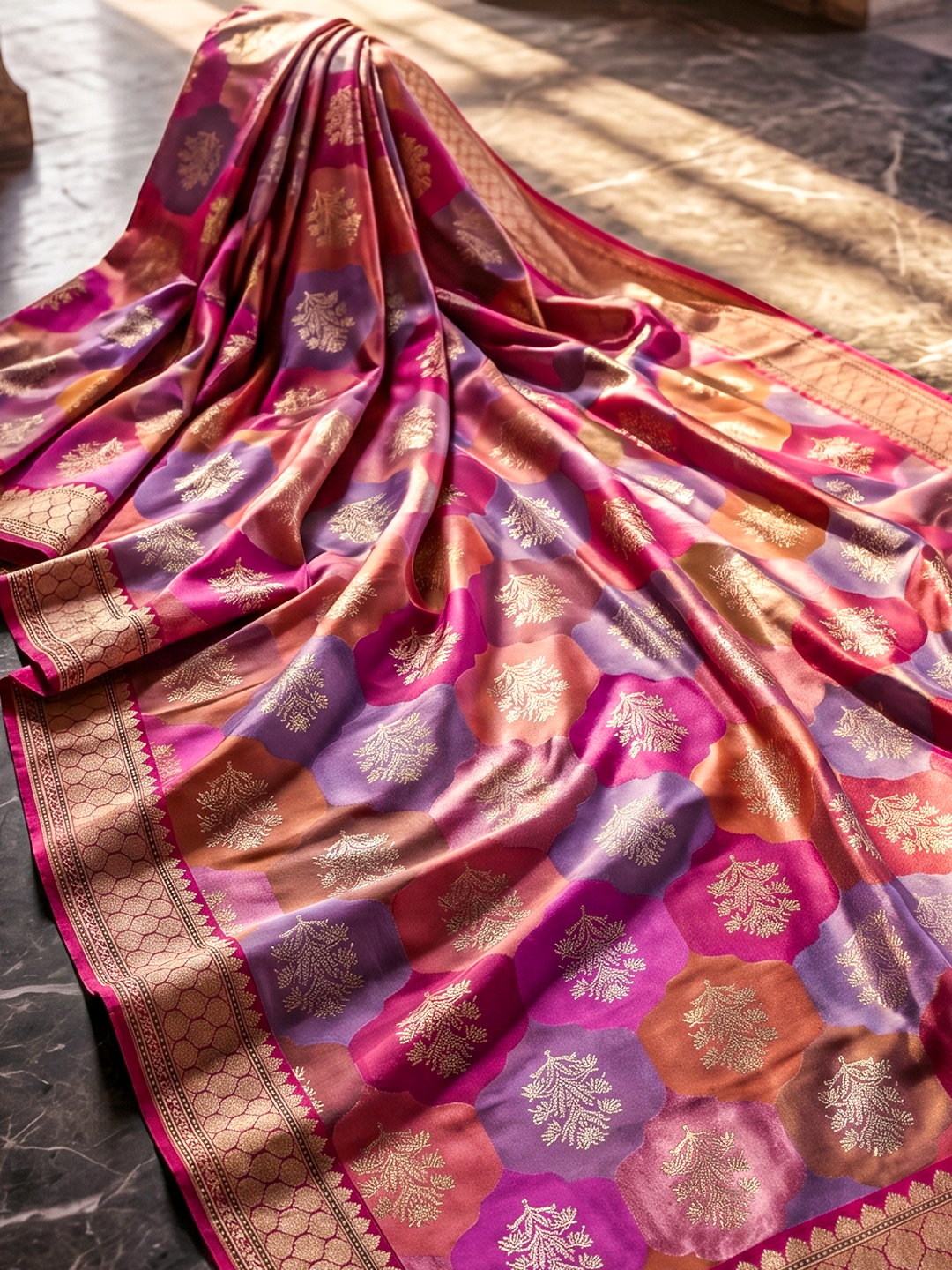
You have found the perfect saree. Now, how do you get it home safely?
Folding and Storage Tips:
- Always fold sarees loosely — never crease the zari work tightly, as it can crack over time
- Wrap sarees in the muslin cloth they are sold in, or in a clean white cotton cloth
- Avoid plastic bags for long-term storage — silk needs to breathe
For Domestic Travellers:
- Carry sarees as cabin baggage if possible to avoid pressure damage in checked luggage
- Heavier sarees like Katan silk should be rolled rather than folded for travel
For International Travellers:
- Sarees are generally allowed in carry-on and checked baggage internationally
- Declare them at customs if the total value of goods exceeds your country's duty-free threshold
- Ask your shop to provide an official invoice — this helps at customs
International Shipping: Many reputable stores, including Silk Khazana, offer international shipping. This is often safer and more convenient than carrying sarees yourself.
Why Silk Khazana Is Different
This is the part of the guide where we tell you honestly who we are and why we believe you should visit us. Silk Khazana is not a middleman. We are a direct manufacturer of Banarasi sarees. Our weavers work within our own production network. When you buy from us, you are not paying commission to three layers of traders.
✅ Direct from Manufacturer
No middlemen. No commission agents. Our sarees come directly from the weavers to you. Better quality control and prices that are genuinely fair.
✅ Fixed Honest Pricing
We price every saree the same for every customer — whether you are a local, an NRI, or a first-time tourist. We do not change prices based on where you are from.
✅ Silk Mark Certified
Every eligible saree at Silk Khazana comes with Silk Mark certification. You can verify the authenticity of what you are buying.
✅ Trusted by Global Buyers
We have served customers from the US, UK, Canada, Australia, UAE, and more. Many international customers return for every major occasion.
✅ Personal Assistance
No pressure. No rush. Our English-speaking staff helps you understand each saree — its weave, its history, and its value.
✅ International Shipping
Cannot carry your purchase home? We ship internationally with full documentation and tracking.
🏪 Silk Khazana | Varanasi, Uttar Pradesh
Silk Khazana vs. Typical Market Shops
| Feature | Silk Khazana | Typical Market Shop |
|---|---|---|
| Price Transparency | ✅ Fixed, displayed prices | ❌ Often negotiable / tourist pricing |
| Authenticity Guarantee | ✅ Silk Mark certified | ⚠️ Varies — often no certification |
| Tourist Pricing | ✅ Same price for all | ❌ Common practice |
| Proper Receipt / GST Bill | ✅ Always provided | ❌ Often avoided |
| International Shipping | ✅ Available with tracking | ❌ Rarely offered |
| English-speaking Support | ✅ Available | ⚠️ Limited |
| Direct from Manufacturer | ✅ Yes | ❌ Usually via middlemen |
| Return / After-Sale Support | ✅ Available | ❌ Rarely offered |
Simple English Section: Key Tips for International Buyers
This section is written in very simple English for readers who are new to English or shopping in India.
🛍️ Buying Tips
- Always ask: "Is this handloom or powerloom?" A good shop will answer clearly.
- Always get a receipt with the shop's name and price.
- Ask to see the Silk Mark certificate.
- Do not buy from someone on the street or near the ghats. They almost never sell real sarees.
- A real Banarasi saree is never very cheap. If the price seems too low, it is probably not real.
💰 Understanding Price
- A basic Banarasi silk saree starts at around ₹5,000 for simple designs.
- A wedding-quality or heavily embroidered saree can cost ₹25,000 or much more.
- Price depends on: type of silk, how long it took to weave, and how complex the design is.
- If a "Banarasi" saree costs ₹1,000 or ₹1,500, it is not a real Banarasi silk saree.
⚠️ Scam Warnings
- Some shops charge tourists more money than local buyers. This is unfair. Choose shops with fixed prices.
- Some shops say "handloom" but sell machine-made sarees. Always check the back of the saree for loose threads — this can show if it is machine-made.
- Some people near tourist areas will offer to take you to their "family shop." These are usually not real family shops. They earn commission for bringing you there.
Frequently Asked Questions About Buying Banarasi Sarees
Is it safe to buy sarees in Varanasi as a tourist?
Yes, it is safe — as long as you know what to look for. The risks are not physical. The risk is overpaying or buying a fake. Use this guide, choose a shop with fixed pricing and certification, and always ask for a receipt.
What is the average price of a Banarasi saree in Varanasi?
A good-quality, authentic Banarasi silk saree starts at around ₹5,000 to ₹8,000 for simpler designs. Wedding-quality pieces — especially Katan silk with heavy zari work — can range from ₹25,000 to ₹1,50,000 or more. Be suspicious of anything labelled "pure Banarasi" at very low prices.
How do I check if a Banarasi saree is made of real silk?
Ask for the burn test: pull out a thread and burn it carefully. Real silk burns like hair — it smells like burning hair and leaves a soft, crushable ash. Synthetic thread smells like plastic and leaves a hard bead. You can also ask the shop for the Silk Mark certificate, which is issued by the Indian government.
Which market is best for buying Banarasi sarees in Varanasi?
Each market has its character. Nati Imli is good for cultural experience but complex to navigate. Chowk has variety but can be overwhelming. Godowlia is convenient but tourist-heavy. For the safest, most transparent experience, visiting a certified, fixed-price manufacturer store like Silk Khazana is the best option for first-time buyers and international tourists.
Can tourists ship Banarasi sarees internationally from Varanasi?
Yes. Reputable shops like Silk Khazana offer international shipping with proper documentation, tracking, and commercial invoices for customs. This is a good option if you are worried about carrying sarees in your luggage or if you want to order after returning home.