+9163073 05873 support@silkkhazana.in
Summer sale discount upto 30%! Shop Now

Mini Cart

How to Identify Pure Banarasi Silk Saree – 10 Expert Tips | Silk Khazana

Silk Khazana Presents

How to Identify a Pure Banarasi Silk Saree

The Complete Expert Guide to Authenticity

Why Authentic Banarasi Silk Matters

A pure Banarasi silk saree is more than just fabric—it's a piece of India's cultural heritage, woven with centuries of tradition in the ancient city of Varanasi (Banaras). These sarees represent unparalleled craftsmanship, where skilled artisans spend weeks creating intricate patterns with pure silk and real zari.

But here's the problem: the market is flooded with fake Banarasi sarees. Synthetic imitations, powerloom copies, and artificial zari replicas are sold as "authentic" at premium prices. Buyers lose thousands of rupees and miss out on the real beauty and durability of genuine Banarasi silk.

This guide will teach you exactly how to spot the real deal—using methods trusted by textile experts, saree connoisseurs, and seasoned buyers. Whether you're purchasing for a wedding, festival, or investment, you'll know how to avoid scams and choose wisely.

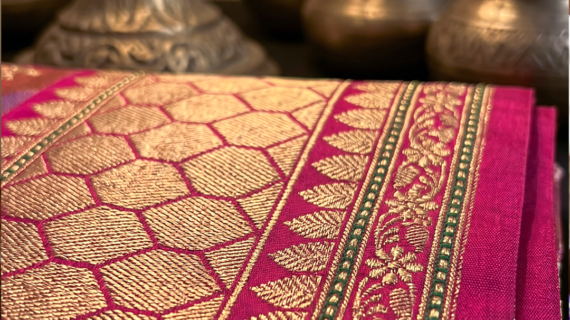
Close-up of pure Banarasi silk saree fabric showing intricate gold zari brocade weave and natural silk lustre

What Is a Pure Banarasi Silk Saree?

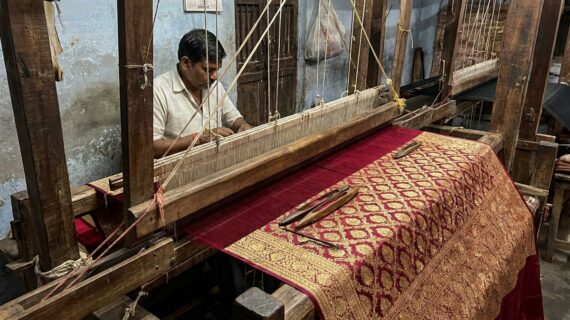
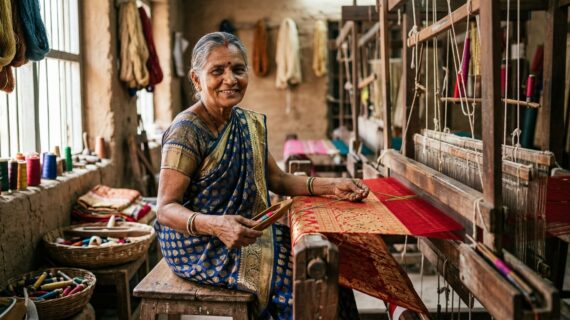
Varanasi artisan weaving pure Banarasi silk saree on traditional pit loom with gold zari threads

Origin and Heritage

Pure Banarasi silk sarees originate from Varanasi (Banaras), Uttar Pradesh—India's silk weaving capital for over 400 years. These sarees earned their fame during the Mughal era when Persian motifs merged with Indian weaving techniques to create something truly timeless.

What Makes It "Pure"?

A genuine Banarasi silk saree contains:

  • 100% pure mulberry silk (not synthetic, art silk, or blends)
  • Real zari made from silver or gold threads (not metallic-coated plastic)
  • Handloom weaving done by skilled artisans (not powerloom machines)
  • Traditional motifs like kalga, bel, jhallar, and Mughal patterns

Types of Authentic Banarasi Silk

  • Pure Silk (Katan): Dense, smooth, and heavy
  • Organza (Kora): Sheer and lightweight with stiff texture
  • Georgette: Soft, flowy, easier to drape
  • Shattir: Plain silk with zari work only on borders

"A genuine Banarasi silk saree is not just woven on a loom — it is woven in the imagination of an artisan who sees heritage, craftsmanship, and cultural legacy all at once."

10 Proven Ways to Identify Pure Banarasi Silk Saree

01

Check for Silk Mark Certification

The Silk Mark is a certification issued by the Silk Mark Organisation of India (SMOI)—a government-backed body that guarantees 100% pure silk.

How to verify:

  • Look for a holographic label with a unique serial number
  • Visit the official Silk Mark website and verify the code
  • Certified sarees come with a certificate of authenticity
🔴

Red Flag: If a seller refuses to provide Silk Mark certification, that's an immediate red flag. This is the most reliable proof of purity.

02

Perform the Burn Test (With Caution)

Pull out a single thread from the saree's edge (ask the seller first). Burn it carefully with a lighter.

Burn test comparison: pure silk burns slowly leaving fine ash, synthetic fabric melts into hard plastic beads

Pure silk results: Burns slowly with a smell like burning hair or feathers. Leaves fine, black ash that crumbles easily. Flame extinguishes quickly when removed from heat.

Fake silk (polyester/synthetic) results: Burns fast with a chemical or plastic smell. Melts into hard, sticky beads. Flame continues burning.

⚠️

Safety Note: Only perform this test in a safe environment. Never burn large sections of the saree.

03

Feel the Texture and Weight

Pure Banarasi silk has a very distinctive feel:

  • Smooth and cool to touch
  • Slightly rough on the reverse side (natural fiber texture)
  • Heavyweight — a genuine saree typically weighs 400–800 grams
  • Soft yet structured — does not cling or feel slippery like polyester
💡

Pro Tip: Run your hand across the fabric. Pure silk creates subtle friction; synthetic fabric slides effortlessly with no resistance.

Authentic zari (real gold/silver thread) versus imitation zari (synthetic metallic yarn) comparison on Banarasi saree
04

Inspect the Weaving Pattern

One of the clearest give-aways between genuine handloom and powerloom is in the weave itself:

Feature Handloom (Authentic) Powerloom (Imitation)
Pattern precision Slight natural irregularities Perfect, machine-like uniformity
Thread ends Visible loose threads at edges Cleanly cut, sealed edges
Motif depth Raised, textured designs Flat, printed-looking patterns
Back side Intricate threading visible Smooth, simplified back

Check the pallu and border: Handloom patterns show depth and dimension. Machine-made designs look printed or stamped.

05

Test the Zari Authenticity

Real zari is made from silver threads coated with gold (or pure silver). Fake zari is metallic-coated plastic.

How to identify real zari:

  • Appears dull golden or silver — not overly shiny
  • Feels metallic and slightly rough to touch
  • Bends without breaking; fake zari cracks or flakes
  • When rubbed on rough paper, real zari leaves a metallic mark

The Magnet Test: Real zari (containing silver) is slightly attracted to magnets. Fake plastic zari shows no magnetic response. Note: modern real zari may contain copper, which affects magnetism — use multiple tests for accuracy.

06

Examine the Price Range

Let's be honest: quality costs money. Below are authentic market prices for genuine Banarasi silk:

Saree Type Authentic Price (INR) Fake / Imitation Price
Pure Silk Banarasi ₹8,000 – ₹50,000+ ₹1,500 – ₹5,000
Heavy Zari Work ₹15,000 – ₹1,00,000+ ₹3,000 – ₹8,000
Kadhua Style ₹25,000 – ₹2,00,000+ ₹5,000 – ₹12,000
⚠️

If a "pure Banarasi" costs under ₹5,000, it is almost certainly fake. Genuine handloom sarees require weeks of skilled labour — that value is reflected in the price.

07

Check the Selvedge (Side Edges)

The selvedge is the finished edge running along the saree's length. Authentic Banarasi sarees use a three-shuttle technique, creating different coloured threads on both edges.

  • Borders are woven into the fabric, not stitched separately
  • Edges are neat but not perfectly uniform (handloom signature)
  • Different coloured thread on each edge from shuttle variation

Fake red flags: Borders glued or sewn onto the body; edges too perfect (machine-made); same colour thread throughout with no shuttle variation.

08

Observe the Sheen and Lustre

Pure silk has a natural, soft sheen that changes with light angles—sometimes matte, sometimes lustrous. This is the unique optical property of pure mulberry silk fibres.

Fake silk (polyester/rayon) has constant, artificial shine. It looks overly glossy with a plastic-like appearance and shows no depth in colour gradation.

💡

Light Test: Hold the saree under natural sunlight. Pure silk shows subtle colour variations and a warm, shifting glow. Synthetic fabric looks flat and uniform under any angle.

09

Verify the Source and Seller

Where you buy matters as much as what you buy. Always purchase from trusted sources:

  • Government-certified handloom stores
  • Direct weavers' cooperatives in Varanasi
  • Established brands like Silk Khazana with verified credentials
  • Stores displaying Silk Mark authorization

Ask these questions before buying:

  • Do you have Silk Mark certification?
  • Is this handloom or powerloom?
  • What is the zari composition?
  • Who is the weaver or cooperative?
  • What is your return/exchange policy?
10

Check for GI Tag Certification

In 2009, Banarasi silk received the Geographical Indication (GI) tag—legally protecting authentic Varanasi-made sarees from imitation. This is a landmark certification that no genuine seller will hide from you.

  • Look for GI tag label or certificate attached to the saree
  • Verify proof of Varanasi origin
  • Registration number traceable to authorised weavers

This certification ensures the saree was genuinely made in Banaras using traditional methods passed down through generations.

Real vs Fake Banarasi Saree: Quick Comparison

Spotting the difference between a genuine Banarasi silk saree and an imitation can be challenging without the right knowledge. The table below summarises the key identifiers at a glance — use it as your quick-reference checklist every time you shop.

Notice the depth and dimensionality of real zari on pure silk — as seen in the image here. The raised floral motifs, warm golden lustre, and rich silk body are impossible to replicate authentically in powerloom or synthetic copies.

Close-up of pure Banarasi silk saree in deep red with intricate raised gold zari floral motifs showcasing authentic craftsmanship
Feature Pure Banarasi Silk Fake / Imitation
Material 100% pure mulberry silk Polyester, art silk, rayon
Weight 400–800 grams Under 300 grams
Price ₹8,000 – ₹2,00,000+ ₹1,500 – ₹5,000
Zari Real silver/gold threads Plastic metallic coating
Weaving Handloom with natural irregularities Powerloom, perfectly uniform
Texture Soft, cool, slightly rough reverse Slippery, overly smooth
Burn Test Smells like hair, crumbles to ash Smells chemical, melts into beads
Durability Lasts 20+ years with care Fades, tears within 2–3 years
Certification Silk Mark, GI Tag No certification
Design Depth Raised, textured motifs Flat, printed appearance

Why Choose Silk Khazana for Your Banarasi Silk Saree?

At Silk Khazana, authenticity isn't just a promise—it's our foundation. Every saree in our collection is a verified heirloom waiting to find its rightful home.

✅ Silk Mark Certified

Every piece comes with verifiable Silk Mark certification — no exceptions, no shortcuts.

✅ Direct Weaver Partnerships

We work directly with third-generation Banarasi artisans, cutting out middlemen and preserving fair wages.

✅ Transparent Pricing

No hidden costs. No fake discounts. Honest pricing that respects the effort of every artisan.

✅ Multi-Point Authenticity Check

Each saree undergoes rigorous quality assurance before it reaches you.

✅ Heritage Preservation

Every purchase directly supports traditional handloom weavers and their families in Varanasi.

✅ 7-Day Easy Returns

Buy with confidence — our hassle-free return policy protects every customer.

Common Mistakes Buyers Make (And How to Avoid Them)

Mistake

Falling for "Too Good to Be True" Deals

Buying a "pure Banarasi" for ₹2,000 during a "sale."

Solution

Authentic handloom sarees have fixed labour costs. If the price seems impossibly low, verify certifications rigorously before buying.

Mistake

Ignoring Silk Mark Certification

Trusting a seller's verbal assurance without checking for Silk Mark.

Solution

Always demand the holographic Silk Mark label and verify it online. Verbal assurances mean nothing without proof.

Mistake

Confusing Art Silk with Pure Silk

Believing "artificial silk" or "art silk" is real silk.

Solution

Art silk is rayon — a plant-based fibre, not silk. Check labels carefully. "100% pure silk" is the only acceptable claim.

Mistake

Not Checking Zari Composition

Assuming all shiny threads are real zari.

Solution

Ask specifically: "Is this real silver zari or imitation?" — 90% of market zari is plastic-coated and will tarnish within months.

Mistake

Buying Without a Return Policy

Purchasing online without return guarantees or quality assurance.

Solution

Buy from sellers offering easy returns like Silk Khazana, or request a video call to inspect the saree before purchase. Photos can be misleading — texture and weight are everything.

Expert Tips Before Buying Your Banarasi Silk Saree

Elegant Indian bride wearing a pure deep red Banarasi silk saree with heavy gold zari pallu at a traditional royal wedding venue

Know Your Budget

  • Entry-level: ₹8,000 – ₹15,000
  • Mid-range: ₹15,000 – ₹40,000
  • Premium/Bridal: ₹40,000 – ₹2,00,000+

Match by Occasion

  • Weddings: Heavy zari, rich colours
  • Formal events: Medium-weight with subtle designs
  • Daily wear: Organza or georgette Banarasi

Inspect in Natural Light

Always check the saree under daylight — not showroom lighting. This reveals true colour, sheen, and any colour inconsistencies.

Ask for Weaver Details

Request the weaver's cooperative name or artisan details. Genuine sellers proudly share this information — it is their heritage.

Verify Return Policy

Confirm the return window (minimum 7 days), condition requirements, and refund process before completing your purchase.

Join Buyer Communities

Online forums and groups dedicated to Banarasi sarees share real buyer experiences and trusted seller recommendations.

Recognising Real Zari and Certification Markers

Beyond the physical tests, authentic documentation tells the complete story of your saree's journey—from a Varanasi loom to your hands. Knowing what to look for on the label and tag can instantly separate genuine pieces from clever imitations.

What Your Tags Should Show

  • Silk Mark holographic sticker with unique serial number
  • GI Tag with Varanasi origin proof
  • Handloom Mark (for handloom-woven pieces)
  • Weaver cooperative registration or artisan name
  • Zari composition clearly stated (silver / gold / imitation)

The Rub Test for Zari

Take a length of the zari thread and rub it against rough paper or a hard surface. Genuine silver or gold zari will leave a faint metallic streak — the same way pencil lead leaves a mark. Fake plastic zari will either leave nothing or produce a bright, artificial coloured smudge.

Silk Mark holographic certification label on a pure Banarasi silk saree border with gold zari, guaranteeing 100% pure silk authenticity

Explore the World of Authentic Banarasi Silk

Silk Khazana store displaying a vibrant collection of pure Banarasi silk sarees in jewel tones with gold zari brocade patterns

The world of authentic Banarasi silk is extraordinarily diverse. Once you know how to identify purity, you can truly begin appreciating the nuances between different styles, weaving traditions, and regional variations.

Signature Banarasi Collections Worth Exploring

  • Kadhua Sarees: Each motif individually woven — the most labour-intensive and most authentic style
  • Cutwork / Jangla: Intricate floral jungles created with extra threads cut after weaving
  • Butidar: Individual small motifs (butis) scattered across the silk body
  • Tanchoi: No extra weft, design formed entirely by the warp threads — extremely disciplined weaving

At Silk Khazana, our curated collections span all these authentic weaving traditions, sourced directly from Varanasi artisans who have dedicated their lives to preserving this heritage.

Frequently Asked Questions

Use the burn test (pull a single thread — it should smell like burning hair and crumble to fine ash). Check the texture — pure silk feels cool and slightly rough on the reverse. Verify Silk Mark certification online using the holographic label's serial number. And check the weight — a genuine Banarasi saree should weigh at least 400 grams.

Silk Mark is a certification issued by the Silk Mark Organisation of India (SMOI) that guarantees 100% pure silk content in the product. It is the most reliable authenticity proof available to Indian buyers — verified sarees come with a holographic label and a unique serial number traceable on the official SMOI website.

Authentic handloom Banarasi silk sarees start from ₹8,000 because of the extensive labour-intensive weaving process (often weeks per saree). Cheaper alternatives priced under ₹5,000 are almost certainly powerloom or synthetic imitations. The price reflects the artisan's time, skill, and genuine materials — it is not arbitrary.

Handloom sarees are woven by skilled artisans on traditional pit looms. They show slight natural irregularities, have visible thread ends at the edges, and feature raised, textured motifs with depth and dimension. Powerloom sarees are machine-made and show perfect uniformity, sealed edges, and flat printed-looking patterns — they lack authentic craftsmanship and heritage value.

Real zari appears dull golden or silver (not overly bright), feels metallic to touch, and bends without cracking or flaking. When rubbed on rough paper, it leaves a faint metallic mark. Fake plastic zari is overly shiny, breaks or flakes when bent, and leaves no metallic residue. Genuine zari also has a slight magnetic attraction due to its silver content.

Yes — provided they offer Silk Mark certification, transparent return policies, and detailed product descriptions including weaver information and zari composition. Reputed brands like Silk Khazana offer fully verified authenticity and comprehensive customer protection. Always avoid sellers with no certification proof, no return policy, or vague product descriptions.

With proper care — dry cleaning, storage wrapped in soft muslin, occasional airing, and refolding along different lines every few months — a genuine Banarasi silk saree can last 20–30 years or more. The pure silk and real zari retain their quality across generations, making it a true heirloom investment.

Invest in Authenticity, Celebrate Heritage

A pure Banarasi silk saree is not just clothing—it is wearable art, a family heirloom, and a tribute to India's rich textile legacy. But with the market flooded with fakes, knowing how to identify authenticity is not just useful — it is essential.

Remember these key takeaways before your next purchase:

  • Always check for Silk Mark certification — it is non-negotiable
  • Use multiple verification methods: burn test, texture, weight, and zari test
  • Don't compromise on price — quality craftsmanship has inherent value
  • Buy from trusted sources like Silk Khazana with transparent, ethical practices
  • Ask questions and demand proof — every authentic seller will welcome them
  • Verify GI Tag origin to ensure Varanasi authenticity

When you choose authentic Banarasi silk, you are not just buying a saree — you are preserving centuries of artisan tradition and directly supporting the skilled weavers of Varanasi who keep this heritage alive.

Invest in Authenticity. Own a Piece of Heritage.

Explore Silk Khazana's curated collection of 100% Silk Mark certified, GI-tagged pure Banarasi silk sarees. Every piece tells a story of heritage, quality, and trust — woven by the hands of master artisans in Varanasi.

Meenakari Pure Handloom Silk Saree – The Royal Heritage Weave | Silk Khazana

Silk Khazana Presents

Meenakari Pure Handloom Silk Saree

The Royal Heritage Weave of India

Every once in a while, a piece of clothing transcends fashion and becomes a living heritage. The Meenakari pure handloom silk saree is precisely that — a wearable manuscript of India's golden past, written in silk, gold zari, and the patient genius of weavers who inherited their craft generation after generation.

At Silk Khazana, we have spent years curating the finest royal Meenakari handloom silk sarees sourced directly from master weavers in Varanasi and Jaipur. Whether you are dressing for a grand wedding, a festive puja, or a milestone anniversary, a Meenakari saree does not just dress you — it tells your story in the language of royalty.

This guide is your complete companion to understanding, choosing, styling, and caring for an authentic Meenakari silk saree. Let us begin at the very beginning.

What Is a Meenakari Silk Saree?

The term Meenakari — derived from the Persian word Meena, meaning enamel — originally referred to the ancient art of decorating metal surfaces with colourful enamelled patterns. Over centuries, this art form migrated beautifully into the world of textile weaving, giving birth to what we now celebrate as the Meenakari silk saree.

In weaving, Meenakari refers to a technique where vibrant, multicoloured silk threads are intricately woven into the fabric — typically a pure handloom silk base — creating motifs that appear almost enamelled in their depth and richness. The result is a saree that shimmers with layered colours, intricate floral and peacock patterns, and a luminosity that no printed fabric can replicate.

Meenakari vs. Regular Silk Saree — The Difference

Unlike a regular pure silk saree that may feature a single-colour weave or simple border work, a Meenakari saree is distinguished by:

  • Multicoloured thread weaving into detailed motifs (not printed or embroidered)
  • Raised texture created by supplementary weft threads — the same principle as Banarasi brocade
  • Intricate gold or silver zari interplaying with the coloured silk threads
  • A heavier drape owing to the density of the weave
  • A reversible or semi-reversible pattern on many traditional pieces
Close up of authentic Meenakari pure handloom silk saree showing intricate zari work

"A Meenakari saree is not woven on a loom alone — it is woven in the imagination of an artisan who sees colour, symmetry, and myth all at once."

History and Cultural Significance

The story of Meenakari weaving in India is inseparable from the Mughal era. When Emperor Akbar's court flourished in the 16th century, he invited Persian artists and craftsmen to establish workshops in Lahore and later Varanasi. These craftsmen brought with them the Meenakari enamelling tradition, which Indian weavers absorbed and transformed into something entirely their own.

By the 17th century, the Banarasi Meenakari saree had become the defining symbol of bridal trousseau in North India. Royalty from Rajputana to Bengal commissioned these sarees for coronations, weddings, and religious ceremonies.

Why Meenakari Holds Ritual Importance

In many Hindu traditions, a Meenakari saree is considered auspicious for religious rituals because the motifs — lotuses, peacocks, paisleys, and deity figures — carry symbolic meaning. Wearing a Meenakari saree to a puja or wedding is, in a sense, wearing a prayer.

Royal Banarasi Meenakari silk saree showcasing rich cultural heritage and zari

Craftsmanship and the Weaving Process

The journey of a handloom silk saree from raw thread to finished drape is one of the most labour-intensive processes in all of Indian textile art. Understanding this journey helps you appreciate why an authentic Meenakari saree commands the price it does — and why it is worth every rupee.

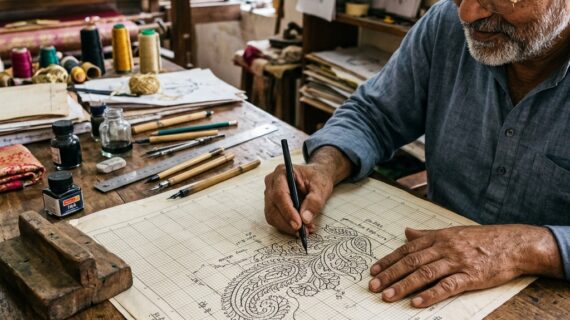
A master designer translates the Meenakari motif onto graph paper, mapping every single thread interlacement. The weaver sits at the pit loom, feet operating the treadles and hands interlacing the coloured Meenakari weft threads by shuttle and needle — each colour requiring a separate pass. A weaver with decades of experience can complete two to three inches of complex Meenakari weaving per day.

Indian master artisan weaving a Meenakari silk saree on a traditional handloom

Features of Royal Meenakari Pure Handloom Silk Sarees

What makes a Meenakari saree truly "royal"? At Silk Khazana, our curated collection embodies all the hallmarks of a masterpiece weave.

Pure Mulberry Silk

Woven on 100% pure mulberry silk, offering a natural sheen and breathable drape that synthetic fabrics cannot replicate.

Real Zari Work

Authentic gold and silver zari — not imitation metallic thread — woven into the border, pallu, and body for lasting lustre.

Handloom Weaving

Woven entirely on a traditional pit loom by skilled artisans — no power loom shortcuts, ensuring each piece is unique.

Multicolour Motifs

Hand-interlaced coloured silk threads forming peacocks, florals, paisleys, and lattice patterns in the Meenakari tradition.

Styling Tips for Meenakari Silk Sarees

A Meenakari saree is inherently statement-making — the secret to styling it well is confident restraint.

Blouse Pairing

  • Contrast blouse: A deep solid colour blouse creates striking visual contrast.
  • Brocade blouse: Use a brocade matching colour for a maximalist bridal look.

Jewellery Coordination

  • Polki or Kundan sets are the traditional match — their uncut gemstones echo the colour vocabulary of the saree's Meenakari motifs.
  • Temple jewellery in antique gold works equally beautifully.

Draping Styles

  • Nivi drape: The classic drape that best showcases the Meenakari pallu and border.
  • Gujarati drape: Brings the pallu to the front, making the Meenakari motifs the centrepiece.
Elegant styling and draping tips for Meenakari Banarasi silk sarees

Occasions & Bridal Consideration

A royal Meenakari pure handloom silk saree is designed for moments that deserve to be remembered, such as Weddings, Diwali, Durga Puja, Engagement Ceremonies, and Milestone Anniversaries.

Many brides choose a Meenakari Banarasi silk saree as their primary bridal outfit or as a reception look. The combination of deep colour, gold zari, and Meenakari artistry makes it a natural choice for brides who want something rooted in heritage without sacrificing grandeur. If wearing a Meenakari saree as a bride, choose a colour that contrasts beautifully with your mehendi — deep royal blue, forest green, or plum all create stunning visual contrast.

Beautiful Indian bride wearing a red royal Meenakari pure handloom silk saree for a wedding ceremony

Care and Maintenance

Your Meenakari saree is an heirloom in the making. With the right care, it will remain as luminous as the day you first wore it.

  • Dry clean only — particularly for zari-heavy pieces.
  • Store wrapped in soft muslin cloth, not plastic.
  • Refold along different lines every few months to prevent crease damage.
  • Never machine wash or hand wash a zari saree.
  • Avoid hanging sarees — the weight causes elongation of the weave.

For bridal or heirloom Meenakari sarees, consider professional archival storage every five to seven years where the saree is cleaned, carefully re-pressed, and re-wrapped in acid-free tissue.

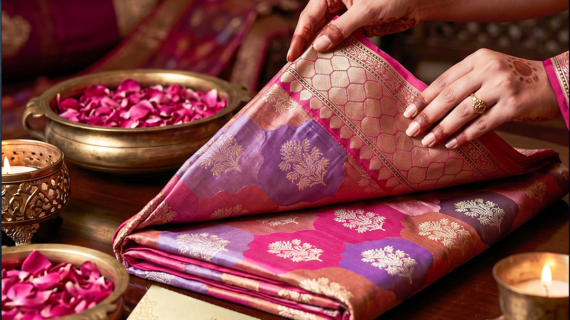
Carefully folded Meenakari silk saree demonstrating storage and care tips

Frequently Asked Questions

What is the difference between a Meenakari silk saree and a regular Banarasi silk saree? +

A regular Banarasi silk saree typically features gold or silver zari brocade work on a silk base. A Meenakari Banarasi saree adds multicoloured silk thread weaving into the brocade motifs — inspired by the art of Meenakari (enamel work) — creating vibrant, multi-toned patterns within the same weave.

How do I know if my Meenakari saree is made from pure handloom silk? +

Look for the Silk Mark and Handloom Mark certifications attached to the saree. You can also check for minor organic irregularities in the weave — hallmarks of genuine handloom craftsmanship. Buying from reputable sources like Silk Khazana is the most reliable method.

What is the price range for an authentic Meenakari pure handloom silk saree? +

Authentic Meenakari pure handloom silk sarees typically range from ₹8,000 to ₹1,50,000 or more, depending on the complexity of the Meenakari design, the quality of the silk, the type of zari used, and the time invested in weaving.

How should I store my Meenakari silk saree to preserve the zari work? +

Wrap the saree in soft, undyed muslin cloth and store it in a flat, dry location. Avoid plastic bags, which trap moisture and can tarnish zari over time. Refold the saree every few months to prevent permanent crease lines.

Wear the Art. Own the Heritage.

Browse our curated collection of royal Meenakari pure handloom silk sarees — each one sourced directly from master weavers, certified authentic, and crafted to become your most cherished possession.

Explore the Collection
Silk Khazana | Varanasi’s Silk Heritage Blog
Heritage & Craft

Introduction to Varanasi’s Silk Heritage

Varanasi isn’t just a city—it’s an emotion woven into threads of tradition, spirituality, and craftsmanship.

When people think of this ancient city, they often picture the ghats, the Ganga aarti, and the timeless charm that seems to exist outside of modern chaos. But there’s another treasure Varanasi holds close—its world-famous silk sarees. These sarees aren’t just garments; they are heirlooms, stories, and symbols of elegance passed down through generations.

Walking through the narrow lanes of Varanasi, you’ll find the rhythmic clatter of looms echoing from small workshops. That sound? It’s history being created in real time. The silk industry here dates back centuries, with roots tied to royal patronage and Mughal artistry. Each saree tells a tale of patience, skill, and artistic brilliance that no machine can replicate.

This is where Silk Khazana enters the picture—not just as a store, but as a curated destination that brings the essence of Banarasi craftsmanship under one roof. For anyone looking to invest in authenticity rather than imitation, Silk Khazana offers a gateway into the real world of handwoven silk.

Intricate Zari work close-up

The hallmark of Banarasi sarees: Intricate handwoven gold and silver zari.

Why Varanasi is Famous for Silk Sarees

There’s a reason why Banarasi sarees are often described as the “queen of silks.” It all comes down to the intricate craftsmanship and the luxurious feel that sets them apart from anything else in the textile world. Unlike mass-produced fabrics, Banarasi silk sarees are created using techniques that have been refined over hundreds of years.

Another factor that elevates Varanasi’s reputation is the quality of silk used. The city sources some of the finest silk threads, ensuring that the final product is not just beautiful but also durable. According to textile experts, authentic Banarasi silk can last decades when properly cared for, making it a valuable long-term investment.

Bridal Banarasi Elegance

A symbol of grace: The Banarasi saree remains a bridal favorite across generations.

Cultural Significance of Banarasi Sarees

In Indian culture, a Banarasi saree is more than just attire—it’s a milestone. From weddings to festivals, these sarees hold emotional and symbolic value that goes far beyond aesthetics. For many brides, wearing a Banarasi saree is a tradition that connects them to generations of women in their family.

Interestingly, Banarasi sarees also reflect India’s rich cultural diversity. The designs often incorporate influences from Persian art, Mughal architecture, and Hindu symbolism. This fusion creates a unique aesthetic that appeals to people across different backgrounds and tastes.

What Makes Silk Khazana Stand Out

In a city filled with countless saree shops, standing out isn’t easy. Silk Khazana isn’t just another retail outlet—it operates more like a bridge between traditional artisans and modern buyers. Instead of relying heavily on middlemen or mass production, the brand focuses on sourcing directly from skilled weavers. This ensures that every saree retains its originality, and customers get exactly what they’re paying for.

Legacy and Craftsmanship

At the heart of Silk Khazana lies a deep respect for craftsmanship. Every saree you find here is a testament to the dedication and skill of artisans who have spent years mastering their craft. These aren’t factory workers—they are artists, each with a unique style and technique that adds character to every piece they create.

Vibrant Saree Collection

A treasure chest of textiles: The diverse and curated collection at Silk Khazana.

Commitment to Quality and Authenticity

When it comes to buying silk sarees, authenticity isn’t just a preference—it’s a necessity. Every saree at Silk Khazana undergoes a careful selection process before it reaches the showroom floor. From the purity of the silk threads to the intricacy of the zari work, each element is closely examined.

Wide Range of Sarees at Silk Khazana

Walking into Silk Khazana feels a bit like stepping into a treasure chest of textiles. The variety is impressive, but it doesn’t feel overwhelming because everything is thoughtfully curated. Whether you’re shopping for a wedding, a festive occasion, or something elegant for a formal event, there’s a saree here that feels like it was made just for you.

Katan Silk Texture

The royal touch: Pure Katan silk, known for its strength and lustrous finish.

Banarasi Katan Silk Sarees

If Banarasi sarees had a royal category, Katan silk would undoubtedly sit at the top. Known for its durability and luxurious texture, Katan silk is made from pure silk threads that are tightly woven to create a smooth and resilient fabric. At Silk Khazana, this category is treated with the importance it deserves.

Organza and Georgette Collections

Not every occasion calls for heavy silk, and that’s where Silk Khazana’s organza and georgette collections shine. These fabrics offer a lighter, more breathable alternative without sacrificing elegance. Perfect for daytime events, casual celebrations, or even office wear, they bring a refreshing versatility to the saree wardrobe.

Organza and Georgette Collection

Light as air: Organza and Georgette sarees for modern, versatile styling.

The Art Behind Every Saree

A Banarasi saree isn’t created overnight. It’s the result of days, sometimes months, of meticulous effort. Behind every piece lies a story of patience, precision, and passion. Silk Khazana places a strong emphasis on showcasing this artistry.

Traditional Weaving Techniques

The magic of Banarasi sarees lies in their weaving techniques, many of which have been passed down through generations. From brocade weaving where patterns appear almost embossed to the intricate incorporation of metallic zari threads, these techniques are the core identity of each saree.

Why Choose Silk Khazana Over Others

Silk Khazana stands apart not because it claims to be the best, but because it consistently delivers on the details that truly matter to buyers. The balance between tradition and trust ensures that what you see aligns with what you get.

Feature Silk Khazana Typical Market Shops
Authenticity High (verified) Often uncertain
Pricing Transparency Clear Often negotiable
Quality Consistency Reliable Varies widely
Value for Money Strong Inconsistent

Customer Experience and Reviews

Instead of aggressive selling, the staff focuses on understanding your needs. Reviews from buyers often highlight this exact aspect—the feeling of being guided rather than sold to. Many customers mention how the staff patiently explained the differences between various types of silk.

Tips for Buying Authentic Banarasi Silk

One of the first things to keep in mind is that genuine Banarasi silk has a certain richness that’s hard to fake. It’s not just about shine; it’s about depth. The fabric feels smooth yet slightly textured, and it drapes naturally without feeling stiff or overly slippery.

Frequently Asked Questions

Is Silk Khazana a trusted silk saree shop in Varanasi?

Yes, Silk Khazana is known for its authenticity, quality control, and transparent pricing.

What types of sarees are available at Silk Khazana?

The store offers a wide range, including Banarasi Katan silk, organza, georgette, and other traditional as well as contemporary designs.

How can I ensure I am buying pure Banarasi silk?

Check the texture, zari work, and weaving patterns. Buying from reputable stores like Silk Khazana and looking for certifications like the Silk Mark also helps.

Conclusion

Silk Khazana doesn’t just offer sarees—it offers confidence. And that’s what makes it a name worth remembering when you think of Banarasi silk. Choosing something authentic carries its own significance in a world that increasingly leans toward fast fashion.

Pure Katan Silk Saree – The Timeless Treasure of Silk Khazana

Silk Khazana Presents

Pure Katan Silk Saree

The Timeless Treasure of Silk Heritage

Understanding Pure Katan Silk Sarees

What Makes Katan Silk Unique

When we talk about pure Katan silk sarees, we are stepping into a world where tradition meets unmatched craftsmanship. Katan silk is not just another fabric; it is a luxurious textile created by twisting pure silk threads together to form a stronger, more durable yarn.

This twisting process enhances the strength of the fabric while maintaining its natural sheen, giving Katan silk sarees their signature glossy finish and smooth texture. Unlike synthetic blends or lower-grade silks, pure Katan silk stands out due to its authenticity, richness, and longevity.

Pure Katan Silk Fabric Texture Detail

A genuine Katan silk saree feels slightly heavier than other silk variants—a mark of quality reflecting the density of the weave and the purity of the silk used. It drapes beautifully, hugging the body to create a regal silhouette that is hard to replicate with any other textile.

Origin and Heritage

The history of Katan silk sarees is deeply rooted in India’s rich textile heritage, particularly in Varanasi (Banaras). For centuries, this region has been the heart of silk weaving, producing exquisite sarees influenced by Mughal-era Persian patterns blended with Indian aesthetics.

Silk Khazana represents this treasure trove of artistry and authenticity. By choosing a pure Katan silk saree, you are not just buying fabric—you are preserving a legacy that has stood the test of time.

Traditional Weaver sitting beside a loom in Varanasi

The Art of Craftsmanship

Traditional Weaving

Each saree is meticulously crafted using handlooms. The process takes several days or even weeks. The addition of zari work—often fine gold or silver threads—adds a layer of luxurious complexity.

Synchronized Effort

The warp and weft threads are interlaced carefully to create a dense, durable fabric. A single mistake can disrupt the entire design, requiring the precision of master artisans.

Role of Skilled Artisans

Behind every saree is a skilled artisan whose dedication brings the fabric to life. They understand color combinations and pattern symmetry in ways machines simply cannot replicate.

Types of Pure Katan Silk Sarees

Banarasi Katan Silk Sarees

Holding a place of unmatched prestige, these sarees featuring floral vines, paisleys, and architectural patterns. They are the ultimate symbol of tradition and grandeur, especially popular for bridal wear.

Contemporary Designer Variants

Modern designers blend classic techniques with innovative designs, catering to evolving fashion sensibilities with minimalistic patterns and fusion styles.

Luxurious Banarasi Katan Silk Saree Display

Why Choose Pure Katan Silk?

Fabric Quality: High-grade silk processed into strong, smooth yarn with a natural, polished glow.

Durability & Longevity: A valuable investment that can last for decades, often becoming a cherished family heirloom.

Investment Value: Authentic handwoven silk retains and often appreciates in value over time.

Elegant styling of a Katan Silk Saree

Care and Maintenance

Storage: Wrap in soft cotton cloth and store in a cool, dry place away from sunlight. Avoid hanging for long periods.

Cleaning: Dry cleaning is the safest option to preserve the fabric and intricate designs. Avoid harsh detergents.

Pure Katan Silk Saree safely wrapped in a cotton cloth for storage

Frequently Asked Questions

What is a pure Katan silk saree? +

A pure Katan silk saree is made from tightly twisted silk threads, resulting in a durable and luxurious fabric known for its smooth texture and rich appearance.

How can we identify authentic Katan silk? +

Look for Silk Mark certification, examine the texture (smooth yet slightly grainy), and perform a burn test if necessary (smells like burnt hair).

Are Katan silk sarees suitable for weddings? +

Yes, they are ideal for weddings due to their regal appearance, opulent designs, and heritage value.

How should we store Katan silk sarees? +

Store them in a cool, dry place wrapped in cotton cloth, away from sunlight to prevent fading and damage.

Experience the Elegance

Explore our curated collection of authentic Pure Katan Silk Sarees.

Explore Silk Khazana