
The three marks at a glance
There are three different certifications you may encounter when buying a Banarasi saree: the GI tag, the Silk Mark, and the Handloom Mark. Each certifies something completely different, and none of them, on its own, tells you everything.
This table is the heart of this guide. If you remember nothing else, remember this:
| Certification | What it certifies | What it does NOT prove |
|---|---|---|
| GI Tag Banaras Brocades & Sarees |
Saree originates from the defined Banaras region | Not handloom; not silk purity |
| Silk Mark Central Silk Board |
The textile is pure natural silk | Not handloom; not from Banaras |
| Handloom Mark Ministry of Textiles |
Fabric was handwoven on a traditional loom | Not silk purity; not regional origin |
Read that right-hand column carefully. A Silk Mark proves your saree is real silk — it says nothing about whether it was woven by hand or machine, or whether it came from Varanasi or anywhere else. A powerloom saree made of pure silk can legitimately carry a Silk Mark. This is not a flaw — each mark answers one specific question. The confusion arises when a seller lets you assume one label covers all three.
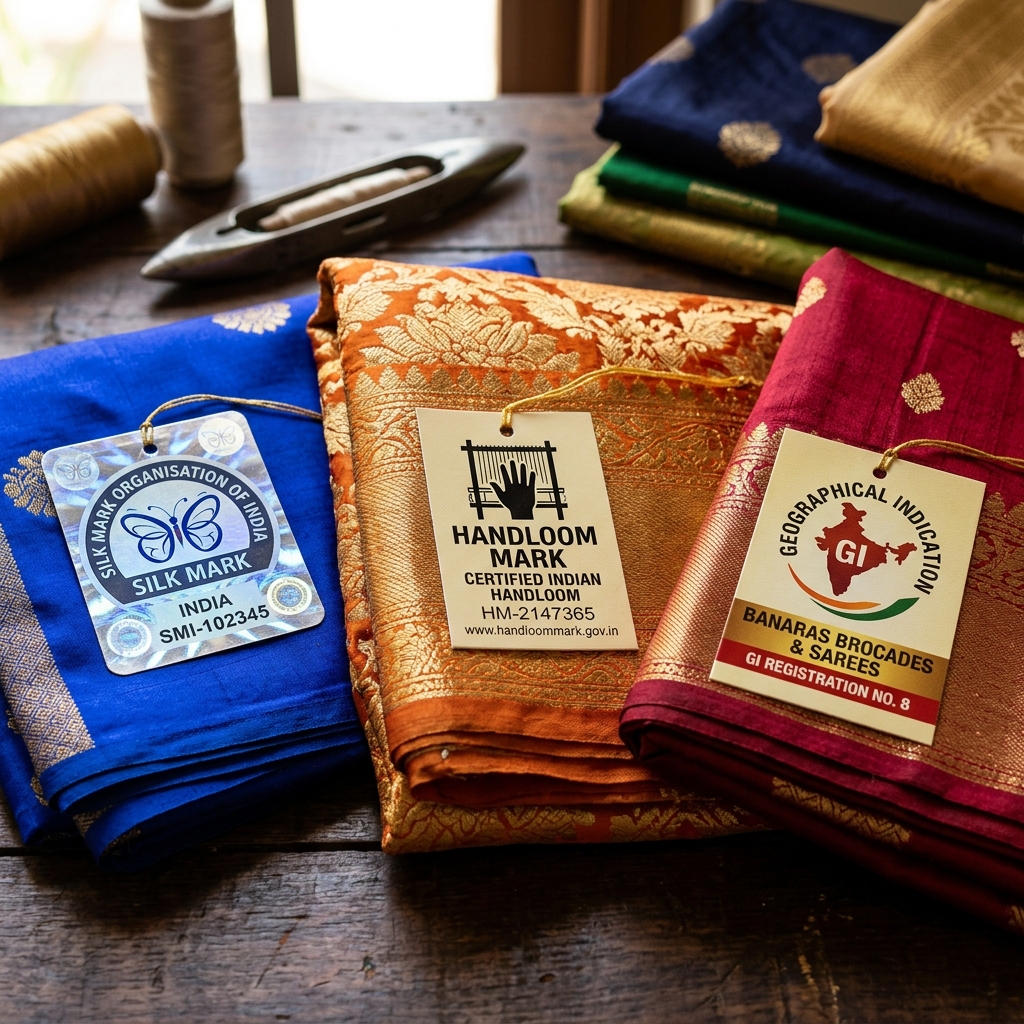
Three marks, three different questions answered — understand what each one actually proves.
The GI Tag: what "Banarasi" legally means
A Geographical Indication (GI) is a form of intellectual property protection that ties a product to its place of origin — the same principle that protects Champagne or Darjeeling tea.
In 2009, "Banaras Brocades and Sarees" received GI status. The application was led by the Banaras Bunkar Samiti, and the protection covers weaving in a defined area of eastern Uttar Pradesh — Varanasi and the surrounding districts of Mirzapur, Chandauli, Bhadohi, Jaunpur and Azamgarh.
What it protects
The GI stops sarees woven elsewhere from being sold as "Banarasi". It protects buyers who get what they paid for — and weaving communities whose craft the name represents.
Origin ProtectionThe honest limitation
Enforcement in a large informal market is genuinely difficult. Not every authentic Banarasi carries a visible GI label, and "GI" in a product description cannot be verified from a photograph online.
Know the limitsHow to use it
Treat the GI as important context — a reason to care where your saree was actually woven — rather than as a sticker that settles the authenticity question by itself.
Context, not proofThe Silk Mark: what it does and doesn't certify
The Silk Mark is issued by the Silk Mark Organisation of India, a society established under the Central Silk Board. Its purpose is narrow and specific: it certifies that a textile is made of pure natural silk.
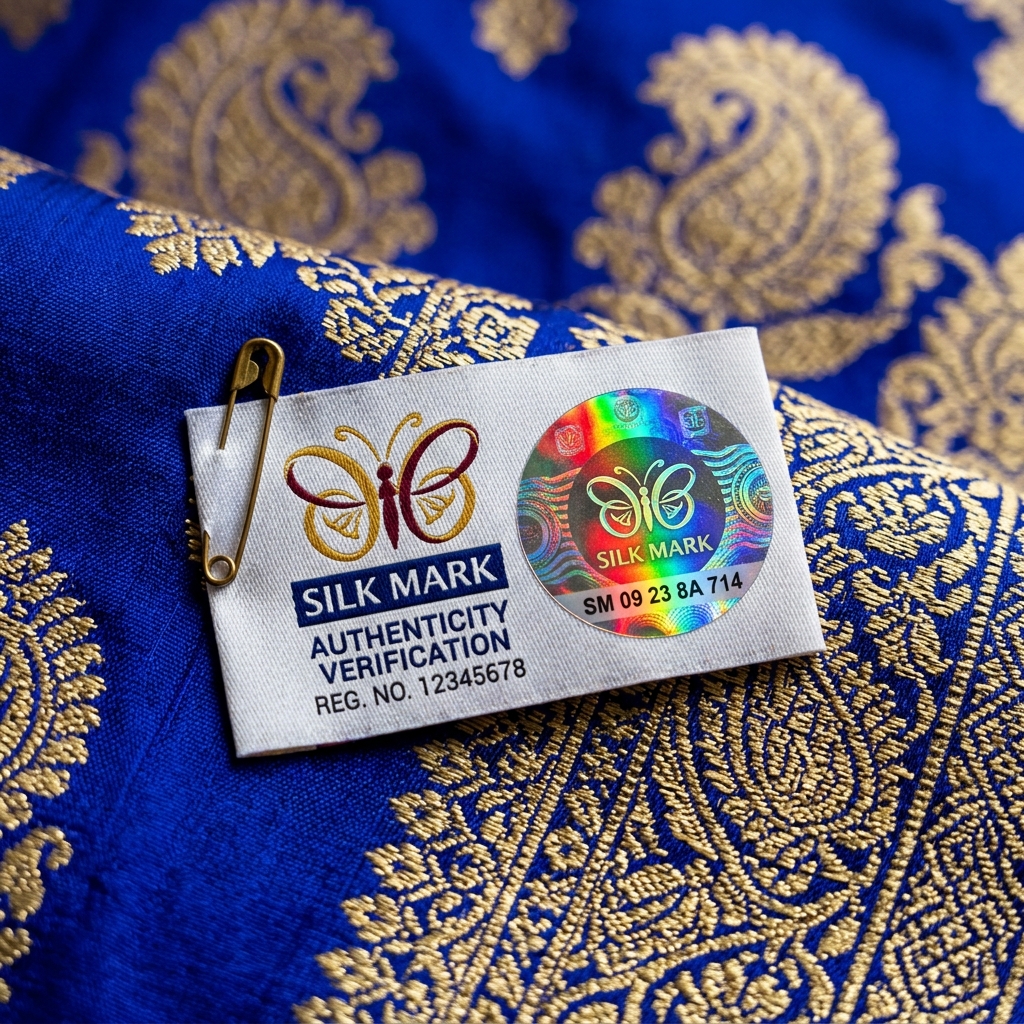
A genuine Silk Mark carries both a hologram and a unique traceable identification number — both are required to be genuine.
How to check a Silk Mark label
A genuine Silk Mark label carries:
- A hologram that shifts colour and pattern at different angles
- A unique identification number traceable back to the authorised registered user who applied it
That traceability is the point. If a seller shows you a Silk Mark label, the number on it corresponds to a registered entity. A photocopied or generic-looking label with no hologram or number is a red flag in itself.
The three limits you must know
- It certifies fibre, not craft. Both handloom and powerloom sarees can carry Silk Mark, provided the silk is genuine.
- It certifies fibre, not origin. A pure silk saree woven far outside the Banaras region can carry a Silk Mark.
- It is advisory, not mandatory. Many genuine weavers — particularly smaller family units — sell authentic sarees without registering for it.
The absence of a Silk Mark does not mean a saree is fake. Its presence does not mean the saree is handwoven in Varanasi. It is one useful data point about one specific question.
The Handloom Mark: the one most buyers have never heard of
If what you care about is that a human being wove your saree on a traditional loom, the Handloom Mark is the certification that actually addresses that. It is issued under the Development Commissioner for Handlooms, Ministry of Textiles, and certifies that a fabric was handwoven — regardless of whether it is silk, cotton, or wool.
A saree can legitimately carry both Silk Mark and Handloom Mark: the first confirming the fibre is pure silk, the second confirming it was woven by hand. Together, that is meaningfully stronger assurance than either alone.
Why this matters for Banarasi specifically
Banarasi sarees are genuinely produced on both handloom and powerloom. Both are real products with real markets — a powerloom Banarasi is not a scam; it is simply a different thing at a different price, and it should be sold as such. The problem is only ever dishonesty: when a powerloom saree is presented as handloom to justify a handloom price. Any seller who tells you that every saree they stock is handloom is telling you something statistically improbable.
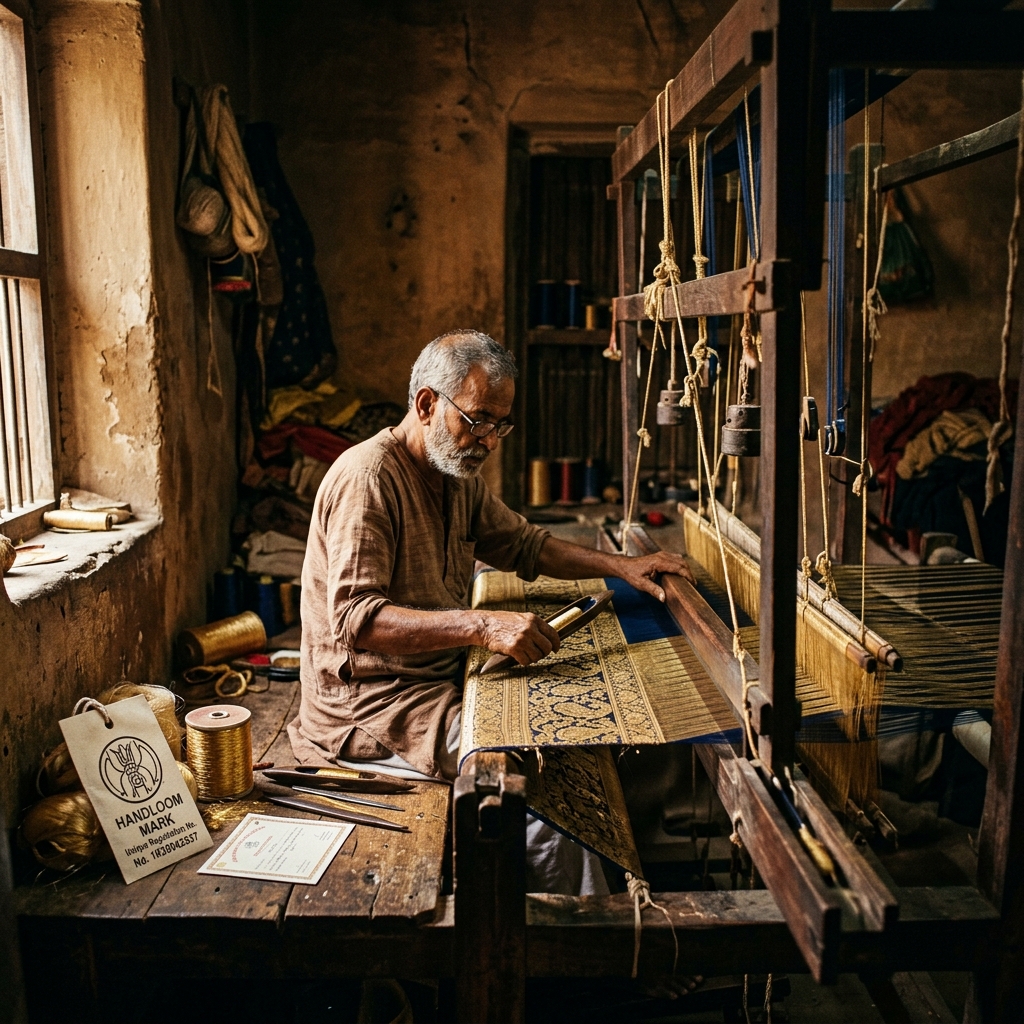
The Handloom Mark certifies human hands wove the fabric — the one certification most buyers never ask about.
What no certification can tell you
Certifications verify specific, narrow facts. Here is the part most articles skip entirely. They cannot tell you:
Outside the scope of all certifications
- The quality of the weaving — whether motifs are cleanly executed, whether the bel resolves properly at the corners, whether the pallu is well proportioned
- The type of zari — no mark certifies whether zari is precious-metal gold/silver or contemporary metallic. You must ask the seller directly.
- The weaving technique — Kadwa versus Fekwa makes an enormous difference to labour and price, and no label records it
- Whether the price is fair for the work actually involved in making that specific saree
These are judgements, and they come from either your own developing eye or a seller you can trust to answer straight questions. Which brings us to the thing that actually matters most.
The verification method that works
Use certifications as supporting evidence within a broader check. In order of practical usefulness:
1
Assess the source first
A Varanasi-based manufacturer who will answer direct questions is the strongest signal available. Ask: What is the fabric? Handloom or powerloom? What weaving technique? What type of zari? Vague or evasive answers tell you more than any label.
2
Turn the saree over
Genuine woven brocade shows the pattern in reverse on the back, with thread work clearly visible. A print shows a flat, faded ghost of the front with no thread work. This single check eliminates most imitations instantly.
3
Feel the fabric
Real silk has weight, warmth against the skin, and a soft rather than glassy sheen. Check the selvedge and finishing quality. Genuine handwoven pieces show neat, considered edges.
4
Then check the labels
Silk Mark for fibre purity — confirm the hologram and unique number. Handloom Mark if handweaving matters to you. Understand the GI as important context for what "Banarasi" should mean.
5
Watch for these red flags
Any single "guaranteed" authenticity test; blanket claims all stock is handloom; assumptions all zari is gold; prices dramatically below market for comparable work. Intricate handweaving has an irreducible labour cost.
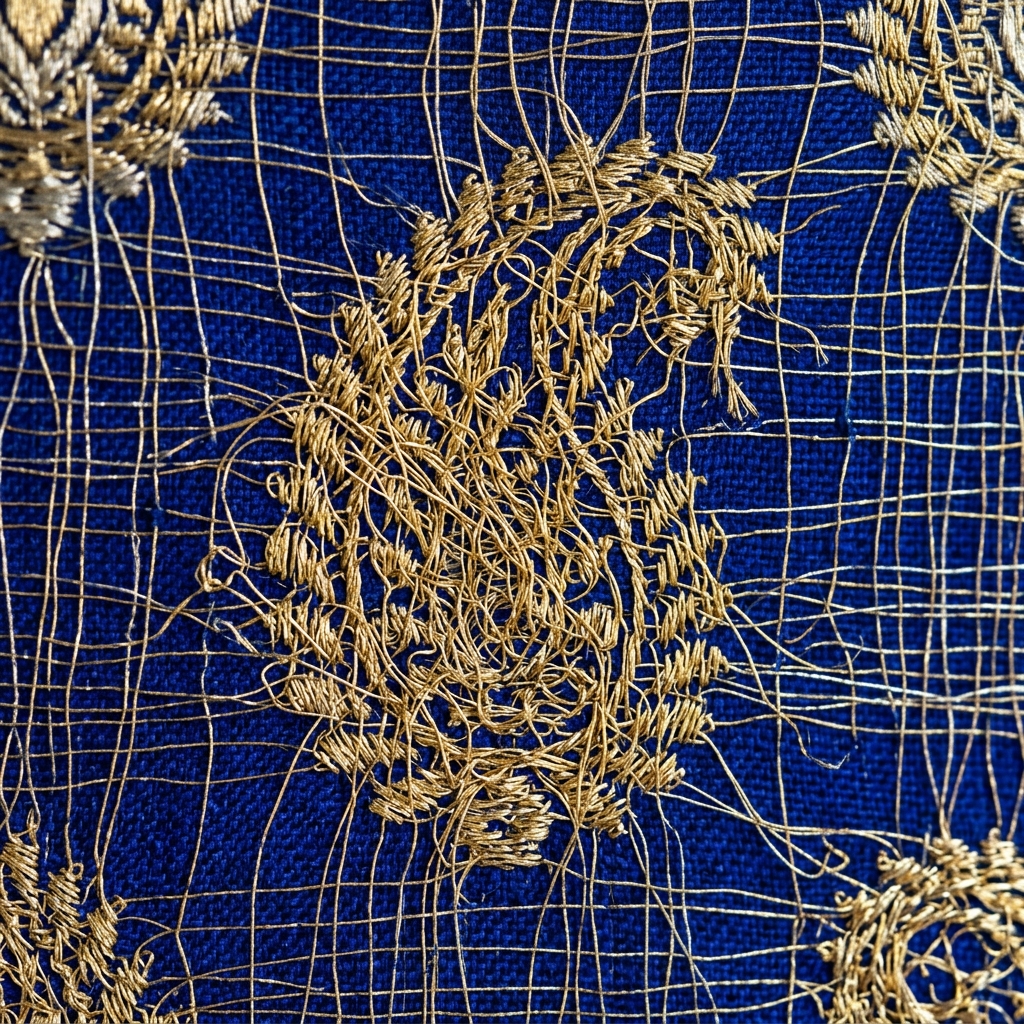
Turn it over: the reverse of genuine woven brocade shows floating threads or motif reverses — a print shows nothing.
For more detail on steps 2 and 3, read our guide on how to identify a pure Banarasi silk saree.
How we handle this at Silk Khazana
We are a family-owned manufacturer weaving Banarasi silk in Varanasi since 1970 — inside the GI region, in our own weaving operation.
What that means for you practically: when you ask us what a saree is, you get a specific answer. If a saree is powerloom, we say so. If the zari is contemporary metallic rather than precious metal, we say so. If a saree is not right for your occasion or budget, we'll tell you that too.
We would rather you buy the right saree with full information — even if that turns out to be a less expensive one — than buy an expensive one under a misunderstanding and lose trust in the craft entirely.
Explore our collections: Katan silk · Tissue · Meenakari · Real Gold Zari · browse the full shop
Have a saree you are unsure about — even one you are considering elsewhere? Message us on WhatsApp at +91 63073 05873. We are happy to tell you what we see.
Key Takeaways
- Three marks, three different questions. GI = where it was woven. Silk Mark = whether the fibre is pure silk. Handloom Mark = whether a human wove it. No single mark covers all three.
- Silk Mark does not mean handloom. A pure-silk powerloom saree can legitimately carry one. Always confirm the hologram and unique number when you see the label.
- The source outweighs the sticker. A credible Varanasi weaver who answers specific questions about fabric, technique and zari is stronger evidence than any label alone.