+9163073 05873 support@silkkhazana.in
Summer sale discount upto 30%! Shop Now

Silk Khazana Presents
Pure Moonga Silk Sarees
India's Golden Fibre
Introduction
What if a saree could outlast its wearer — and grow more beautiful with every passing year?
That is not a poetic exaggeration. It is the lived reality of owning a Pure Moonga Silk Saree.
Among the rarest and most coveted silks in the world, Moonga silk (also written as Muga silk) carries a story that stretches across centuries of Indian royalty, master weavers, and the sun-drenched river valleys of Assam. Today, when artisans at Silk Khazana in Varanasi weave Moonga silk into a saree, they are continuing a tradition that is — quite literally — ancient.
Whether you are an NRI searching for an heirloom-quality saree to wear at a wedding back home, or a traveller who has fallen in love with India's textile heritage, this guide will tell you everything you need to know about Pure Moonga Silk Sarees: what they are, why they are special, how to identify the real thing, and how to style and care for them.
Let us begin with the silk itself.
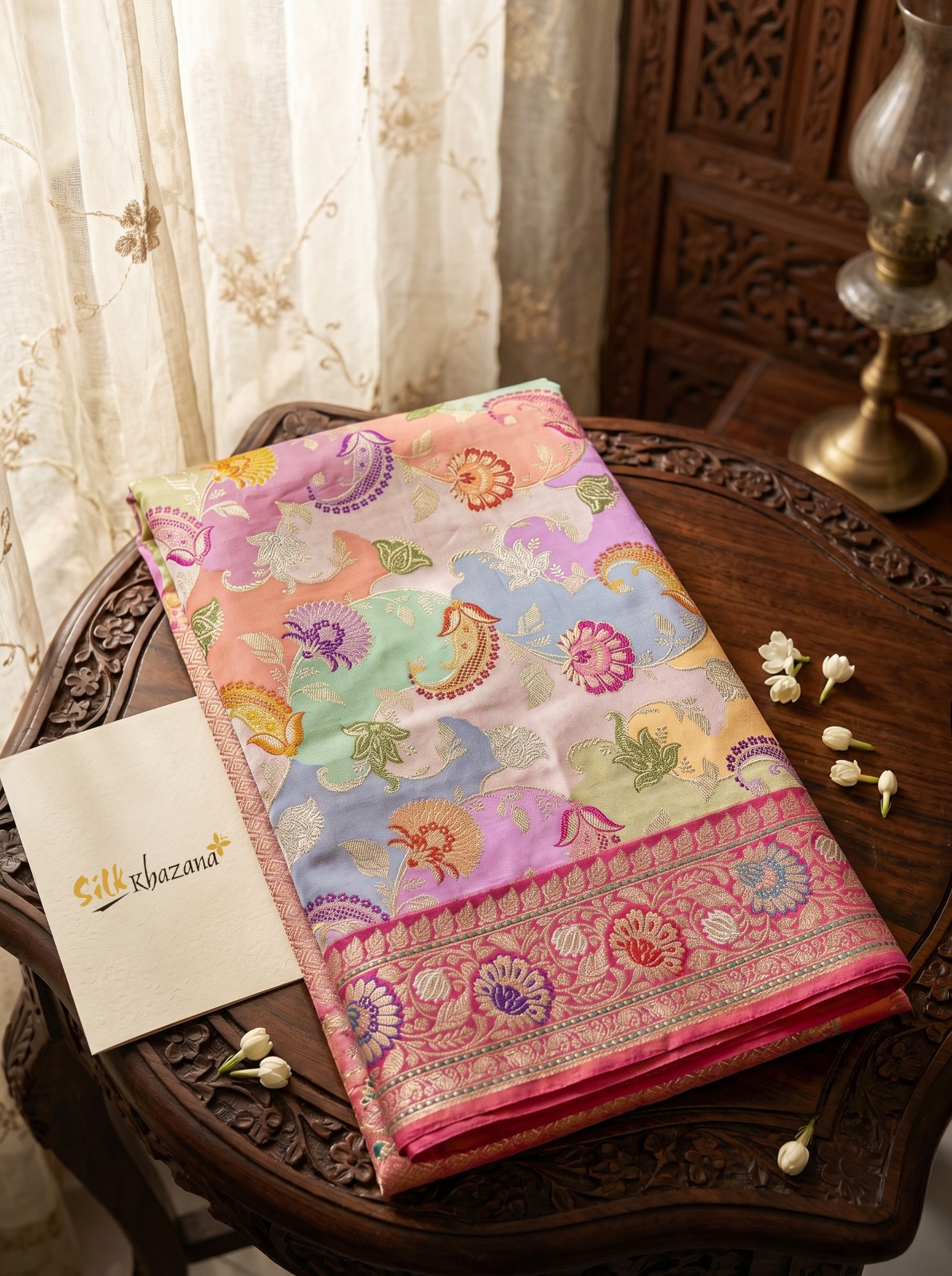
What Is Moonga Silk? The Origin Story of India's Golden Fibre
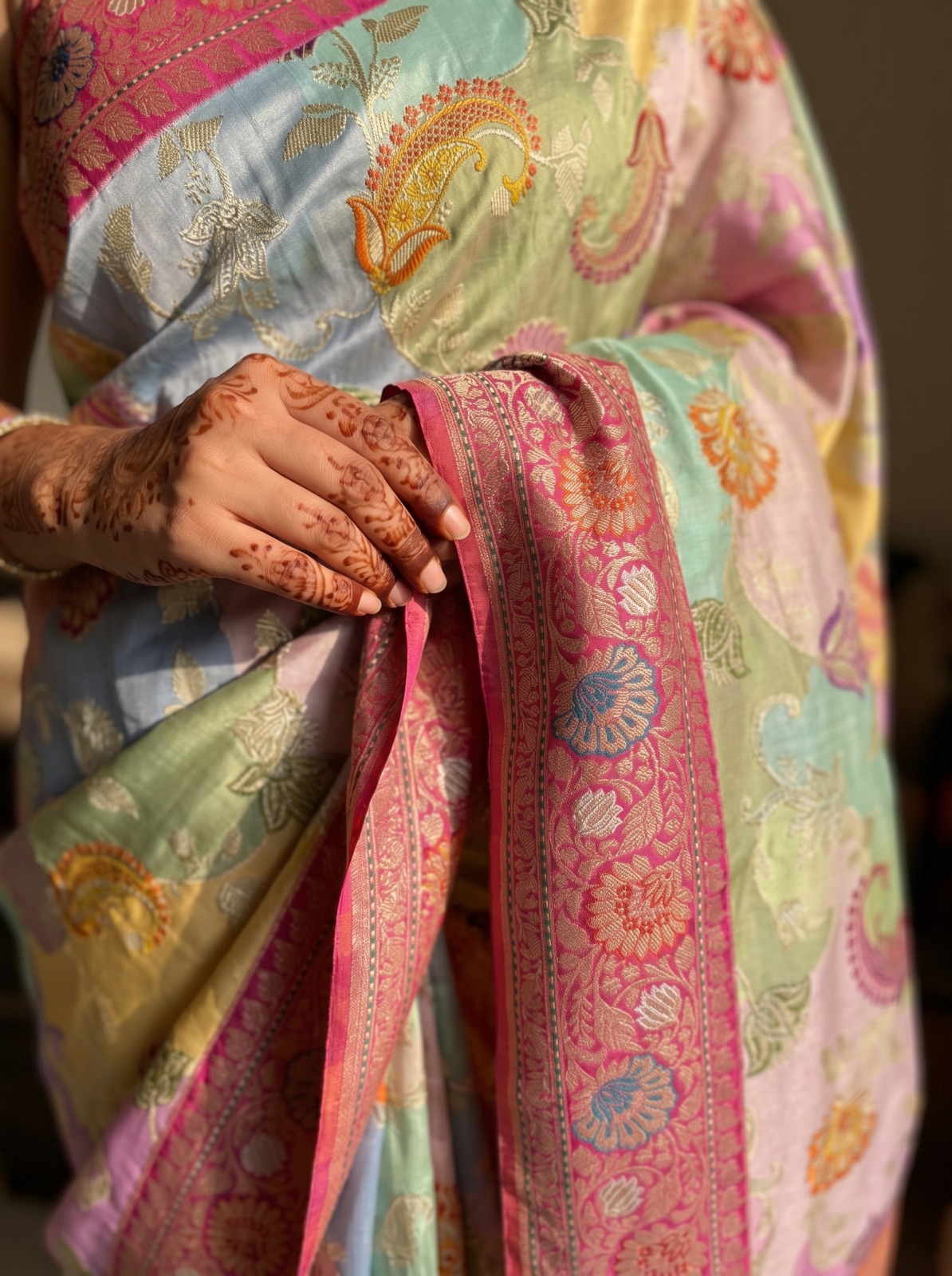
The Silkworm Behind the Gold
Moonga silk — also called Muga silk — is produced by a semi-wild silkworm known as Antheraea assamensis, found exclusively in the lush forests of Assam, northeastern India. The name "Muga" derives from the Assamese word for "yellowish," a direct nod to the silk's signature natural golden hue that no dye can replicate.
What makes this silk truly extraordinary is that Antheraea assamensis exists nowhere else on earth. The silkworm feeds on the aromatic leaves of the Som (Machilus bombycina) and Soalu (Litsaea polyantha) trees, and it is this unique diet in Assam's biodiverse forests that gives Moonga silk its distinctive lustre and strength.
A single Pure Moonga Silk Saree requires approximately 1,000 grams of raw silk, which means roughly 8,000 cocoons are needed to weave just one drape. That number alone tells you why Moonga silk has always been considered precious.
A History Written in Royal Threads
The history of Moonga silk is as rich as the fabric itself. Ancient Indian texts including the Arthashastra, attributed to the philosopher Kautilya in the 4th–3rd century BCE, reference fine silks from Assam — making this one of the oldest documented textile traditions in the subcontinent.
It was during the reign of the Ahom Dynasty (1228–1826 CE) that Moonga silk weaving truly flourished. The Ahom kings offered royal patronage to weavers, elevating Muga silk from a local fabric to a symbol of sovereignty and prestige. For centuries, Moonga silk garments were reserved exclusively for royalty — ordinary citizens were simply not permitted to wear them.
Today, the GI (Geographical Indication) tag protecting Assam's Muga silk ensures that authentic Moonga silk can only be produced in Assam, safeguarding both the weavers' livelihoods and the fabric's integrity.
5 Reasons Pure Moonga Silk Sarees Are Truly One-of-a-Kind
When women who own Moonga silk sarees say they cherish them above all others, there is substance behind the sentiment. Here is what makes a Pure Moonga Silk Saree genuinely exceptional.
1
The Lustre That Grows Richer With Age
Most fabrics fade. Moonga silk does the opposite. Its natural golden sheen deepens and brightens over years of wearing and washing, making an heirloom Moonga saree more resplendent than a new one. This is a phenomenon unique to Muga silk among all the world's natural fibres.
2
Extraordinary Durability
Moonga silk is widely regarded as the most durable of all silks. It is said — and weavers in Assam will tell you with pride — that a well-cared-for Muga saree outlasts the person who owns it. The tensile strength of Muga silk fibre is significantly higher than that of mulberry silk (the silk used in most commercially available sarees).
3
A Natural, Chemical-Free Sheen
That warm, golden gleam you see in a Pure Moonga Silk Saree is entirely natural — the result of a unique protein structure in the silk filament, not any dye or chemical treatment. This makes Moonga silk a preferred choice for those who value natural, sustainable fashion.
4
Lightweight and Breathable
Despite its richness, Moonga silk is surprisingly breathable and comfortable to wear. The fabric drapes elegantly without clinging, making it suitable for warm Indian climates — a quality especially appreciated by NRIs returning from cooler countries to attend Indian weddings and festivals.
5
It Becomes a Family Heirloom
Because of its exceptional longevity and the fact that its beauty only grows with time, a Pure Moonga Silk Saree is not merely a purchase — it is an investment in a piece of living heritage that can be passed from mother to daughter across generations.
Moonga Silk Sarees at Silk Khazana: Where Assam's Golden Fibre Meets Varanasi's Artistry
Silk Khazana has been a trusted name among discerning saree lovers for its uncompromising commitment to authentic, handwoven silk sarees. Based in Varanasi — the global capital of silk weaving — Silk Khazana brings together the finest Moonga silk with the city's legendary Banarasi craftsmanship to create sarees that are genuinely extraordinary.
Banarasi Moonga Silk Sarees
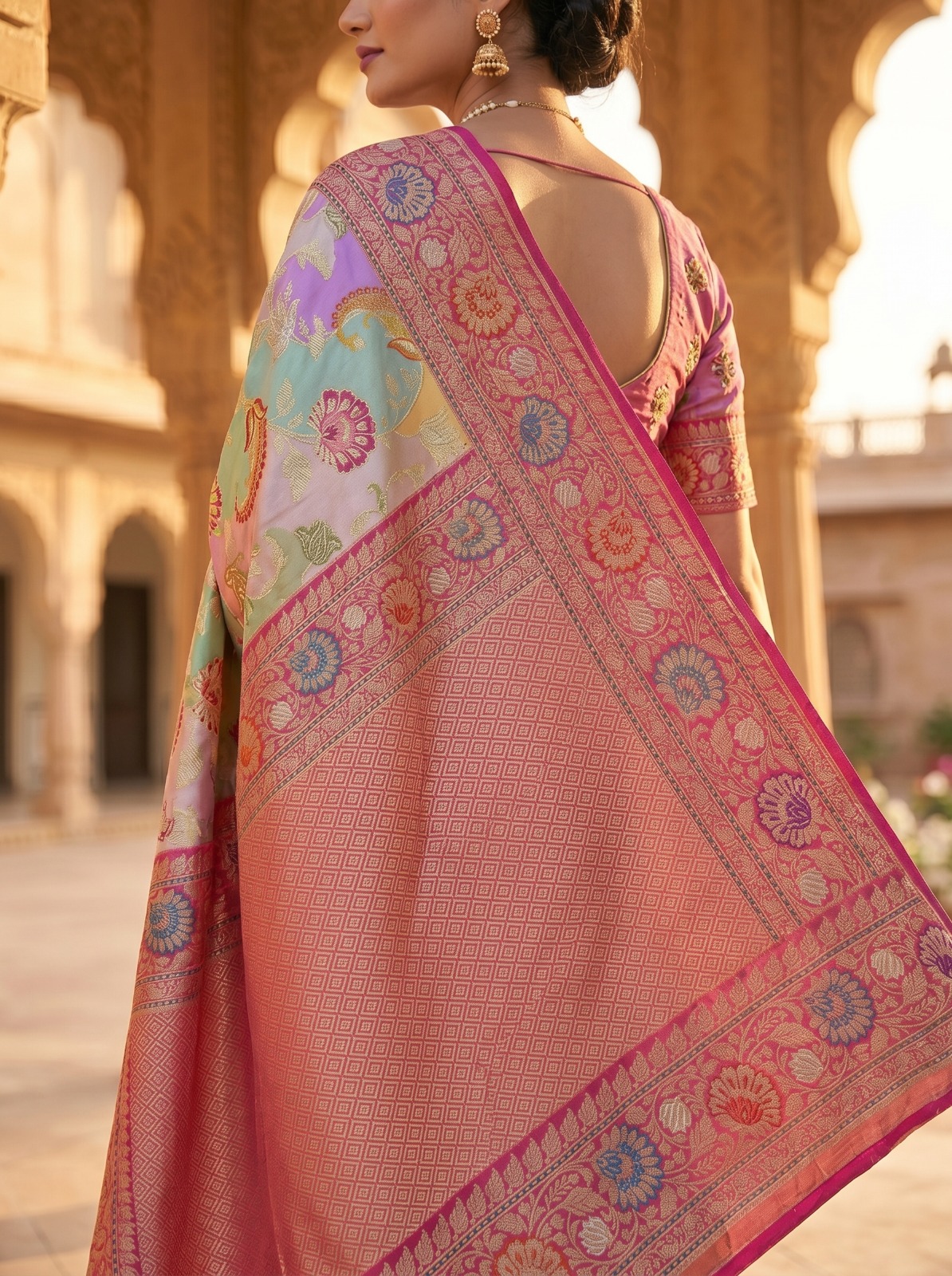
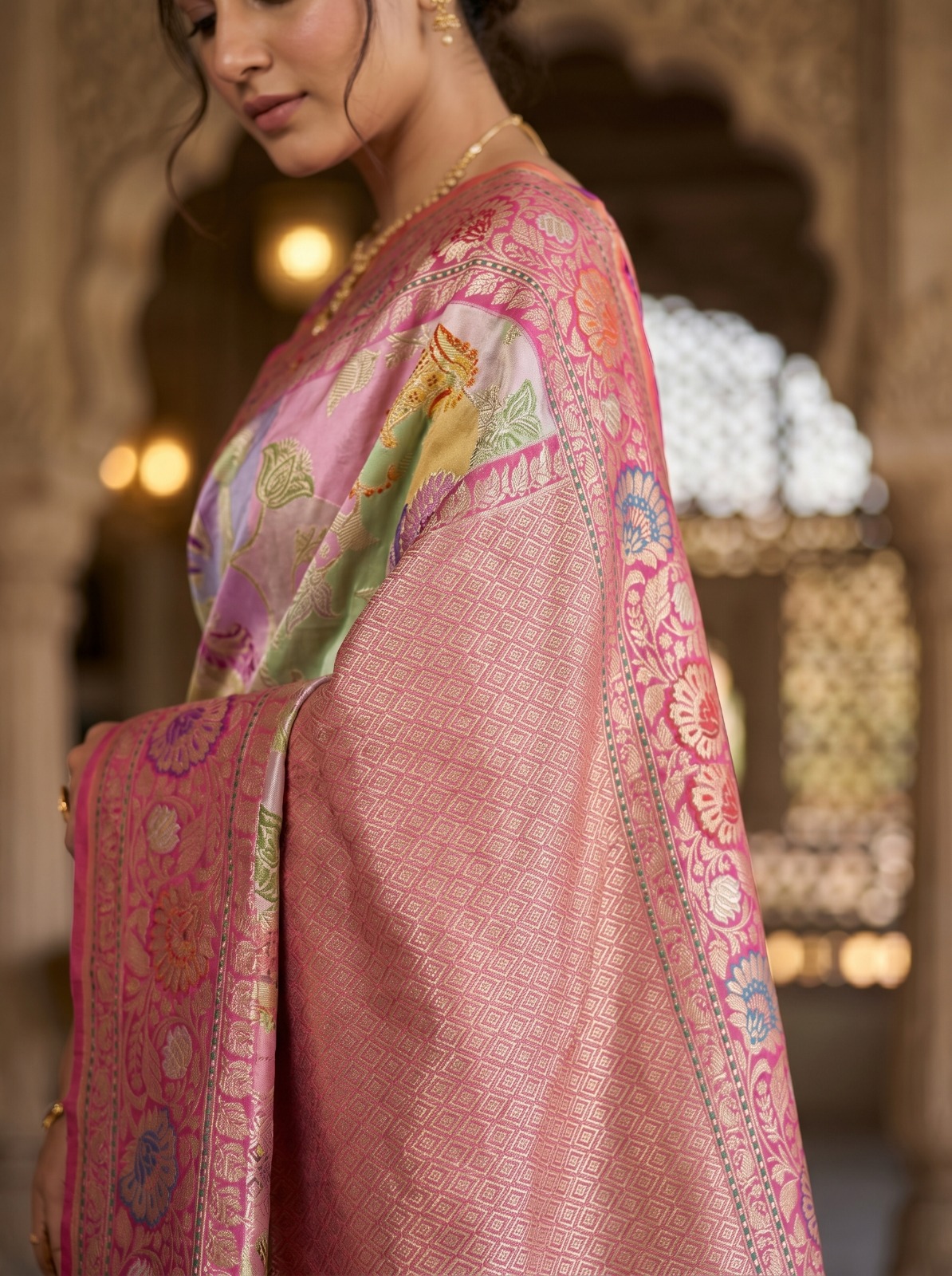
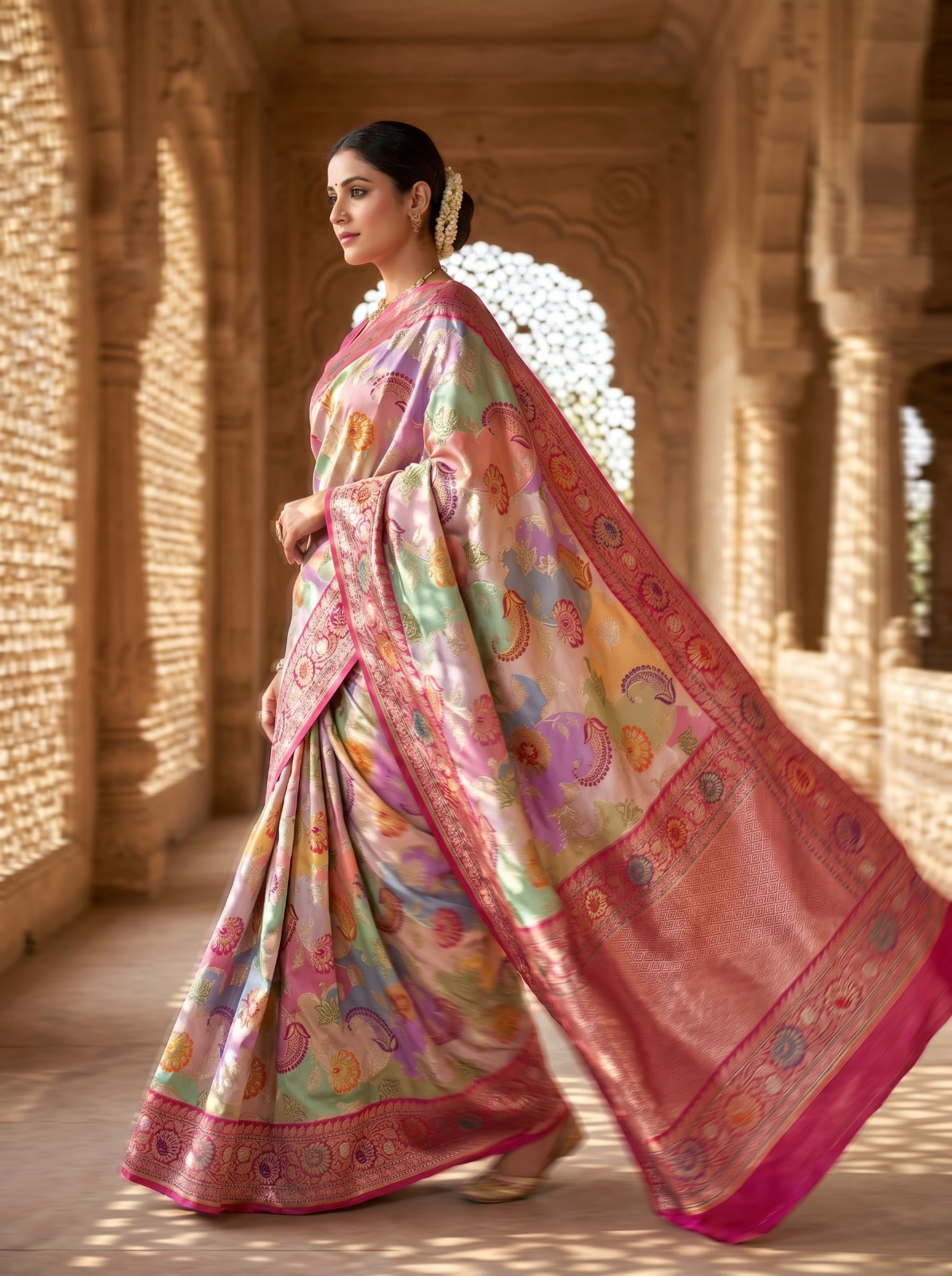
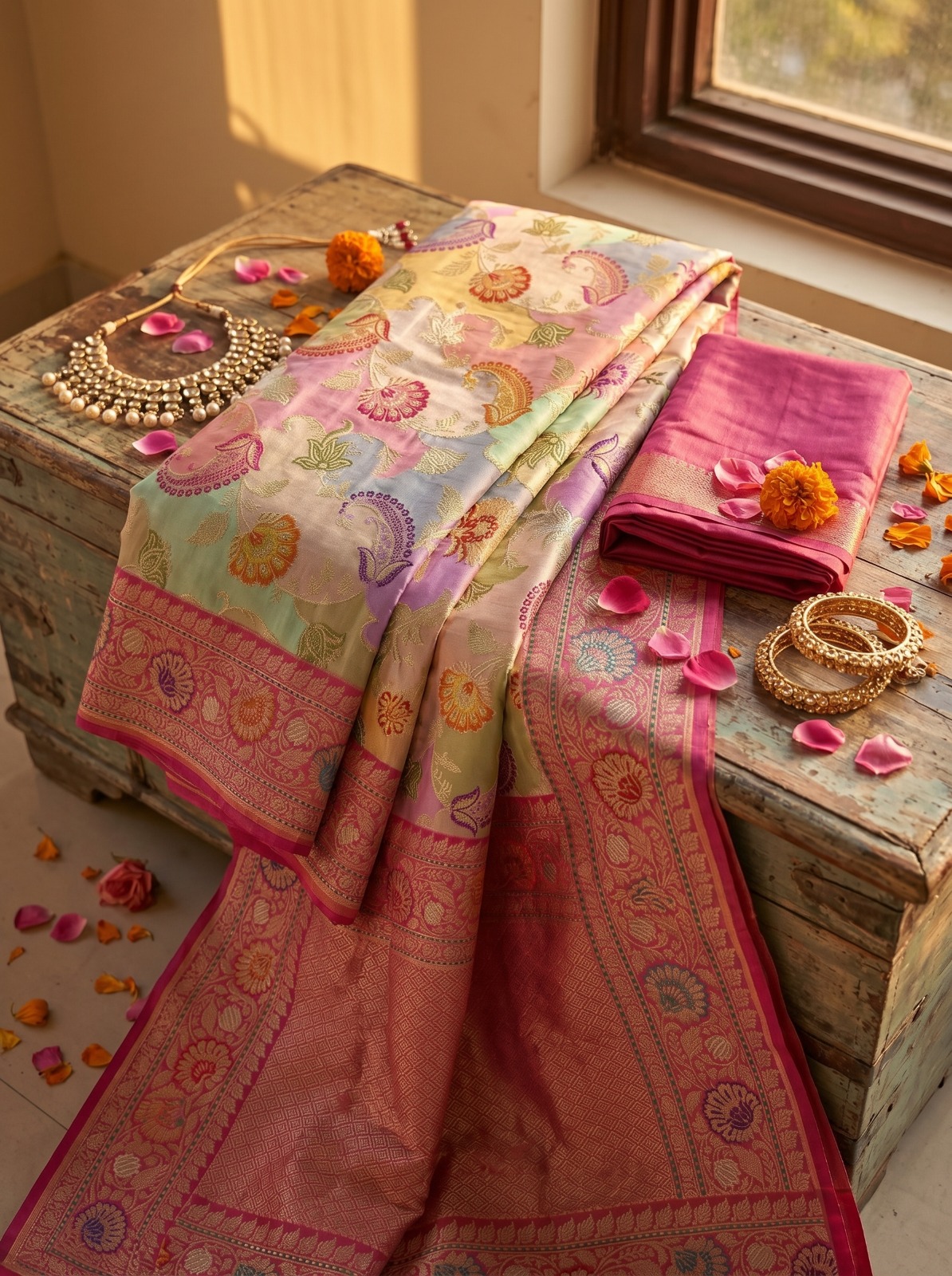
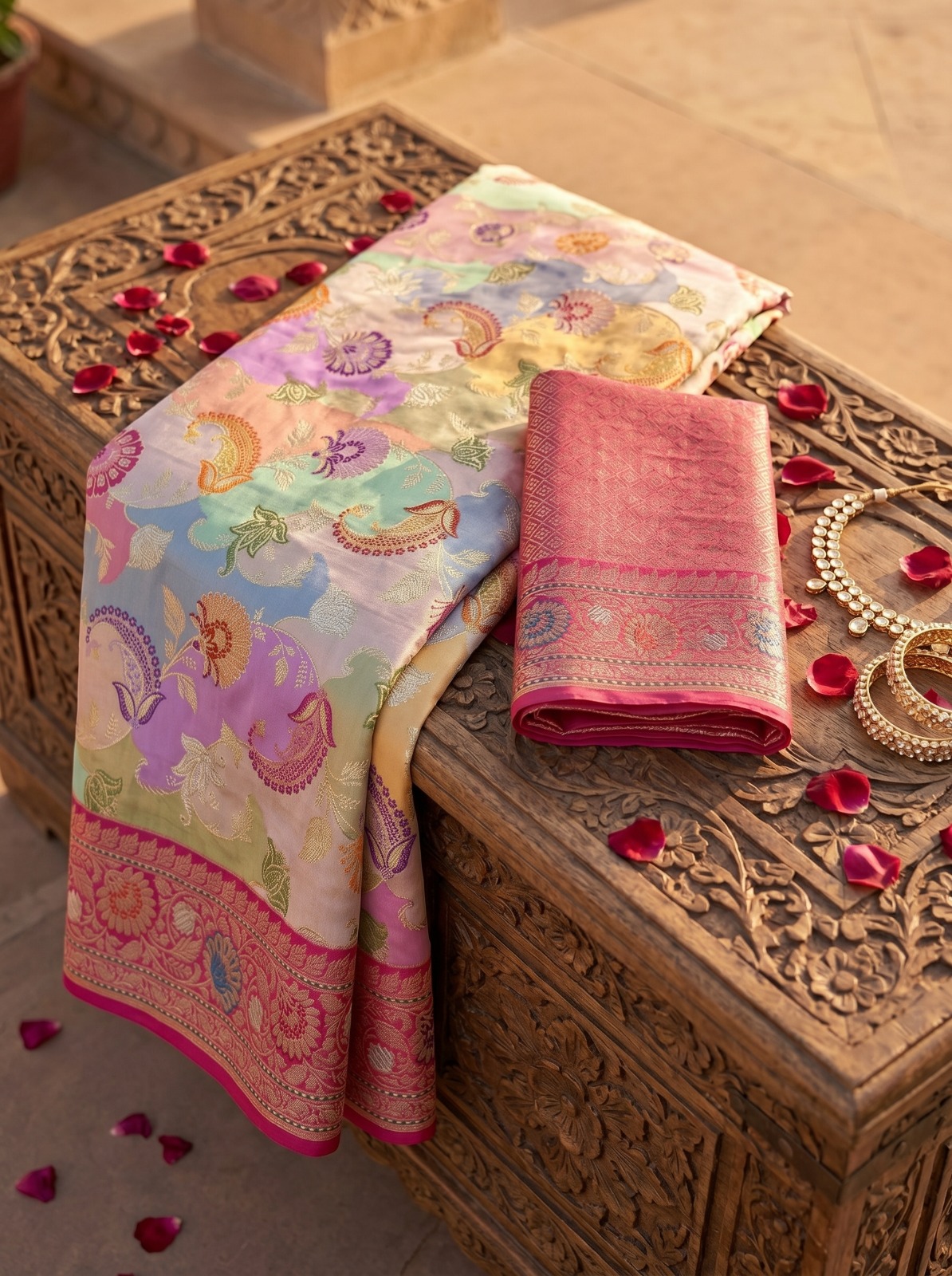
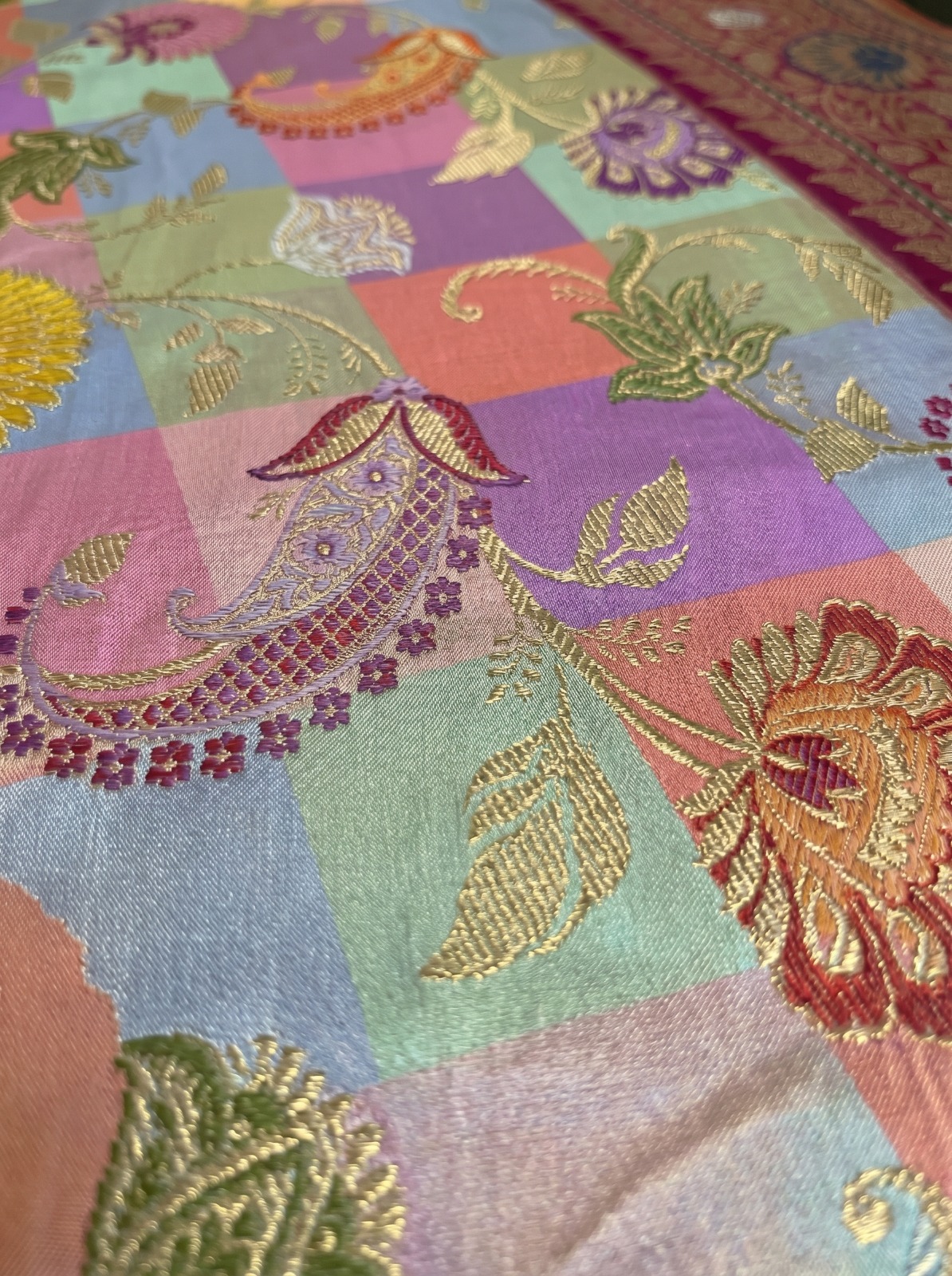
When Assam's Moonga silk is woven on Varanasi's traditional handlooms with zari (gold and silver thread) motifs, the result is a Banarasi Moonga Silk Saree — a synthesis of two of India's greatest textile traditions. These sarees feature the intricate floral and paisley brocade patterns that Banarasi weaving is celebrated for, rendered in the warm golden canvas of Moonga silk.
These are the sarees that make a statement at weddings, receptions, and high-profile cultural events.
Moonga Tussar Silk Sarees
A popular variation blends Moonga silk with Tussar silk, creating a fabric with a slightly textured, earthy finish while retaining the natural golden undertone. Moonga Tussar sarees are prized for their versatility — equally at home at a festive family gathering or a formal evening event.
Handloom Moonga Silk Sarees
For those who value the purity of the weaving process, Silk Khazana's handloom Moonga silk sarees are woven entirely on pit looms by master weavers without the use of any power machinery. Each saree carries the distinct irregularities that only hand-weaving can produce — proof of genuine artisanship.
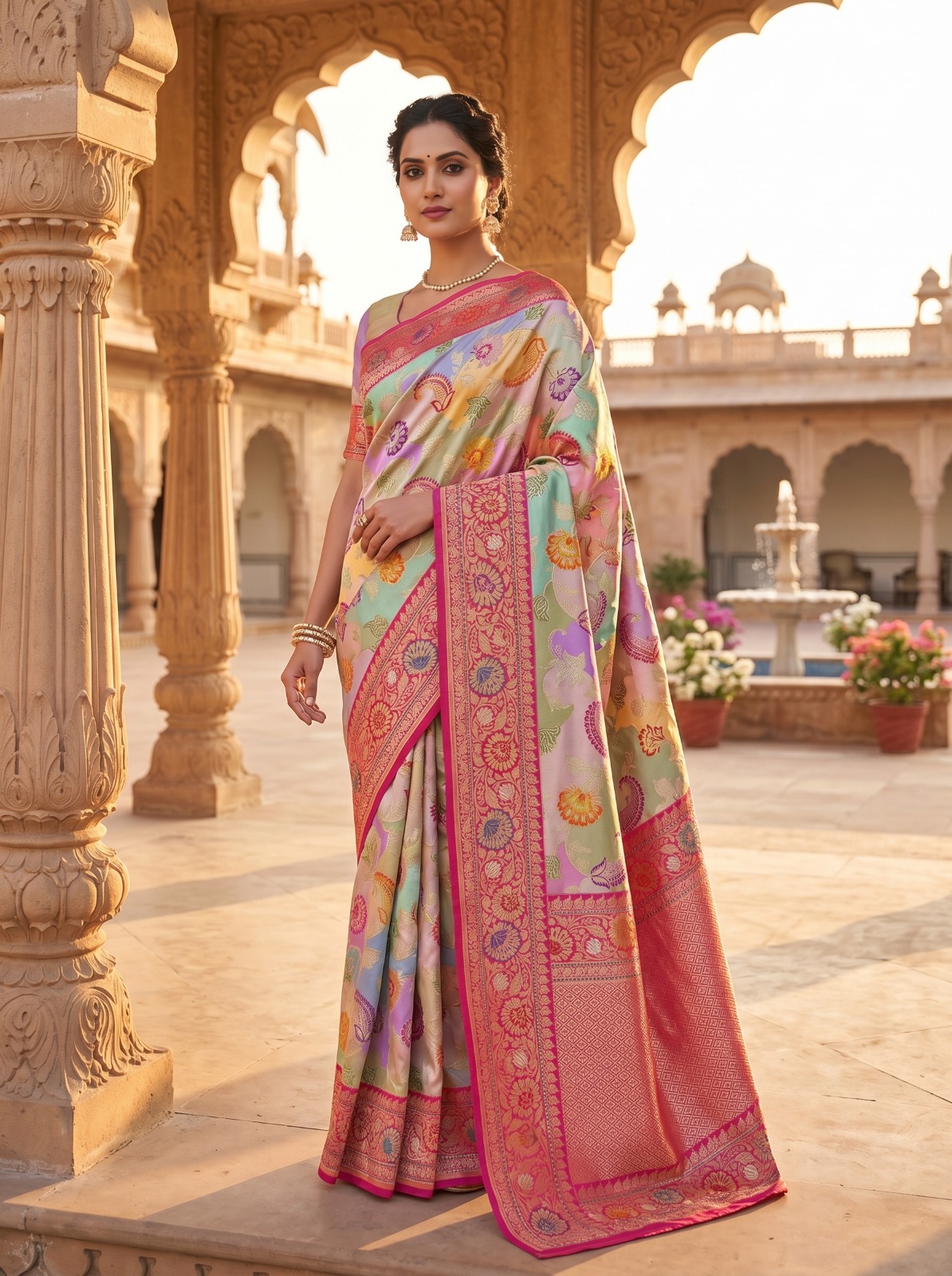
How to Identify a Pure Moonga Silk Saree: 5 Tests You Can Do at Home
With the rise of imitation fabrics, knowing how to authenticate your purchase is essential — especially when buying online or abroad. Here are five reliable ways to identify genuine Moonga silk.
1. The Burn Test
Carefully burn a few threads from an inconspicuous edge. Genuine silk burns slowly, smells like burning hair, and leaves a fine, crushable ash. Synthetic fibres melt, smell like burning plastic, and leave hard beads.
2. The Ring Test
Pure silk, being a fine natural fibre, can be pulled through a ring without snagging or bunching. Most synthetic imitations will not pass through as smoothly.
3. The Touch Test
Run your fingers across the fabric. Authentic Moonga silk feels smooth yet subtly textured, with a warmth that synthetic fibres lack. It should feel cool initially but quickly warm to your touch.
4. The Lustre Check
Hold the saree under natural light and tilt it at different angles. Authentic Moonga silk has a multi-directional sheen — it glows from within rather than reflecting like a mirror. Synthetic imitations often have a flat, uniform shine.
5. The Weave Inspection
Look closely at the weave. A handloom Moonga silk saree will have slight, natural variations in the yarn — these are not flaws but the signature of handcrafted authenticity. Machine-made imitations have a perfectly uniform, almost mechanical regularity.
Pro Tip: Always ask for the Silk Mark certification when purchasing a Moonga silk saree. Issued by the Silk Mark Organisation of India, this certification guarantees the fabric is 100% pure silk.
How to Style a Pure Moonga Silk Saree: Occasion-by-Occasion Guide
A Pure Moonga Silk Saree is remarkably versatile. Its natural warmth suits a wide range of skin tones, and its texture holds embroidery and embellishment beautifully. Here is how to style it for different occasions.
- Indian Weddings and Receptions: Pair a Banarasi Moonga Silk Saree with a heavy contrast blouse in deep jewel tones — burgundy, bottle green, or navy — and accessorise with temple jewellery or polki sets. The golden tones of Moonga silk complement both gold and silver jewellery exceptionally well.
- Festive Occasions (Diwali, Durga Puja, Eid): Opt for a Moonga silk saree with a zari border and keep the blouse and jewellery relatively understated. The natural gold of the fabric provides all the richness the occasion demands without over-dressing.
- Corporate and Formal Events: A lightweight Moonga Tussar silk saree in muted earthy tones draped in a Nivi style, paired with a simple blouse and minimal jewellery, makes an authoritative and elegant statement in professional settings.
- Haldi, Mehendi and Pre-Wedding Functions: The warm yellow-gold base of Moonga silk makes it a natural choice for Haldi ceremonies, where yellow is auspicious. Look for Moonga sarees with floral or geometric borders for a traditional aesthetic.
- For NRIs: Styling Moonga Silk Abroad: Moonga silk's lightweight, breathable nature makes it practical for international travel. For saree-wearing events abroad, a pre-stitched or pre-draped Moonga silk saree paired with statement earrings creates an effortlessly elegant Indian look without the hassle of complex draping.
A Closer Look: The Banarasi Moonga Silk Saree
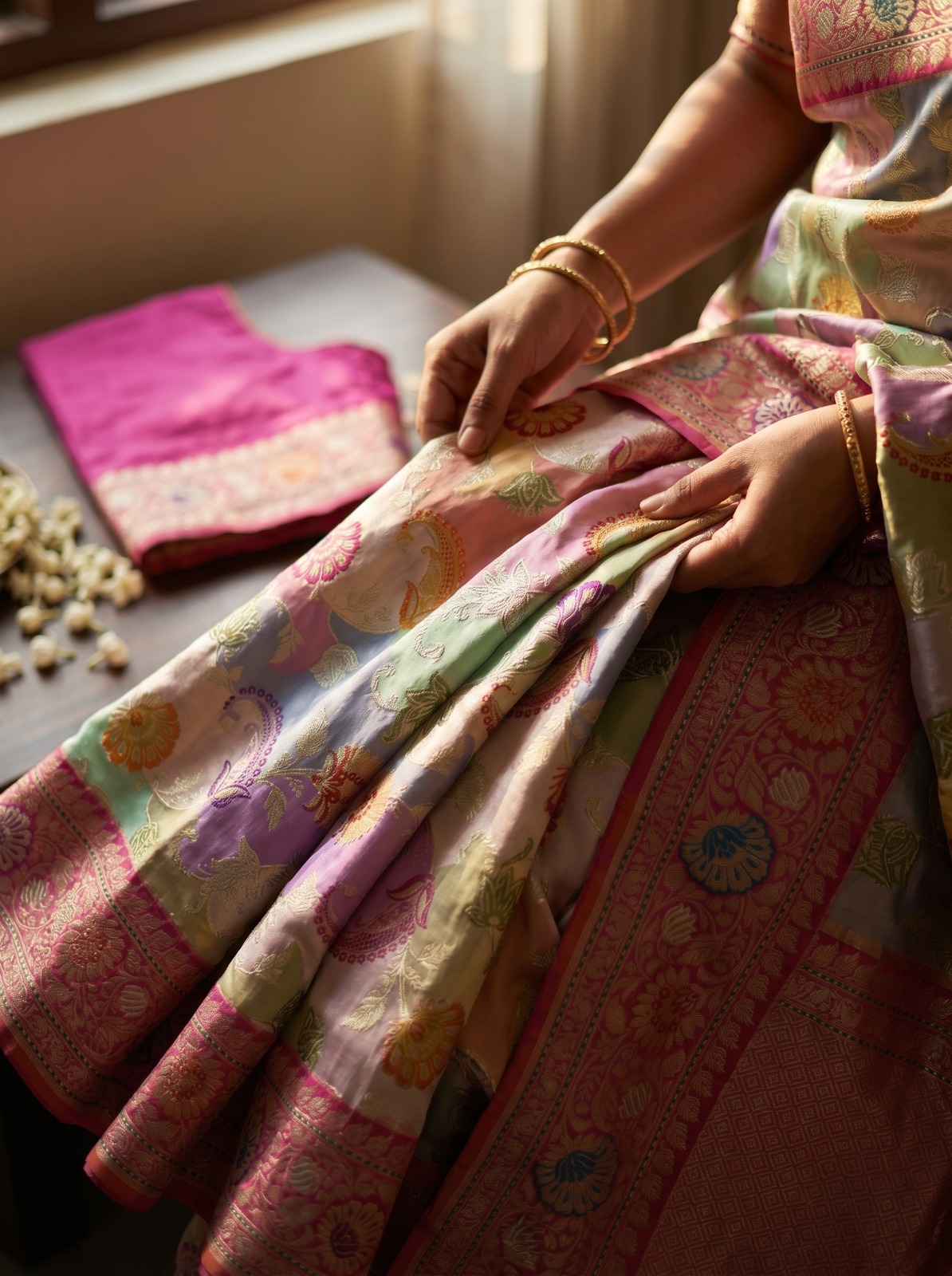
Pure Moonga Silk Saree Care Guide: Protecting Your Investment
Given that a Pure Moonga Silk Saree is both a financial and emotional investment, caring for it correctly is essential.
Washing
Always dry clean your Moonga silk saree. If hand-washing is necessary, use cold water with a mild, pH-neutral detergent. Never machine wash.
Drying
Do not wring or twist the fabric. Lay it flat on a clean towel or hang in the shade. Direct sunlight will fade natural silk fibres over time.
Ironing
Iron on a low silk setting with a thin cotton cloth between the iron and the saree. Never iron directly on the fabric.
Storage
Store your Moonga silk saree in a muslin or cotton cloth (not plastic) to allow the fibre to breathe. Keep neem leaves or cedar balls nearby. Refold regularly to prevent creases.
Zari Care
Gold and silver zari work is delicate. Avoid rubbing the zari against rough surfaces. When storing, keep the zari side facing inward.
Why NRIs and International Travellers Choose Silk Khazana
For NRIs and tourists, buying an authentic Indian saree can be a daunting experience. The market is crowded with imitations, and without local knowledge, it is easy to overpay for substandard fabric.
Silk Khazana addresses these concerns directly:
- Direct-from-Varanasi sourcing: Every saree is sourced directly from master weavers, eliminating middlemen and ensuring authenticity.
- Silk Mark certified: Silk Khazana's Pure Moonga Silk Sarees carry the Silk Mark, so you know exactly what you are buying.
- Expert guidance: The team brings decades of expertise to help choose the right saree.
- Safe international shipping: Sarees are carefully packed to preserve fabric making it practical to buy anywhere in the world.
- Transparent pricing: With no auction-style pressure, what you see is what you pay.
For NRIs attending Indian weddings, celebrating cultural festivals abroad, or simply wanting to reconnect with India's textile heritage, Silk Khazana offers a trusted, authoritative point of purchase.
Frequently Asked Questions
What is the difference between Moonga silk and Muga silk?
They are the same silk. "Muga" is the Assamese name, while "Moonga" is the Banarasi/Hindi variation of the same word. Both refer to the silk produced by Antheraea assamensis silkworms in Assam.
Why is Moonga silk so expensive?
Moonga silk is expensive because it is genuinely rare. The silkworms are found only in Assam, production is entirely manual, a single saree requires ~8,000 cocoons, and the weaving process can take up to two months.
How long does a Pure Moonga Silk Saree last?
A well-maintained Moonga silk saree can last for decades — even generations. Unlike most fabrics, Moonga silk's lustre actually increases with age, making it genuinely improve over time.
Can I buy an authentic Moonga silk saree online?
Yes, provided you purchase from a reputable, certified seller. Look for the Silk Mark certification and buy from established brands like Silk Khazana, which guarantee authenticity.
Is Moonga silk saree suitable for daily wear?
Moonga silk is durable enough for regular wear but is most commonly worn for special occasions, weddings, and festivals given its value and craftsmanship.
What skin tones suit Moonga silk sarees?
The warm golden tones of Moonga silk are universally flattering and complement all Indian skin tones particularly well, from the fairest to the deepest complexions.
Are Moonga silk sarees good for gifting?
Absolutely. A Pure Moonga Silk Saree is considered one of the most meaningful gifts in Indian culture — an ideal combination of heritage, craftsmanship, and lasting value for milestone celebrations.
Conclusion: Own a Piece of Living Heritage
A Pure Moonga Silk Saree is not merely a garment. It is a living testament to thousands of years of Indian craftsmanship — from the ancient forests of Assam where the silkworms feed on aromatic leaves, to the master weavers of Varanasi who transform golden filaments into breathtaking art.
It gets richer with every wear. It endures for generations. And it carries within its weave a story that no synthetic fabric can ever tell.
At Silk Khazana, we believe that owning a Pure Moonga Silk Saree should be an experience as beautiful as the saree itself — transparent, guided, and rooted in genuine expertise. Whether you are celebrating a wedding, preserving a cultural connection from abroad, or simply investing in something truly exceptional, we are here to help you find your perfect Moonga silk drape.
Explore Silk Khazana's Pure Moonga Silk Saree collection today — and carry a golden legacy forward.
Written by the Silk Khazana editorial team, drawing on over a decade of expertise in India's handloom textile traditions.