+9163073 05873 support@silkkhazana.in
Summer sale discount upto 30%! Shop Now

Silk Khazana Presents
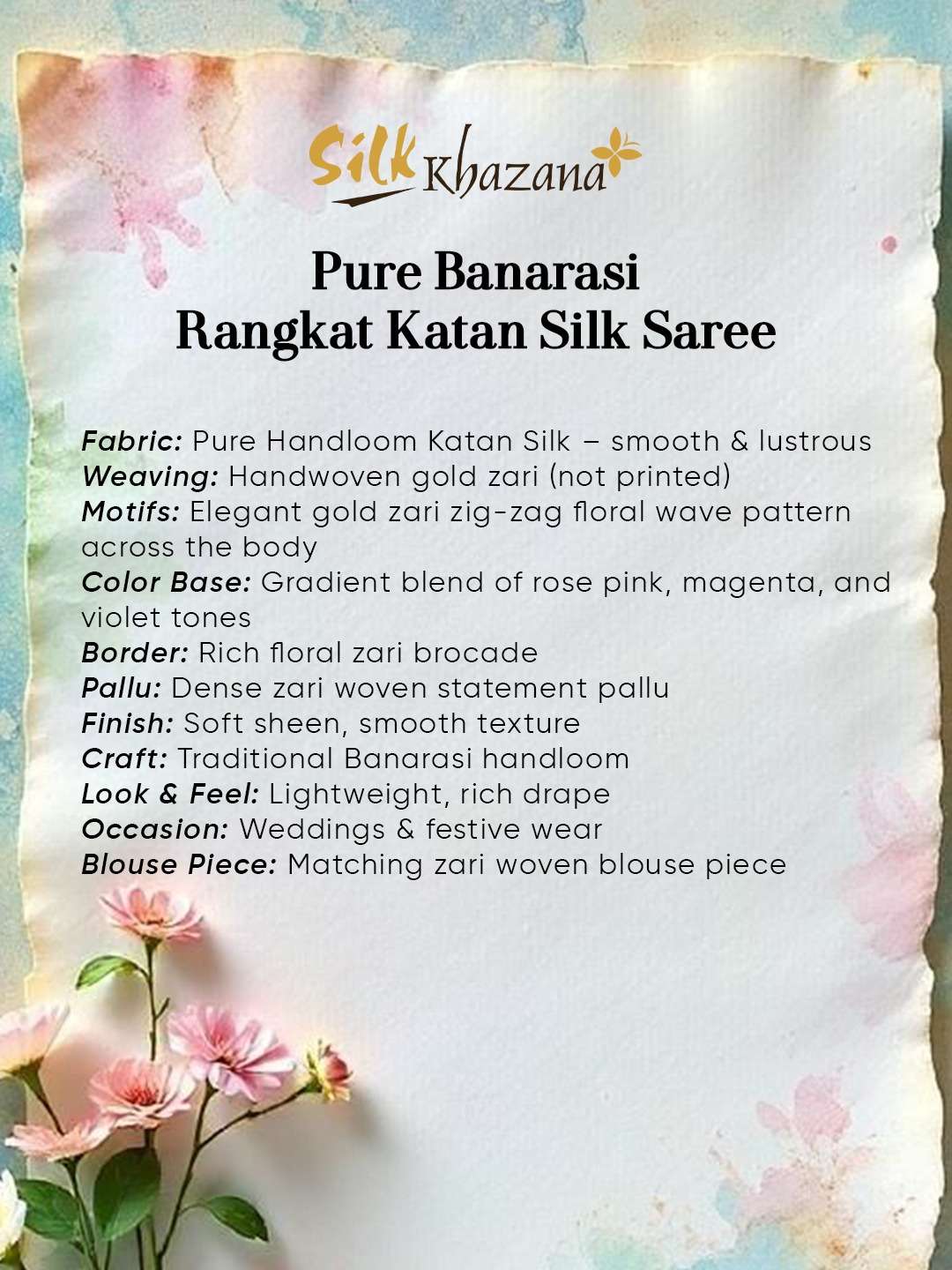
Pure Banarasi Rangkat Katan Silk Saree
The Rarest Thread in Indian Weaving
Introduction
There are sarees. And then there are sarees that only a handful of weavers in the entire world can make.
The Pure Banarasi Rangkat Katan Silk Saree belongs firmly to the second category.
In the by-lanes of Varanasi — where the oldest weaving traditions in India still breathe — the Rangkat technique is whispered about with reverence. It is a dying art, preserved today by only a small circle of master weavers who have spent decades mastering the precise choreography of colour that gives a Rangkat saree its breathtaking, seamless colour transitions. When that technique meets Katan silk — the purest, most prestigious silk used in Banarasi weaving — the result is not merely a saree. It is a masterpiece.
Whether you are an NRI searching for a bridal heirloom that carries the full weight of Indian craftsmanship, or a saree lover who has heard the word "Rangkat" and wants to truly understand what it means, this guide is for you. At Silk Khazana, we have been custodians of Varanasi's most authentic silk traditions, and this is our definitive guide to one of the most extraordinary sarees that Banaras produces.
Let us start at the foundation: the silk itself.
What Is Katan Silk? Varanasi's Gold Standard of Weaving
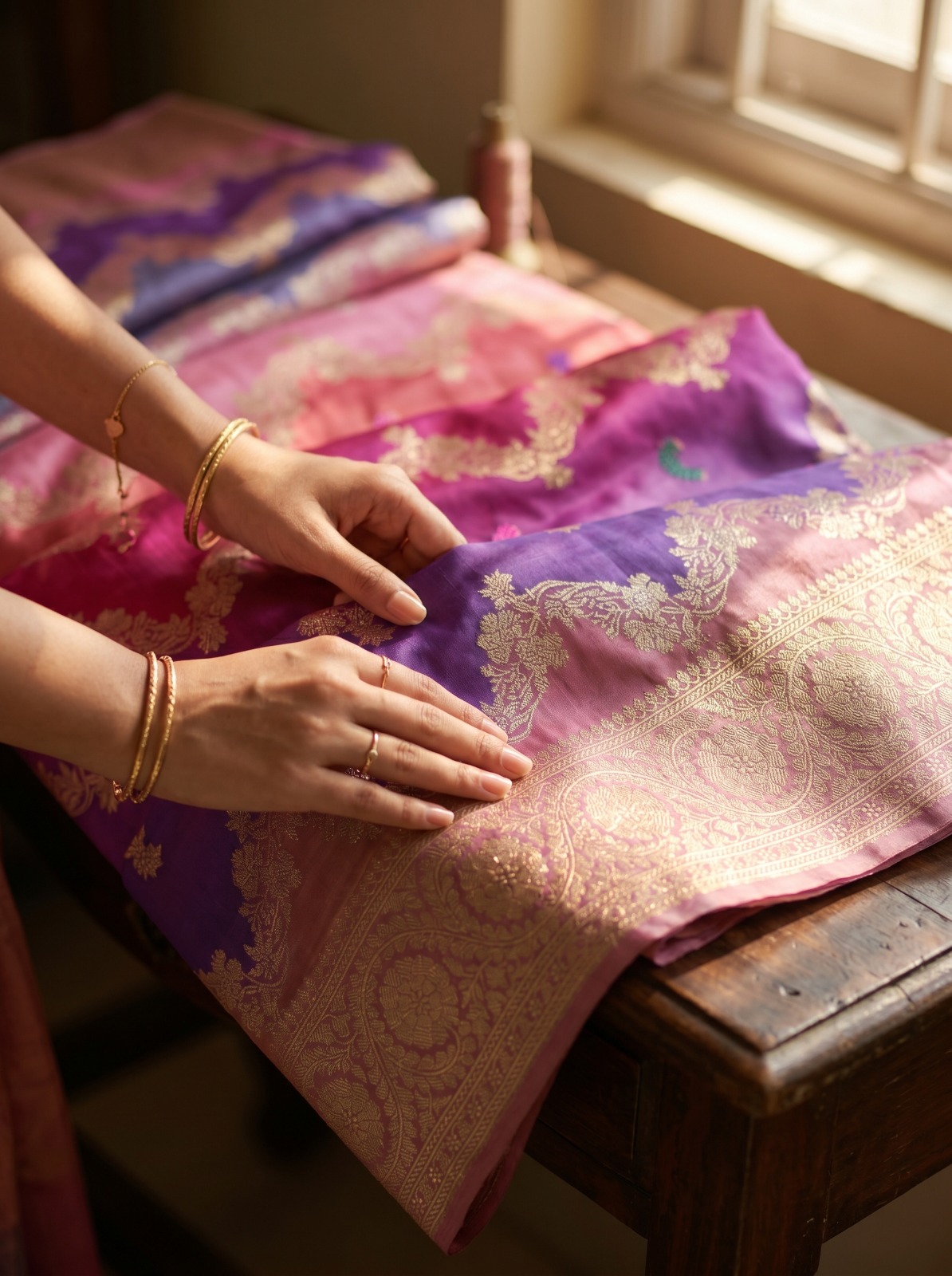
Before you can appreciate a Rangkat Katan saree, you must understand why Katan silk occupies the highest rung in the hierarchy of Banarasi textiles.
The Making of Katan
"Katan" refers to the manner in which the silk thread is prepared. Multiple pure mulberry silk filaments are tightly twisted together — a process called "throwing" — to create a yarn of exceptional tensile strength and uniform lustre. The result is a thread that is simultaneously strong enough to withstand the tension of Varanasi's traditional pit-loom weaving, and fine enough to produce the crisp, smooth surface that Banarasi brocade demands.
A Pure Banarasi Katan Silk Saree uses this premium twisted silk in both the warp (lengthwise threads) and the weft (crosswise threads) — which is what makes it "pure" Katan. In lesser Banarasi silks, the warp may use a different base thread. In pure Katan, there is no compromise anywhere in the structure.
🏛️ A History Woven in Royal Courts
The history of Katan silk in Varanasi is inextricably linked with the Mughal Empire. Historians trace the sophistication of Banarasi Katan weaving to the 14th and 15th centuries, when Persian weavers, patronised by Mughal courts, brought their mastery of fine silk and gold brocade to Varanasi. The women of the Mughal royal household were known to favour Katan silk for its cool, smooth drape and its ability to hold the weight of intricate zari embellishment without distorting.
By the 17th century, Varanasi had become the undisputed capital of Katan silk weaving in India — a position it holds to this day.
✨ What Makes Katan Silk Feel Different
If you have ever held a Pure Katan Banarasi Silk Saree, you will know that it has a quality unlike any other fabric: it is heavy yet fluid, structured yet yielding. It makes a distinctive soft rustle — a sound that connoisseurs call "the music of silk" — when it moves. Its surface has a cool, smooth lustre that deepens rather than diminishes in the light.
These are not qualities that can be replicated by any synthetic fabric, however sophisticated. Katan silk's unique character comes entirely from the purity of the mulberry silk fibre and the precision of the weaving.
What Is the Rangkat Technique? Banaras's Most Secretive Weave
If Katan silk is the canvas, Rangkat is the art that elevates it into something that has no comparison in the textile world.
The Meaning of Rangkat
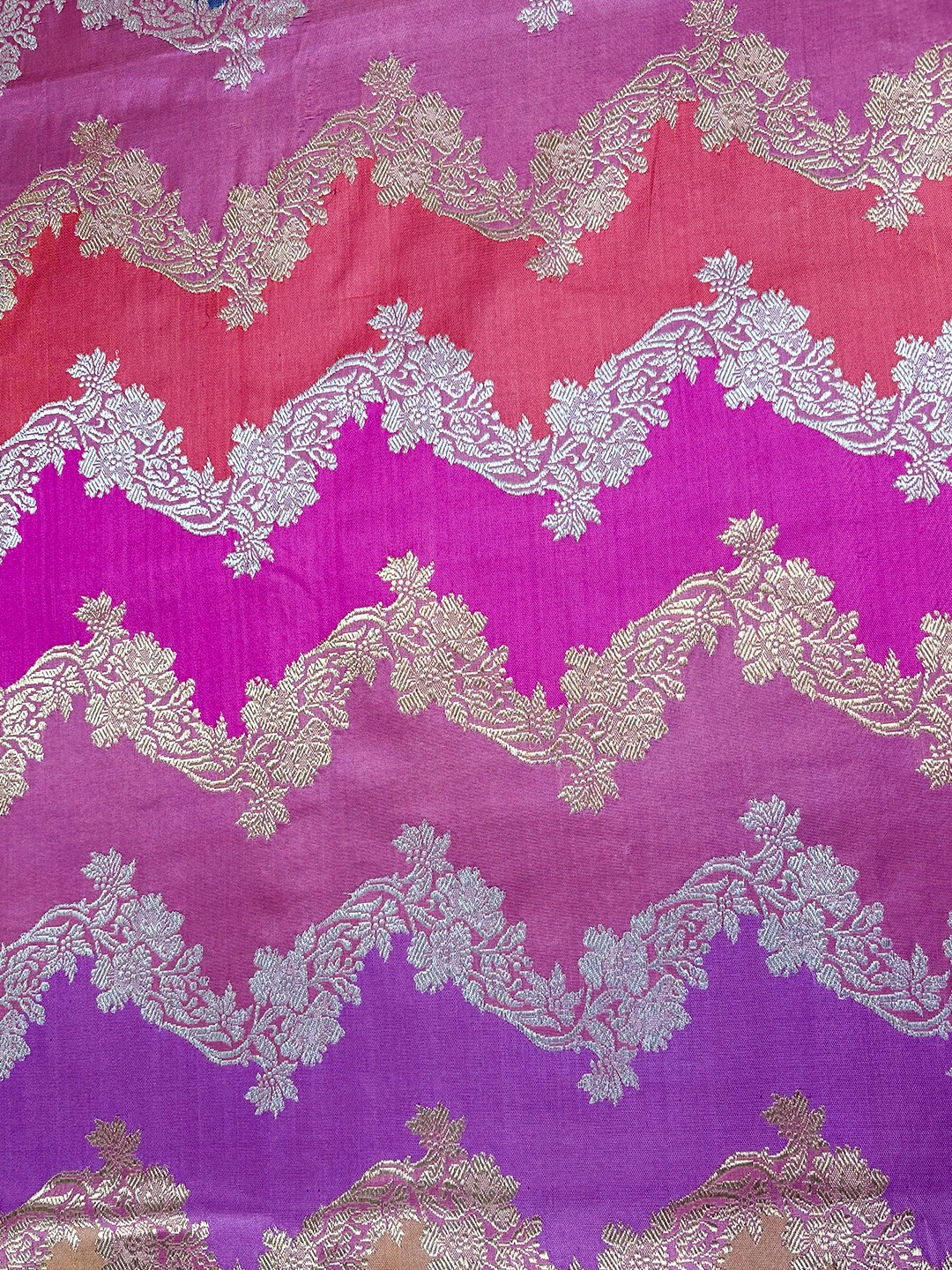
"Rangkat" is derived from two Hindi words: rang (colour) and kat (to cut or divide). True to its name, the Rangkat technique involves sharply dividing and transitioning colours across the body of the saree — not through dyeing, but through weaving. The colour changes are built directly into the structure of the fabric at the loom level.
This is fundamentally different from tie-dye, block-print, or screen-print techniques where colour is applied to an already-woven fabric. In a Rangkat saree, colour is the weave itself.
🧵 How a Rangkat Saree Is Actually Woven
The Rangkat technique requires the weaver to make multiple, carefully calculated changes in both the warp (vertical threads) and the weft (horizontal threads) as the saree progresses on the loom. The weaver essentially orchestrates a transition — sometimes gradual, sometimes dramatically sharp — between two or more base colours across defined sections of the saree.
This is extraordinarily difficult for several reasons:
- First, the loom must be set up in a particular way that allows different sections of the warp to carry different coloured threads simultaneously — a complex, time-consuming arrangement that requires expert calculation before a single thread is woven.
- Second, the transitions must be managed with absolute precision. A miscalculation by even a few threads is visible in the finished fabric and cannot be corrected without unravelling the weave.
- Third, when additional elements like real zari (gold and silver thread), Meenakari (coloured thread work), or Kadwa butiwork are incorporated into a Rangkat Katan saree, the weaver must simultaneously manage the colour transitions AND the additional pattern threads — a feat of multitasking that only years of experience can enable.
🙌 Why So Few Weavers Practice Rangkat
The Rangkat technique demands a level of mental concentration, physical dexterity, and accumulated knowledge that very few weavers ever fully master. It is genuinely on the verge of disappearing. In the entire weaving community of Varanasi — which numbers in the hundreds of thousands — only a small group of master weavers can execute a true Rangkat with the precision the technique demands.
A single Pure Banarasi Rangkat Katan Silk Saree can take anywhere from two weeks to over a month to complete, depending on the complexity of the colour transitions and the density of the motif work layered over them.
This is the reason that an authentic Rangkat Katan silk saree is not merely expensive — it is irreplaceable.
The Rangkat Katan Silk Sarees in Silk Khazana's Collection
At Silk Khazana, our Rangkat collection is curated directly from the master weavers of Varanasi who have dedicated their lives to keeping this technique alive. Here is a guide to the varieties you will find.
Rangkat Pure Katan Silk with Real Zari
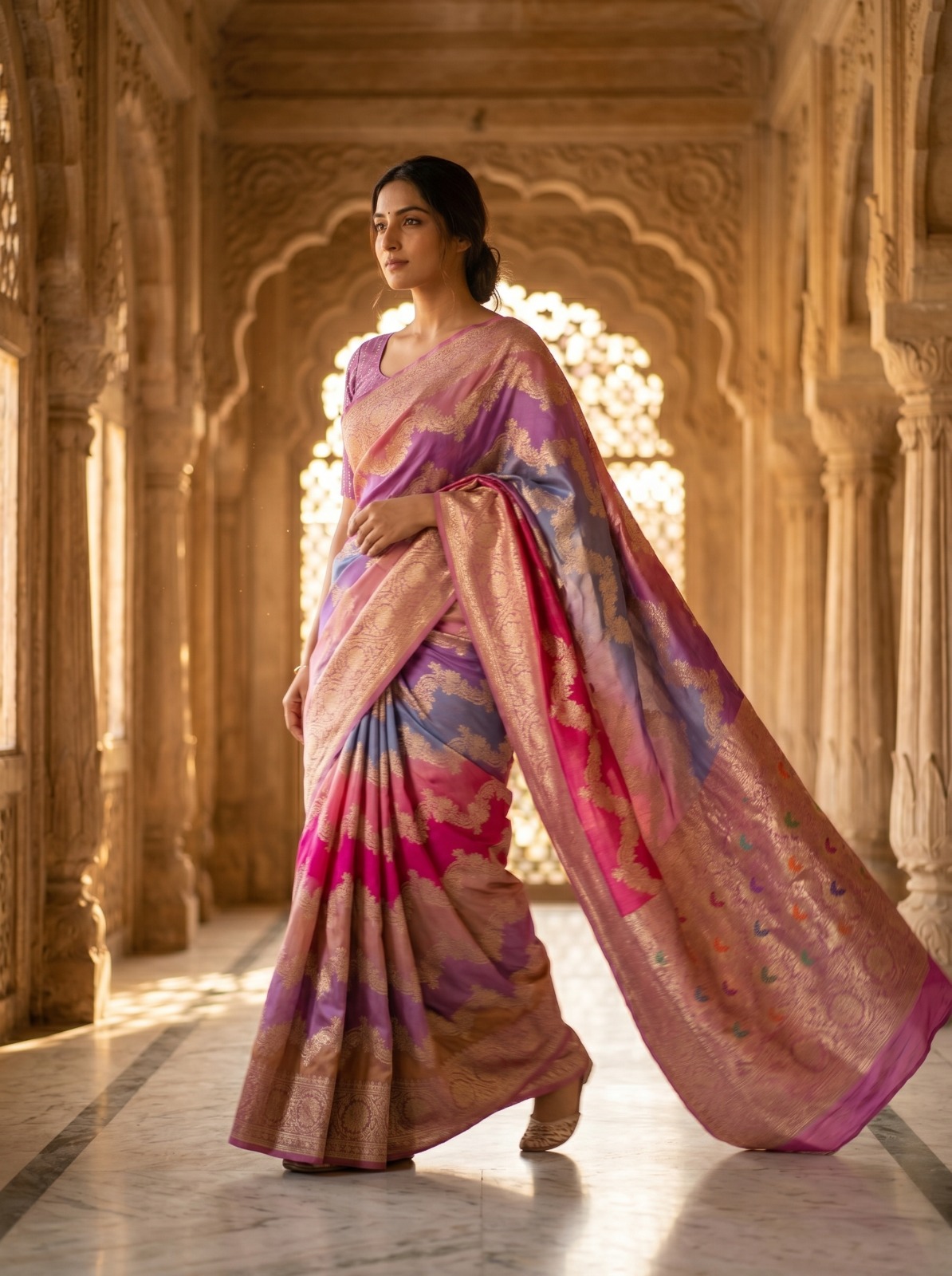
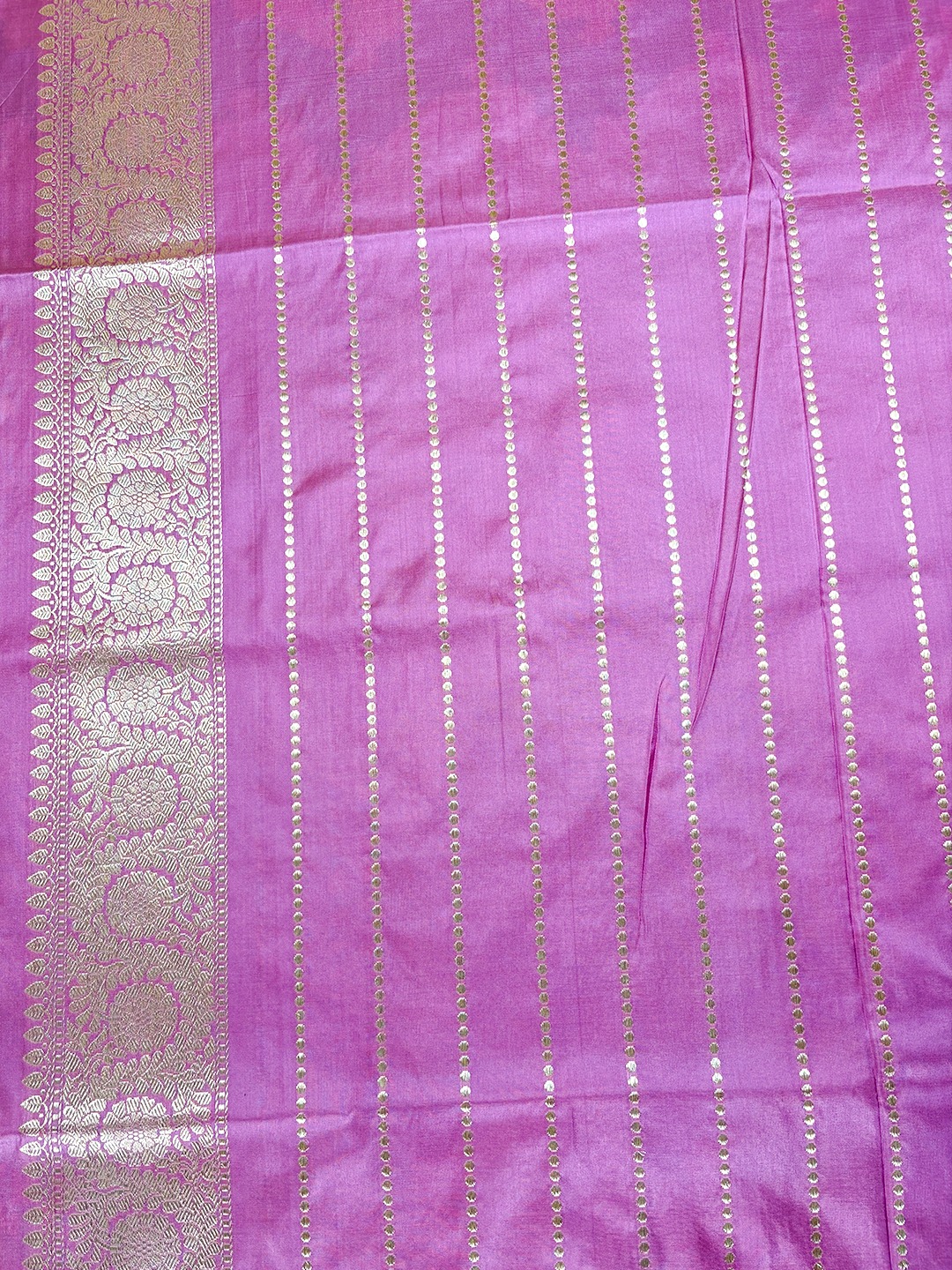
The most classic expression of the Rangkat tradition. The Katan silk base carries the signature colour transitions of the Rangkat technique, while real zari — gold or silver thread — creates the motifs: the paisleys (keri), lotus flowers, and geometric lattices (jaal) that Banarasi brocade is celebrated for.
The combination of the dynamic, colour-shifting base with the timeless richness of real zari creates a saree that is theatrical in impact yet deeply rooted in tradition. These are the sarees most prized for bridal trousseaux and wedding reception draping.
Rangkat Katan Silk with Meenakari
Meenakari is the art of adding coloured silk threads alongside the zari in the motif work — drawing from the tradition of enamel-work jewellery in creating multi-coloured, jewel-like patterns within the weave. In a Rangkat Meenakari Katan saree, this jewel-toned inlay work plays against the colour transitions of the Rangkat base.
Think of it as a saree that manages to be both bold in its large-scale colour drama and intricate in its close-up detail — two qualities that are rarely found together in a single piece of fabric.
Kadwa Rangkat Katan Silk
The Kadwa weave is one of the most technically demanding in Banarasi weaving: each individual motif is woven independently, with the supplementary thread cut away at the back between motifs rather than being carried across the fabric. This creates a saree with a clean reverse side and motifs of exceptional definition and precision.
When the Kadwa technique is combined with the Rangkat colour transitions on a Katan silk base, the result is a saree of staggering complexity and artisanal achievement — a piece in which every square centimetre represents minutes of a master weaver's focused labour.
How to Identify an Authentic Rangkat Katan Silk Saree
In a market where imitation is rampant, knowing how to authenticate a Rangkat Katan silk saree before you buy is essential — particularly when shopping online or from unfamiliar vendors.
1. Examine the Colour Transitions Closely
In an authentic Rangkat saree, the colour transitions are woven into the fabric structure — not printed, dyed, or applied after weaving. Hold the saree up to the light and look at the transition zones from both the front and the reverse. In a genuine Rangkat, the colour shift will be visible in the weave itself. A printed imitation will show the colour only on the surface.
2. Check the Reverse Side of the Fabric
Turn the saree over and examine the back. In a handloom Katan silk saree, the reverse side should show the underside of the zari and thread work as "floating threads" between the motifs — this is the natural consequence of the loom-based weaving process. A machine-made saree will either have the same appearance front and back or very neatly clipped floats.
3. The Silk Burn Test
Remove a thread or two from an inconspicuous hem area and apply a careful flame. Pure mulberry silk burns slowly with a smell like burning hair and leaves a fine, crushable ash. Synthetic threads melt and leave a hard plastic bead.
4. The Weight Test
A Pure Katan Silk Saree has a distinctive weight to it — substantial but not stiff. Synthetic imitations tend to feel either too light and flimsy, or too stiff and heavy. The weight of genuine Katan silk comes from the density of the tightly-twisted mulberry silk threads.
5. The Silk Mark and GI Tag
Always ask for the Silk Mark certification — the Silk Mark Organisation of India's guarantee that the fabric is 100% pure silk. For a Banarasi saree, also look for the GI (Geographical Indication) tag that certifies the saree was handwoven in Varanasi according to traditional methods.
Silk Khazana's Promise: Every Pure Banarasi Rangkat Katan Silk Saree in our collection comes with authentication documentation. We source directly from master weavers and offer full transparency about the weave, the technique, and the materials used.
How to Style a Pure Banarasi Rangkat Katan Silk Saree
The defining characteristic of a Rangkat saree — its dramatic, seamless colour transitions — makes it one of the most versatile and visually striking sarees you can wear. Here is how to style it for maximum impact across different occasions.
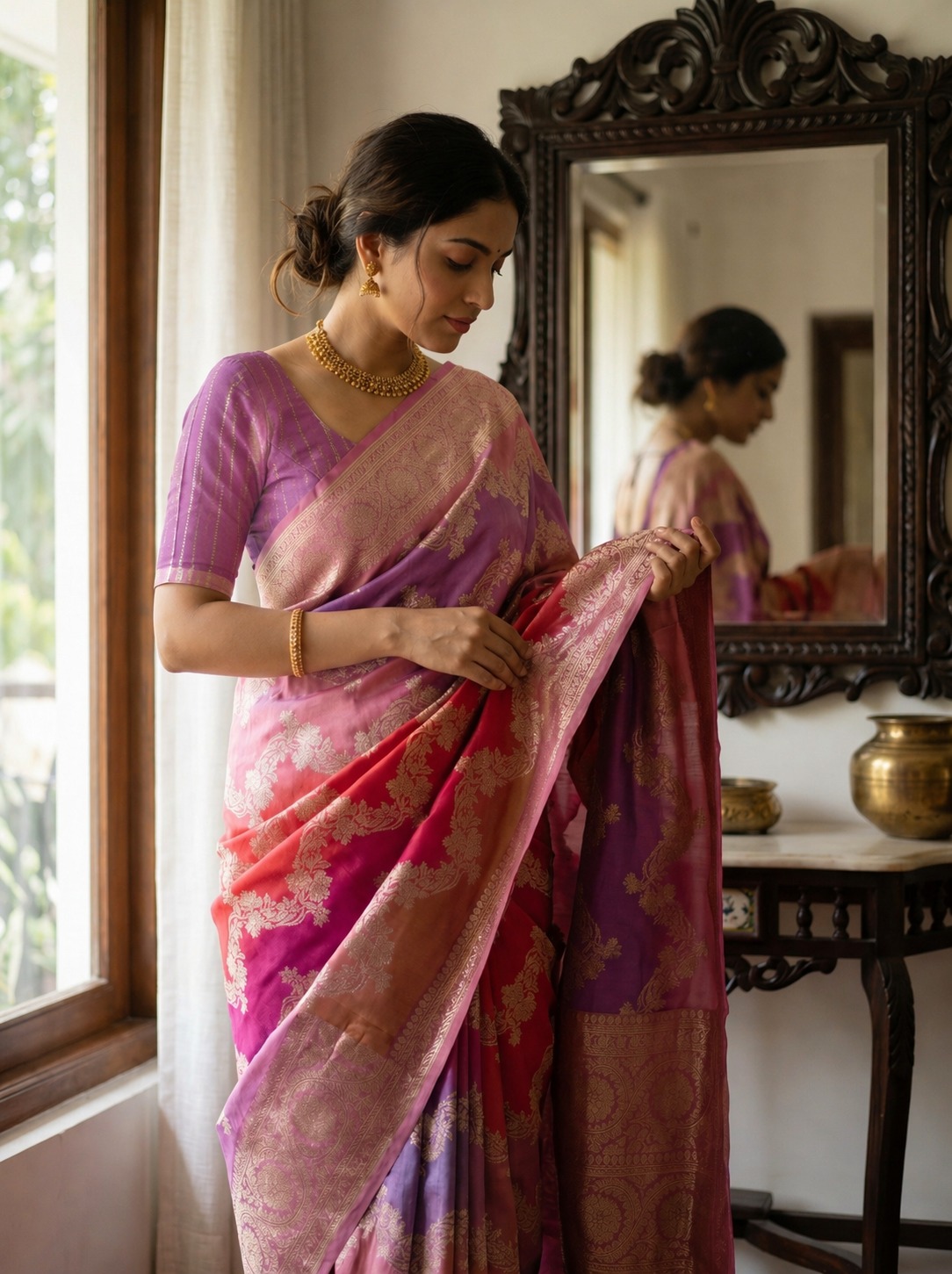
- Bridal and Wedding Reception: A Rangkat Katan saree with real zari is an ideal choice for brides who want something that is both deeply traditional and visually extraordinary. Because the saree itself carries so much colour drama, keep the blouse in a solid, contrasting colour, and choose Polki, Kundan, or Jadau jewellery. For the draping, the Nivi style best showcases the Rangkat colour transitions.
- Wedding Guest and Sangeet: A Rangkat Meenakari Katan saree offers the perfect balance of festivity and refinement for a wedding guest. Pair it with a blouse that picks up one of the Meenakari thread colours and choose gold jewellery in a medium weight. Statement earrings and a single statement cuff are all you need.
- Festive Occasions: For festivals, a Rangkat Katan saree in vibrant, auspicious colours — red-and-gold transitions, saffron-and-ivory, or peacock blue-and-emerald — makes a statement that requires minimal accessorising. Keep the blouse clean and the jewellery simple.
- Formal Evenings: For sophisticated, non-bridal occasions, a lighter Rangkat Katan saree with subtle colour transitions and minimal zari work creates an effect of quiet elegance. Pair with a silk or cotton blouse in a complementary neutral and small pearl or diamond earrings.
- For NRIs - Travelling with Your Saree: Katan silk is surprisingly travel-friendly. Roll the saree loosely around a cylinder of acid-free tissue to prevent permanent crease lines. Store flat in your luggage, with the zari side protected by a thin cotton cloth.
Caring for Your Pure Banarasi Rangkat Katan Silk Saree
A Pure Banarasi Rangkat Katan Silk Saree is an heirloom investment. Caring for it correctly ensures that it remains as magnificent decades from now as the day you bring it home.
Cleaning
Always dry clean a Rangkat Katan saree. The real zari work is particularly sensitive to water and agitation. For routine freshening between wears, air the saree in the shade for a few hours.
Ironing
Iron on the lowest silk setting with a thin muslin cloth placed between the iron and the saree. Never apply the iron directly to the zari work, and do not use steam on the zari sections.
Storage
Wrap the saree in a soft muslin or cotton cloth — never plastic. Store flat or loosely rolled, not in a tight fold. Re-fold along different lines every three to six months to prevent permanent crease formation.
Zari Protection
The gold and silver zari can tarnish over time. Store a few silica gel packets near (not touching) the saree. Keep away from perfume, hairspray, and other aerosols which can permanently stain.
Petticoat Pairing
Always pair a Katan silk saree with a smooth satin or silk petticoat in a matching colour to avoid friction against the saree's delicate inner surface.
Why NRIs and International Visitors Choose Silk Khazana for Rangkat Katan Sarees
Buying an authentic Rangkat Katan silk saree from abroad is an act of trust. The risks are real: imitation fabrics sold as pure silk, machine-made sarees sold as handloom, and inflated prices justified by spurious claims of rarity.
Silk Khazana removes every one of these risks:
- Direct Weaver Relationships: We source our Rangkat Katan sarees directly from the master weavers who create them, in Varanasi. There are no middlemen. You receive the saree the weaver made.
- Full Authentication: Every saree carries the Silk Mark certification and, where applicable, the Banarasi GI tag. We offer full transparency about provenance.
- Expert Guidance: Our team brings decades of expertise in Banarasi silk weaving to guide your purchase seamlessly.
- Secure International Shipping: Each saree is packed to professional archival standards and safely shipped worldwide, including to the US, UK, Canada, Australia, UAE, and Singapore.
- Transparent Pricing: We price our sarees honestly, with clear explanations of what you are paying for, avoiding false urgency.
Frequently Asked Questions About Banarasi Rangkat Katan Silk Sarees
What exactly is the Rangkat technique in a Banarasi saree?
Rangkat is a traditional Banarasi handloom technique in which colour changes are built directly into the warp and weft of the fabric as it is woven on the loom. This creates seamless, sharp transitions between two or more base colours in the body of the saree — a distinctive visual effect that cannot be replicated by dyeing or printing.
What is the difference between Katan silk and other Banarasi silks like Georgette or Organza?
Katan silk uses pure twisted mulberry silk in both warp and weft, producing a dense, smooth, and highly lustrous fabric. Banarasi Georgette is made with a different twist structure that creates a lighter, crinkled texture. Organza uses a plain weave with finer threads for a sheer, stiff effect. Katan is considered the gold standard — the heaviest, richest, and most durable of the Banarasi silk bases.
Why is a Rangkat Katan silk saree more expensive than other Banarasi sarees?
Three factors combine to make Rangkat Katan sarees among the most expensive Banarasi weaves: the premium cost of pure Katan silk, the extreme complexity and time requirement of the Rangkat technique (2–4 weeks per saree minimum), and the scarcity of weavers who can execute true Rangkat. In combination, these factors place authentic Rangkat Katan sarees in the highest tier of Banarasi textile pricing.
Is a Rangkat Katan saree appropriate for a bride?
Absolutely. A Pure Banarasi Rangkat Katan Silk Saree — particularly one with real zari and Meenakari — is one of the most prestigious choices for an Indian bride. Its dramatic colour transitions, real gold zari, and supreme craftsmanship make it an heirloom piece that stands apart from more common bridal saree choices.
Can I buy an authentic Rangkat Katan silk saree online?
Yes, provided you purchase from a trusted, certified seller with direct weaver relationships. Look for Silk Mark certification, ask for provenance information, and avoid listings that cannot provide authentication documentation. Silk Khazana ships authentic Rangkat Katan sarees internationally with full certification.
How many colours can a Rangkat saree have?
Traditional Rangkat sarees typically feature two to three distinct colour transitions across the body of the saree, creating a gradient or zonal colour effect. More complex Rangkat pieces may incorporate four or more colour sections, but these are rarer and even more time-intensive to produce.
How do I know if a Rangkat saree is genuine or printed?
Examine the colour transition zone under good light on both the front and reverse side of the fabric. In a genuine Rangkat saree, the colour change is structural — visible in the threads of the weave itself, consistent front and back. In a printed imitation, the colour change is surface-only, and the reverse side will look different from the front.
Conclusion: Own the Rarest Thread in Indian Weaving
The Pure Banarasi Rangkat Katan Silk Saree is not a commodity. It cannot be mass-produced. It cannot be replicated by a machine. It cannot be rushed. It exists only because a small, dedicated community of master weavers in Varanasi have chosen to spend their lives preserving a technique that the modern world very nearly allowed to disappear.
When you drape a Rangkat Katan saree, you are wearing the result of weeks of a master's labour, centuries of accumulated technique, and an unbroken thread of craftsmanship that runs from the Mughal court weaving halls to the narrow by-lanes of today's Varanasi.
At Silk Khazana, we consider it our responsibility — and our privilege — to connect you with this living heritage. Whether you are a bride searching for a saree that no one else will have, an NRI who wants to bring home something truly authentic, or a collector of India's finest textiles, our Rangkat Katan collection has been assembled with one principle: no compromises.
Explore Silk Khazana's Pure Banarasi Rangkat Katan Silk Saree collection — and wear the rarest weave from Varanasi.
Authored by the Silk Khazana editorial team — drawing on direct relationships with Varanasi's master weavers and over a decade of expertise in authentic Banarasi textile traditions.